Home » Medieval News » Page 10

Category: Medieval News

General view over valley in mountains of south Norway from beside Lendbreen glacier

Recreating Norwegian Tunic from the Iron Age

A Norwegian tunic, dated to AD 230 -390, is going to be recreated

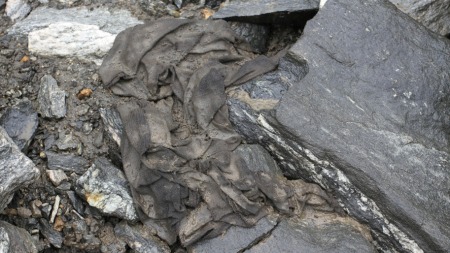
In Norway the ice is melting in the glaciers, shedding numerous treasures from the prehistoric as well as medieval past. A few years ago the Lendbreen glacier in Breheimen National Park thus coughed up shoes, hunting gear, tent pegs, textile rags and horse dung from the Iron Age as well as a woolen tunic from AD 230 – 390. Since then archaeologists and conservators have worked to study this, the oldest piece of textile ever found in Norway.

Iron age tunic as found in Norway under Glacier

The tunic was found at a place where people had camped in order to hunt for reindeers. In summer the animals are so plagued by the warble flies that they seek refuge on the glaciers. The hunters took advantage of this by camping on the edge of the glacier. Here they tethered their horses before continuing on foot. It is not quite clear what happened at the camp afterwards. However, the fact remains that the archaeologists found not only arrowheads, but also complete arrows with fletching and shafts plus the tunic, which had been bundled up and left in the dung. Perhaps the hunting party was caught in a storm and died before they could retrieve their valuables and horses.

Reconstruction

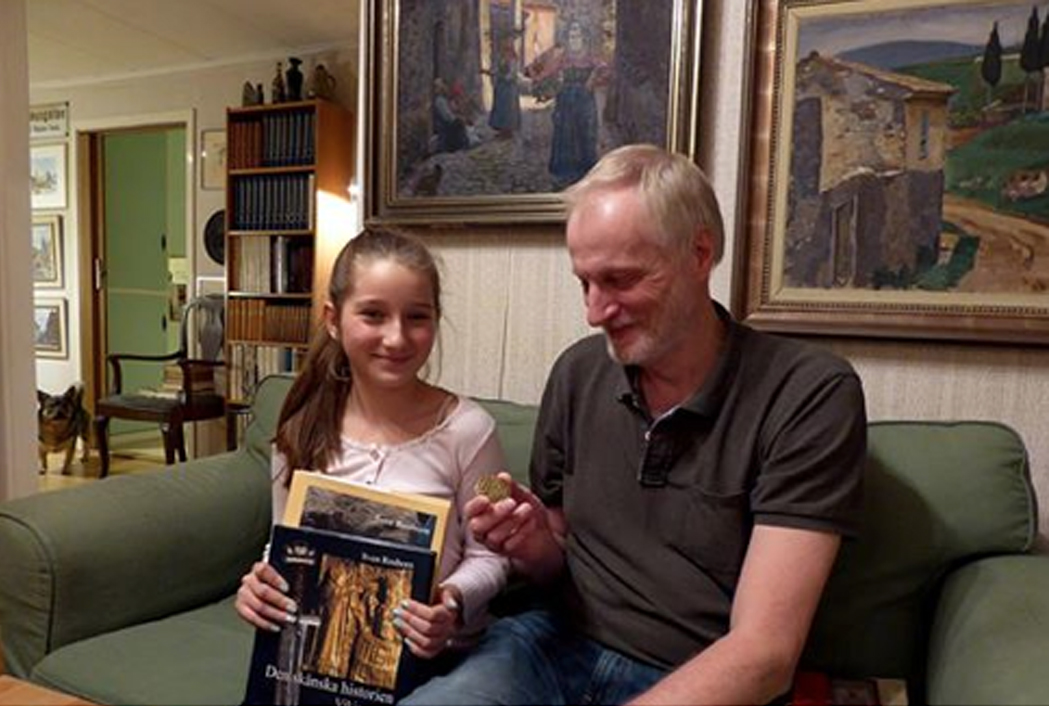
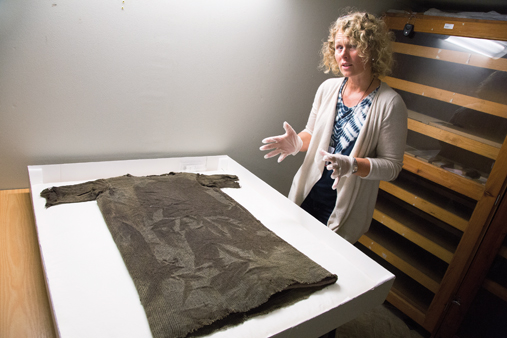
Marianne Vedeler with Tunic. Photo: Yngve Vogt

The chief archaeologist, Marianne Vedeler, now tells that the shirt is going to be reconstructed. Hopefully this will shed new light on the ancient production process and the time, which was invested in making such a tunic.

Marianne Vedeler tells: “The remarkable thing is how old and well-preserved the tunic was. It is a very fine example of how prehistoric people used wool. One of our aims in reconstructing the tunic is to learn more about how the textile was made, how time-consuming it was to make, and how the wool was used.”

The reconstruction will take place in a collaboration between two museums, The Museum of Cultural History at the University of Oslo and the Norwegian Mountain Museum (Norsk Fjellmuseum) in Lom . Thw result will be two tunics: one tunic will be on display at the museum in Oslo, the other at the museum in Lom, which has a large exhibition of the other archaeological finds from the Lendbreen glacier, some ten kilometres west of Lom.

Overhair and underwool

The wool, which will be used, will come from present-day wild sheep provided by a sheep farmer at Hareid in Sunnmøre.

Villsau - Wild Sheep in Norway
Wild Sheep – villsau – in Norway

The wool of this ancient Norwegian sheep breed has two layers. The outer-layer hair, known as overhair, is long and stiff and acts as a sort of raincoat for the sheep. The innermost layer, called underwool, is soft and fine and resembles the wool we find in modern sheep breeds. The different properties of the wool were used for different types of textile.

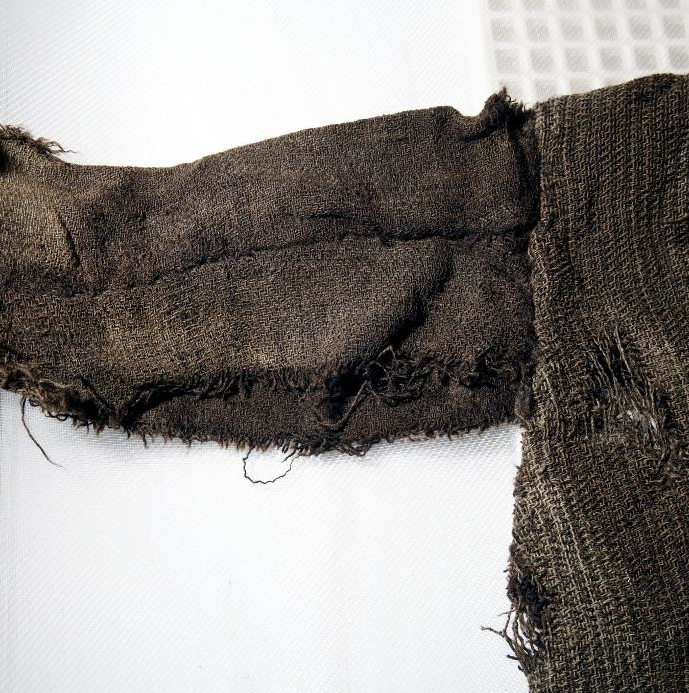
“Textiles made from overhair were more water-resistant and more hard-wearing than if they had been made of underwool. We were therefore surprised to discover that the tunic from Lendbreen was made almost exclusively from underwool, that is to say the wool from the innermost layer. The tunic is a strange mixture of fine wool and simple cut. Most Iron Age clothing was repaired and re-used. More hard-wearing than today’s clothing, it might be used for several decades. The tunic may have been used for something else before it was left on the glacier. It was old and worn when found, and had several patches sewn on it. The sleeves had also been sewn on at a later date than the original tunic”, tells Marianne Vedeler.

“The glaciers were also used as transport routes for people travelling between the valleys, such as between Bøverdalen and Ottadalen. It was quicker to go over the mountain pass than to go round. The glaciers in those days were much bigger, and easy to walk on. The tunic may have been lost on just such a trip,” says Mai Bakke from the Museum in Lom.

Separating the wool

Tunic - detail. Photo: Mårten Teigen/ The Museum of Cultural History
Tunic – detail. Photo: Mårten Teigen/ The Museum of Cultural History

Among other things, the researchers will be seeking to assess how much work was required to separate the overhair from the soft underwool and how long it would have taken to make the tunic.

Before the wool can be spun, all the overhair must be removed. The traditional wool spinnery at Selbu Spinneri – http://selbuspinneri.com – will be responsible for separating the wool and spinning it. Some of the wool will be spun on a hand spindle – a long thin spindle with a round whorl – which was the only known method of spinning in olden times. It was not until the 1700s that the spinning wheel first appeared.

“Spinning the wool demanded an enormous amount of work and in those days represented a bottleneck in the production process. Having all the wool spun by hand would have been too costly for our project, so we are also spinning some mechanically,” Vedeler explains.

Distinctive diamond pattern

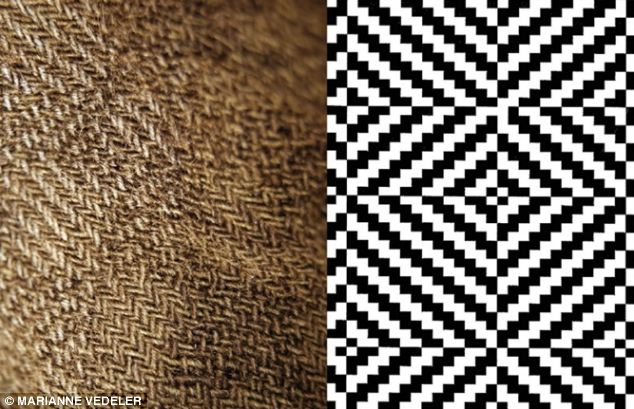
Iron age tunic. Reconstruction: Marianne VedelerWhen the archaeologists found the tunic on the glacier, it was possible to discern a diamond pattern in the textile, as long as the tunic was wet. The distinctive weaving technique used to make this pattern is known as diamond twill. This is held to be quite advanced.

“Two colours were used in the tunic to create a mottled pattern. The combination of the diamond twill weave and this pattern is unusual, and it is precisely this combination that we intend to copy”, she continues.

The underwool from the wild sheep can be sorted in shades from pale grey through to dark grey. For the recreation, Vedeler has chosen to use the palest and darkest shades.

Bronze Age weaving

The spun woollen yarn will be woven on a vertical warp-weighted loom, which is the oldest kind of loom we know of:

“The loom is simple, but time-consuming to use,” says Vedeler.

Consisting of a simple upright frame with two horizontal beams, the loom is leant against a wall. The vertical warp threads hang freely from the upper beam. To keep the warp threads taut, stones or other heavy weights are hung from the bottom of bundles of warp threads. The weaving is done from the top of the loom downwards and every line of weft thread is beaten tightly in place with a sword beater.

The textiles will be woven by handweaver Lena Hammarlund from Gothenburg in Sweden. Lena specializes in reconstructing prehistoric textiles.

Once the textile has been woven, the two tunics will be sewn by tailors at the traditional craft business Heimen Husflid in Oslo.

From Nordic Food to Nordic Wool

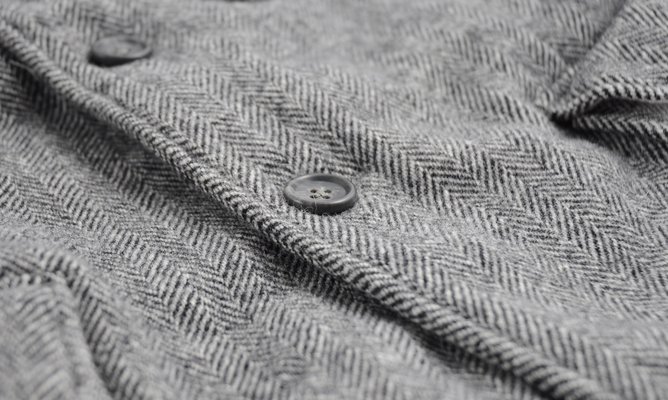
Woolen Jacket inspired by Norwegian Traditions

Marianne Vedeler hopes the reconstruction will inspire Norwegian designers to create new, modern textiles as had the wild food of Scandinavia been the inspiration for restaurants like world-famous Noma.

“Clothes were not consumer items in the Iron Age. It was important to be able to re-use clothing, and in those days clothes lasted a long time. Today, we spend enormous resources on clothes. And modern clothes are not durable. If we can use local raw materials and create clothing of high quality, it will be good for us all. We are therefore hoping that designers will be inspired by this example of old, Norwegian design. If we can create modern textiles from a prehistoric design, we hope also to be able to give a boost to the Norwegian wool industry. Sadly, much of the wool from the old sheep breeds is currently wasted,” adds Vedeler, who, in company with ethnologist Ingun Grimstad Klepp of the National Institute for Consumer Research, and journalist Tone Skårdal Tobiasson, the author of a number of books about fashion and design – has made an all-out effort to rectify this through the “VikingGold” project.

SOURCE:

Recreating clothes from the Iron Age
by Yngve Vogt

Villsau

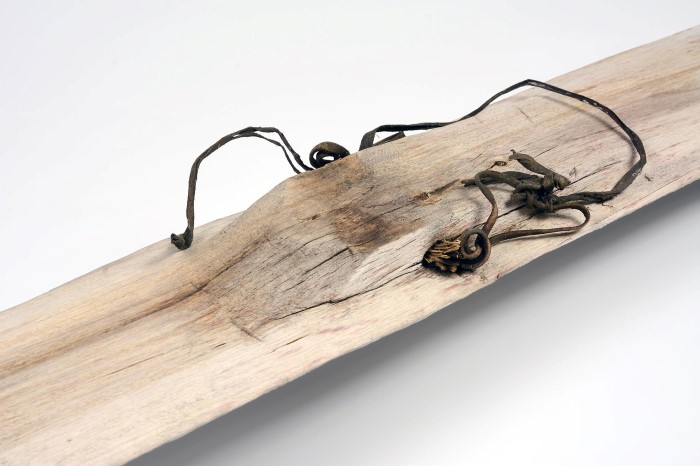
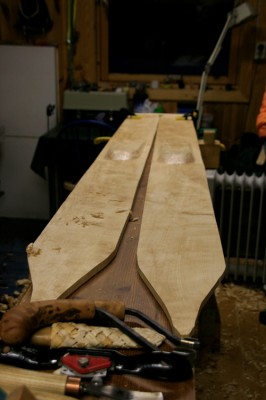
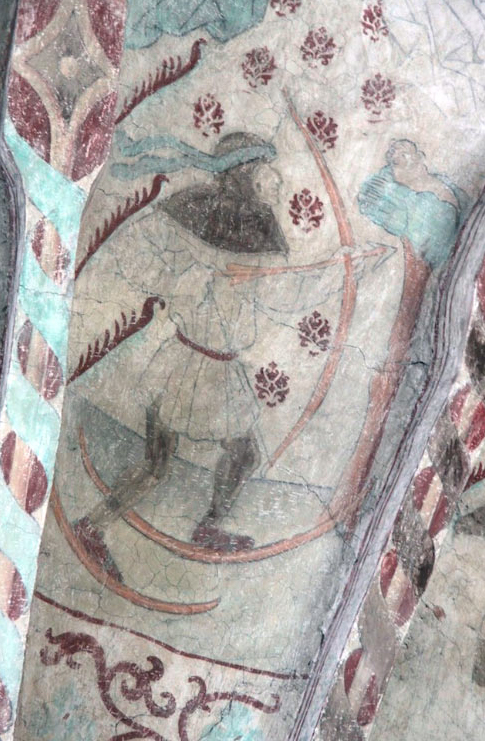
Another find from Lendbreen – Old Skies

READ MORE:

Out of the Norwegian Glaciers: Lendbreen – a tunic from the early first millennium AD
By Marianne Vedeler and Lise Bender Jørgensen, Lise
In:  Antiquity 2013,  Vol. 87 No. 337 pp. 788–801
ISSN 0003-598X. 87(337)


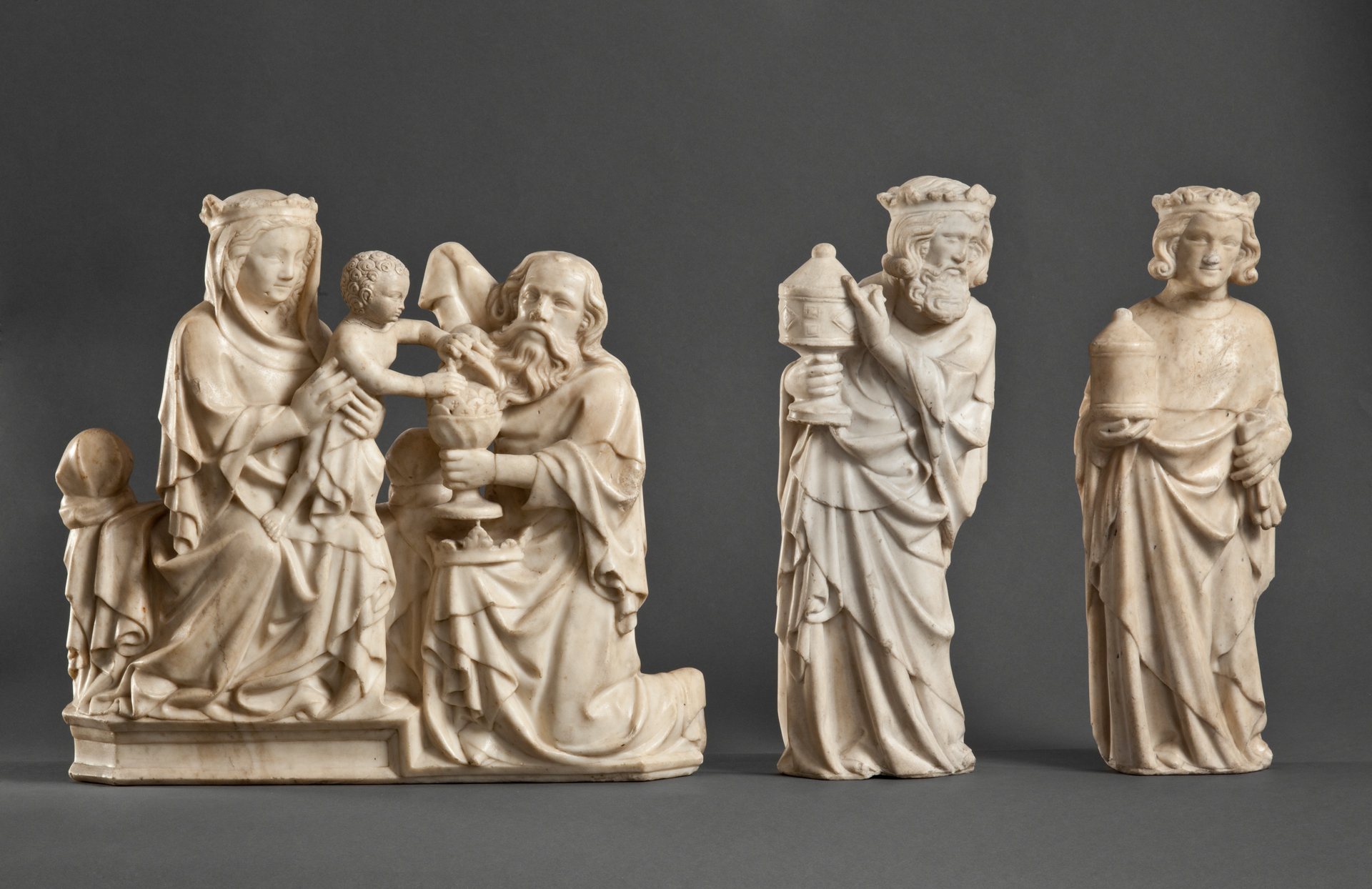
Museum Schnuetgen,Anbetung der Hl. 3 Koenige,Hochaltar,Köln,Inv.Nr. K210

The Three Magi in Cologne 1164 – 2014

This year Cologne celebrates the 850th anniversary of the arrival of the three Magi with several exhibitions

The city of Cologne in Germany has been celebrating its magnificent trademark – the Three Magis – all year. The occasion is the 850th anniversary of the arrival of the relics in the city.

The remains of the Magi were brought to the Cathedral in Cologne in 1154 after having been pillaged from the Italians by the Archbishop Rainald of Dassel. During the Middle Ages their relics transformed the city into one of the most beloved pilgrimage centres in the Western World. This year the city celebrates the 850-anniversary with a series of events and several exhibitions.

Caspar – Melchior – Balthasar

Caspar-melchior-Balthasar in Cologne 2014
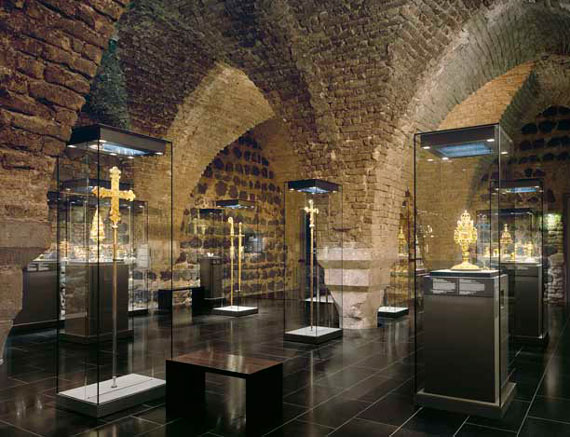
The Treasury in the Cathedral of Cologne. © Dombauhütte Köln / Foto: Matz und Schenk

The Cathedral in Cologne, where the relics of the three Magi are still revered, celebrates the anniversary with an exhibition focusing on the history of the veneration of the three saints. This is accomplished by showing the different locations of the famous reliquary by Nicholas Verdun in the Cathedral as well as exhibiting the impressive collection of other golden treasures belonging to the Cathedral. In the entrance hall to the Domforum visitors may get an introduction to the full story. In the library a series of manuscripts are exhibited, amongst those the Limburger Evangeliar.

Foremost, however, an exhibition in Museum Schnütgen on “The Magi” tells the story and shows the art, which these three symbols of generosity stimulated.

The earliest piece of art in the exhibition is a 3rd century tomb slab from the Vatican Museum; one of the most recent is an 18th century Neapolitan nativity scene with about 300 figures from the Diözesanmuseum (Diocesan Museum) in Freising . Whether it is a 5th century ivory diptych from the Milanese Cathedral Treasury, marvelous 10th and 11th century Ottonian book illuminations from libraries in Bremen, Rome and Göttingen or a unique 14th century Madonna from the Metropolitan Museum in New York – practically all of the exhibited works are in and of themselves worth a trip to Cologne.

A Reliquary from Limoges ca. AD 1200 © National Museum of Copenhagen

The earliest reliefs and objects still adhered to the traditions set by ruler portraits from the Antiquity. However, the scene soon became imbued with almost fairytale-like qualities. The Wise Men mentioned in the Gospels became kings and the Virgin Mary in the stable of Bethlehem was transformed into a sumptuously clothed queen sitting upon a throne, while her divine child received both adoration from the shepherds and gifts from the Magi.

Since the 10th century at the latest the representation of the Mother of God sitting on the “Throne of Wisdom” became one of the most important cult images to grace the interior of churches. Highlights in this section of the exhibition are precious examples of wooden and ivory sculpture, but also the stone Romanesque choir screens from the Rheinisches Landesmuseum (Rhenish State Museum) in Bonn.

The central theological significance of the Adoration of the Magi is reflected in compositions depicting them next to scene of Crucifixion. The two themes were often placed in juxtaposition to each other, be it on a 12th century book cover or in 14th and 15th century panel paintings. The exhibition features a number of especially ornate examples.

Many representations also use the star as a leitmotif to embody the cosmic dimension of Christmas. These include the mitre from Sainte-Chapelle in Paris, one of many loans from the Musée de Cluny, and a diptych from the Museo del Bargello in Florence.

Royal affluence, oriental splendour and exotic paraphernalia came to predominate later on, particularly in paintings from the late 15th and early 16th centuries. The exhibition shows this by exhibiting prominent works from all over Europe. Several valuable and rare textiles and works of goldsmiths, among them pieces from the Musée des Tissus in Lyon and the Grünes Gewölbe (Green Vault) in Dresden, make it possible to experience three-dimensionally objects like those portrayed in the paintings.

An extensive catalogue has been published for the exhibition, also in English. It can be purchased at the museum for the special price of 39 €, in stores for 49.90 €.

VISIT:

Die Heiligen Drei Könige. Mythos, Kunst und Kultur
Cologne, Museum Schnütgen
25.10.2014 – 25.01.2015,

Caspar – Melchior – Balthasar. 850 Jahre Dreikönigenverehrung im Kölner Dom
Cologne Cathedral
19.07.2014 – 25.01.2015

SEE MORE:

1164 -2014 in Köln. Reich Beschenkt…

Der Schrein der Heiligen Drei Könige

FEATURED PHOTO:

Anbetung der Heiligen Drei Könige vom Hochaltar des Kölner Domes, Köln, um 1310-1322, Museum Schnütgen, Köln © RBA / W. Meier

Qur'an fragment Tübingen University Library Ma VI 165

Sensational Fragment of Very Early Qur’an Identified

A fragment of a Qur’an in the University Library may be dated back to the 7th century

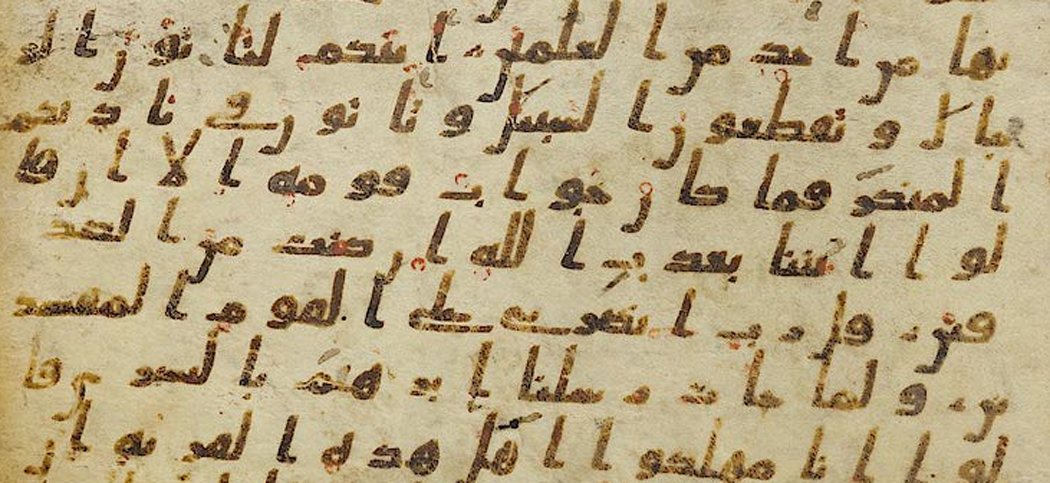
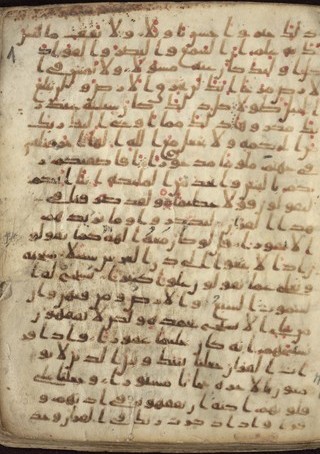
Qur'an fragment Tübingen University LibraryExperts have recently studied three samples of a fragment of a Qur’an, which has been in the University Library in Tübingen since the end of the 19th century. Their conclusion is that the parchment with a 95.4% statistical probability can be dated to the period between Ad 649 -675. It thus seems to have been written 20 – 40 years after the death of the Islamic prophet Muhammad. Such an early date is really a world record. The date has been established through modern C14 – radiocarbon – analysis at a lab in Zürich.

The study has been undertaken in connection with a wider research project funded by the German Research Society (DGF) and the corresponding French institution: Agence National de la recherché (ANR). The project aims to study the Qur’an as a material object. Focus is – apart from technical studies like these – on palaeographic analysis.

The Tubingen manuscript with the signature Ma VI 165 belongs to a collection of more than 20 Qur’an fragments in the holdings of the University Library: The parchments are inscribed in Kufic script, one of the oldest forms of writing of Arabic. The handwriting had attracted the attention of scientists because of its characteristic style and format. It is characterised as a very early script variant (ḥiǧāzī); however, the dimensions of the letters are quite small in comparison to what is common in other early manuscripts. Hence the very early date has surprised the experts. Another early manuscript is the so-called Sana’n-fragment, which has been determined too be earlier than AD 671.

The Qur’an fragments are digitally available here

The investigated Qur’an manuscript with the signature Ma VI 165

READ MORE:

Project Coranica 

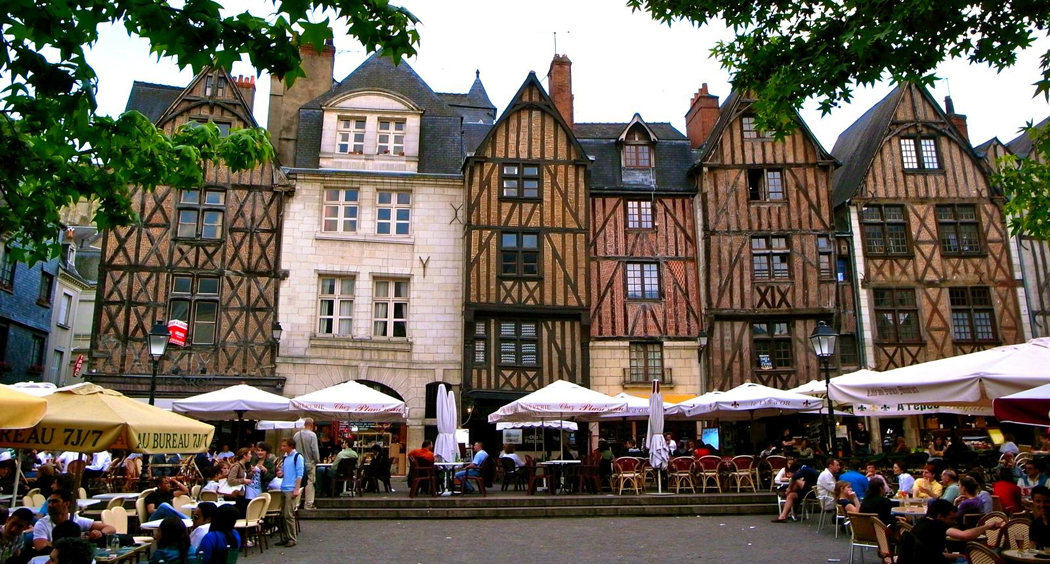
Tours - Place Plumerau

Tours – a Divided City

Tours was very early on a fortified city with a flourishing Christian community on the outskirts. The two parts of the modern city still seem to reflect this ancient historyTours was very early on a fortified city with a flourishing Christian community on the outskirts. The two parts of the modern city still seem to reflect this ancient history

Read more