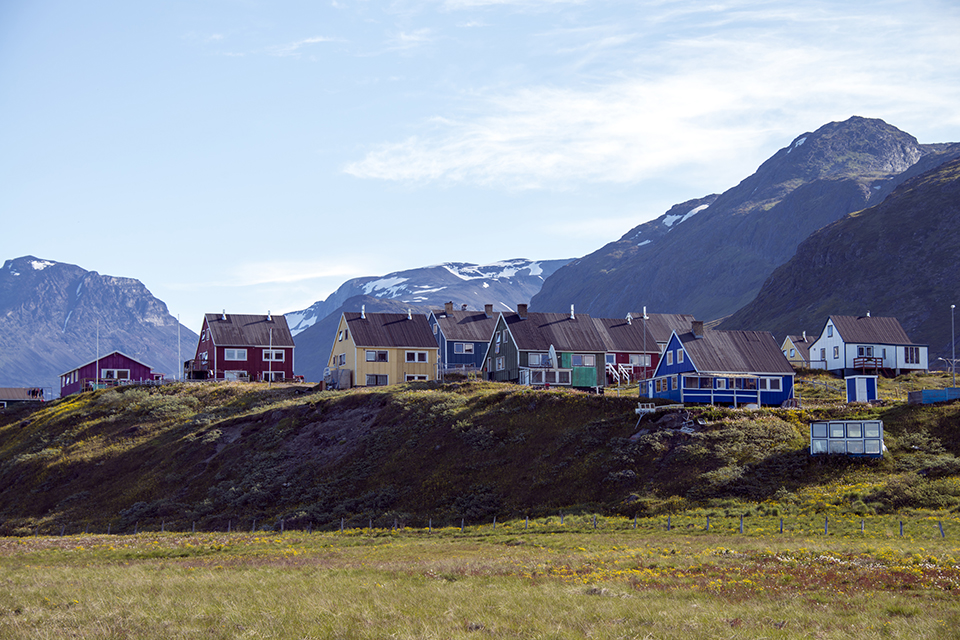
When Greenland was settled by Norse migrants in AD 997, it was uninhabited. From the outset it became part of the Danish–Scandinavian world
Greenland and Denmark: Short Historical Summary
- Greenland was settled by Norse migrants around AD 1000 and was uninhabited at the time; earlier Dorset peoples had disappeared, and Thule Inuit arrived only around AD 1250.
- The Norse settlers were part of the Danish–Scandinavian world, sharing language, culture, church structures, and political ties originating in the early Danish kingdom (established by the 6th century).
- During the Viking Age, Danish-led Scandinavian expansion reached Greenland and briefly formed part of the North Sea Empire under Cnut the Great (c. 1016).
- Greenland was governed via Iceland and later Norway, but church administration and dynastic power remained closely tied to Denmark.
- From 1397 (Kalmar Union), Greenland was formally part of the Danish realm.
- Although Norse settlements were abandoned by c. 1450, Danish kings continued to assert sovereignty and send expeditions; Greenland remained recognized as Danish territory.
- In 1814, Denmark lost Norway but explicitly retained Greenland and Iceland; Iceland became independent in 1944, Greenland did not.
- Greenland gained Home Rule in 1979 and expanded Self-Government in 2009, controlling most internal affairs.
- Foreign policy and defense remain Danish responsibilities due to NATO membership and U.S. defense treaties (1941/1951), which already allow U.S. military presence.
- Greenland is not in the EU but has special agreements; it is part of NATO through Denmark.
- Recent U.S. interest in Greenland is attributed to geopolitical signaling, access to rare-earth resources (e.g., Kvanefjeld), and ideological projects by U.S. techno-libertarian actors, not military necessity.
The Early Medieval Danish Kingdom dates back to the 5th century, when a group of former Scandinavian mercenaries mixed with Saxons, Goths, Slavs and other people joined up, adopted the name Danir, and went on to conquer vast stretches of what later became the Kingdom of Denmark. As such, the “King of the Danes” was recognised in Frankish sources from the 6th century, while Latin sources from Ravenna called it “Dania.” Lists of these very early kings in the heroic poem Beowulf, composed sometime in the 7th century and written down around AD 700, tells us that at that time, Dania was a recognised polity on par with other early medieval kingdoms such as the Anglo-Saxons.
Later, during the Viking Age, Scandinavians engaged in a wide-reaching diaspora conquering land from Novgorod to Kyiv in the east, and further west—from Normandy up to the Danelaw in western England, over to Ireland and all the way to Greenland and Vineland. Across this Scandinavian world, the common Germanic language was known as dǫnsk tunga, literally “the Danish tongue”, indicating the de facto leadership in the more spectacular ventures which these people engaged in, such as the conquest of Normandy and the Danelaw. This language, in its many forms and dialects, and today subsumed under the term “Norse” was in the 10th century spoken and understood from Iceland to Kyiv. This was the language of the Northmen, another epithet known from Ravenna in the 6th century. From a linguistic point of perspective, the language was formed in the aftermath of the climatic upheavals and demographic decline in the 6th and 7th centuries.
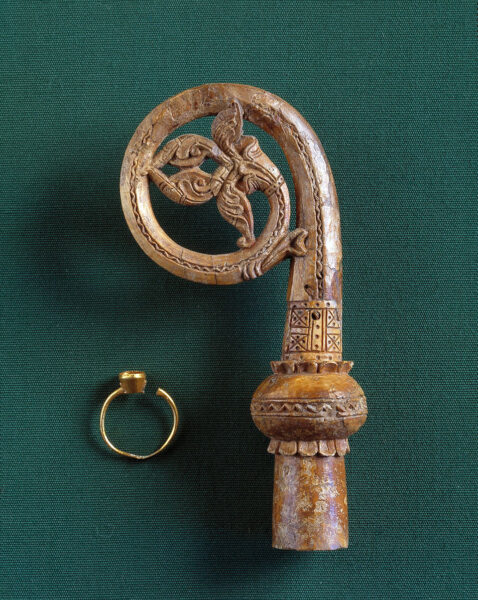
This period of conquest and diaspora culminated in the 10th century, when scions from the Danish ruling dynasty settled across the vast stretches of Europe and the Arctic, forging the realm ruled by Cnut the Great in 1016. This consisted of Denmark, England, Norway, and parts of present-day Sweden. As Iceland was at least affiliated with Norway at that time, Iceland may be said to have been part of this North Sea Empire. Included here would have been the brand new colonies in Greenland and Newfoundland.
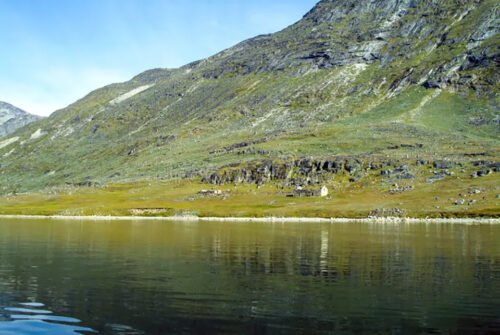
These two colonies had been founded around the year 1000. At that time, Greenland was literally empty of people, as the Dorset people had by then virtually disappeared from the northernmost strip of Greenland. This fact is often willfully overlooked by their later heirs, the Thule Inuit, who arrived in the region around AD 1250 and who constitute the present-day indigenous people inhabiting Greenland. The Dorset and the Thule peoples were, according to DNA as well as culture, were two radically different populations. Nevertheless, the Inuits prefer to talk about the Dorset people as “paleo-inuits”, for obvious reasons wishing to bridge this time-gap. The inconvenience caused by the fact that they were never the “indigenous” people per se, is of course nothing but a curiosity. However, in the effort to forge a proper Greenlandic identity, it plays a role. From a scholarly perspective, it just serves to underline the fact that the history of “peoples” is always a question of ethnogenesis – the stories we tell, of where we come from and who we are. Unfortunately, such stories are usable for PR purposes by the current White House administration.
Medieval Greenland
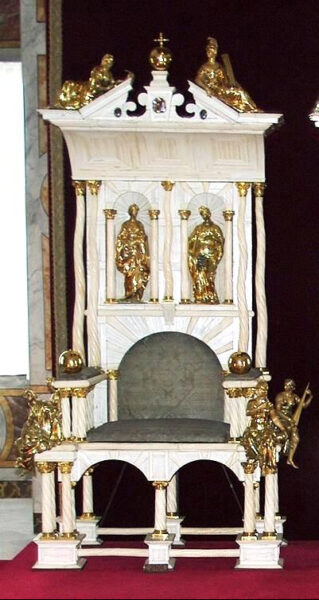
Arguably, Greenland was ruled from Iceland until 1262, when the latter island was subsumed by the Norwegian Kingdom, established as a distinct polity after Cnut the Great’s empire collapsed in the mid-11th century. However, in terms of the church on Greenland (and Iceland), the dioceses were first assigned to Bremen (Germany) and later to Lund (present-day Sweden), the medieval Danish archdiocese. First in 1152, the two northernmost dioceses were assigned to Nidaros in Trondheim. Already at that time, Greenland may be said to have “belonged” to the Norwegian kingdom. We may say that for ca. 250 between 1152 and c. 1397, Greenland was formally ruled from Norway. However, as consorts in Norway and Sweden during this period were primarily picked from neighbours such as Denmark, Sweden and Scotland, while Danish Queens were picked from wider Europa, it is safe to say that to a large extent, Denmark was still the leading nation in Scandinavia controlling the diplomatic interface towards the south (and not least the Holy Roman Empire and the Hanseatic league).
However, in 1397, the Norwegian kingdom signed the Kalmar treaty, formally joining a pan-Scandinavian union of the three legally distinct kingdoms governed by the ruling monarch in Denmark. Since that date – 1397– Greenland was once again part of the Danish realm, which has been the case until now.
Fifty years later, the Norse settlers “died out” or “left” because of an amalgamation of deteriorating walrus ivory exports, the Black Death, climate change, or conflicts with the Thule Inuit, who were moving south due to the shifting patterns of prey casued by the Little Ice Age. Exactly how the events played out continues to be debated. However, the fact remains that although the Norse settlements were abandoned after c. 1450, the Danish kings continued to mount expeditions to know the status of their vast province (and if possible, exploit it). Ventures are known from 1473, 1579, 1581, 1585, 1605, 1619, 1636, 1652, and finally in 1721, when a missionary effort was launched. In between, numerous other expeditions were mounted by trading companies from England, Portugal, Germany, etc. The hiatus between 1473 and 1579 was probably caused by the events following the protestant Reformation. However, Greenland continued to be a well known and recognised part of the Danish Realm.
After 1814
However, in 1814, at the Congress of Vienna, the English succeeded in destroying the global competitor Denmark by severing the kingdom of Denmark–Norway, “giving” Norway to the Swedes. However, at that point, Greenland and Iceland were specifically reserved for the Kingdom of Denmark. Until 1944, both islands were ruled from Copenhagen. At that point, Iceland gained its independence, while Greenland retained its status as Danish. In 1979, home rule was established according to a treaty, and then i 2009 – as part of a renewed effort to secure future independence for the Greenlanders – this treaty was renegotiated, securing the Greenlanders full legislative and administrative responsibility for a number of internal affairs, and a promise that should the Greenlanders wish to take over additional institutions, they would be fully welcome to do so.
Only one particular area of responsibility was reserved, namely foreign policy and defence. The reason is that there exists a treaty from (1941) 1951 allowing the USA to consider the whole of Greenland as part of its defensive sphere. Accordingly, there is no hindrance whatsoever to the USA establishing bases of any kind, nor other defensive installations.
Greenland is – as is Denmark – a full member of NATO. By choice, and due to fishing rights, Greenland is not a member of the European Union but has a special advantageous connection (free travel, etc.). Also relevant is a treaty from 1917, when the USA bought the Virgin Islands. In this treaty, we read:
“In proceeding this day to the signature of the Convention respecting the cession of the Danish West Indian Islands to the United States of America, the undersigned Secretary of State of the United States of America, duly authorized by his Government, has the honour to declare that the Government of the United States of America will not object to the Danish Government extending their political and economic interests to the whole of Greenland.”
Present Crisis
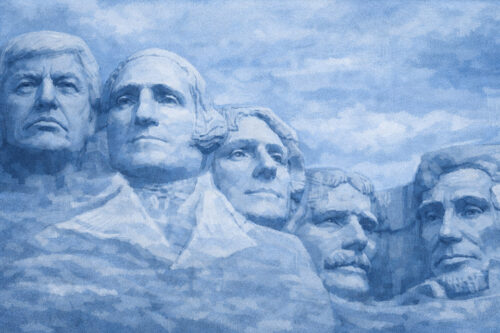
Nonetheless, on a number of occasions, Trump and his administration have declared that the USA needs to control Greenland for security purposes; most recently the claim has been voiced following the dramatic coup in Venezuela.
The reason why is not easily understood. As stated, the USA already has full power of attorney to establish bases or other installations for military purposes wherever and whenever it might feel this is necessary. So why?
Three explanations are offered
- First, Trump is looking to his legacy, and Canada seems too large a “lump” to swallow in order to be remembered as the president who, for the first time in 75 years, enlarged his nation. Greenland is “easier.” Albeit the Danish realm may be the oldest kingdom in the world, it is considered a small and geopolitically insignificant player. On the other hand, Denmark is a member of NATO and the EU. The latter is siding with Denmark in this matter.
- Second, Trump and his entourage of techno-lords wish to mine for rare metals. In particular, they are interested in exploiting the extremely valuable Kvanefjeld deposit, which lies in the south of Greenland and where the logistics of extraction, processing, and shipping are surmountable. However, mining at Kvanefjeld is a contentious matter for the government of Greenland, as a by-product of mining there would be the extraction of uranium, followed by an alleged widespread poisoning of the surrounding landscape, which happens to be the greenest part of Greenland. Since 2013, political decisions have alternated as to whether mining there should be allowed or not. In 2021, a new government decided to stop the extraction of uranium, leading directly to a demand for USD 10–11 billion from Energy Transition Minerals, partly owned by Australian and Chinese interests. Currently, the arbitration has floundered, and the case is heading for the court in Nuuk.
- Third, inspired by Neal Stephenson’s novel Snow Crash, the present-day proponents of the Technate, Peter Thiel, Elon Musk, Curtis Yarvin, Balaji Srinivasan, and other prominent Silicon Valley techno-lords have for a long time had their eyes on Greenland as the future location for their ultra-libertarian “seasteads,” privately governed “freedom cities.” Hence their interest in taking over the world’s largest island, where only 57,000 people live. As these techno-lords have bankrolled Trump’s re-election campaign, they now look for recompense.
FEATURED PHOTO:
Narsaq with the Kvanefjeld in the backgorund. Dreamstine/Faure 41090046
SOURCES:
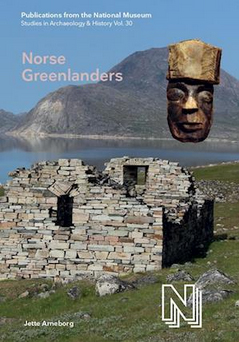 Norse Greenlanders.
By Jette Arneborg
Series: Publications from the National Museum. Studies in Aarchaeology and History, vol 39.
Syddansk Universitetsforlag/Nationalmuseet 2024
The First People in the Avanersuaq/Thule Region
By Mikkel Sørensen and Torben Diklev
Series: Publications from the National Museum, Studies in Archaeology & History Vol. 31
University Press of Southern Denmark 2025
So You Want to Own Greenland?
Lessons from the Vikings to Trump
Af Elizabeth Buchanan
Hurst & Co Publishers Ltd 2025