Pollen studies from the area around Lake Constance in southern Germany show that biodiversity increased dramatically after around AD 500, before reaching a maximum around the year 1000. The question is why?
- Pollen studies from the Lake Constance region show a sharp rise in biodiversity after c. AD 500, peaking around AD 1000 and petering out after AD 1350.
- Biodiversity levels before AD 500 were relatively low, including during the Roman Climate Optimum (c. 200 BC–AD 200), indicating that climate alone does not explain biodiversity patterns.
- Between AD 500 and AD 1000, biodiversity increased by approximately 48 per cent despite climatic deterioration.
- Biodiversity continued to rise through the early medieval warm period (c. 900–1350) and declined sharply after c. 1350.
- Major population collapses following climatic shocks and plague (c. AD 536–542 and after 1348) do not show a direct correlation with biodiversity change.
- Increased biodiversity was primarily driven by arable weeds and grassland species linked to traditional agricultural practices. However, imports of plants from the South and the East contributed.
- Key drivers included manuring, mixed farming, forest clearance, drainage, land reclamation, and settlement expansion between c. 800 and 1000.
- Monastic land management and expanded transport and communication networks facilitated agricultural intensification and species migration via trade.
- After c. 1500, biodiversity did not return to medieval peak levels despite population growth.
- This failure to recover is linked to the rise of monoculture and market-oriented cash crops such as flax and hemp.
- The study concludes that traditional “High Nature Value” farming systems, characterised by sustained low-intensity human disturbance, can enhance biodiversity.
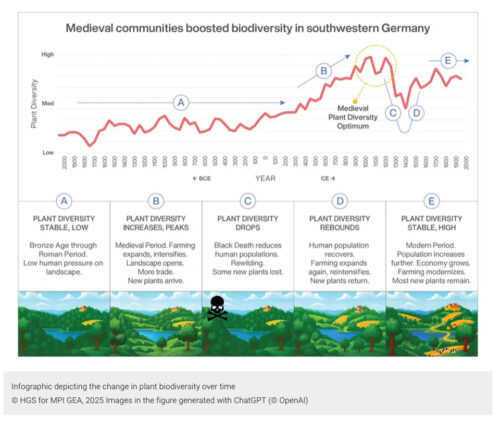
Infographic depicting the change in plant biodiversity over time
© HGS for MPI GEA, 2025 Images in the figure generated with ChatGPT© Press Release Max Planck Gesellschaft
Lake Constance in southern Germany is, in many respects, an enormously interesting place from a historical perspective. Embedded within the Rhine, it lies at the foot of the Alps on the border between what are now Germany, Switzerland and Austria. The precise delineation of borders is complex. The lake also functions as a boundary between the upper (Alpine) section of the Rhine and the middle course of the river, which begins at the eastern end of the lake. The lake covers an area of 473 km² and reaches a maximum depth of 252 m. At its centre lies the island of Reichenau, which divides the lake.
Lake Constance is a classic glacial lake dating back to the period following the last Ice Age. Humans have frequented the area since around 8000 BC and have settled there since approximately 4000 BC. These early Stone Age peoples lived in houses built on stilts extending out into the lake. Around the beginning of the Common Era, the area was incorporated into the Roman Empire (the lake is first mentioned in 43 BC). After the fall of the Roman Empire, the region was settled by a Germanic tribe known later known as the Alamanni.
Ups and downs in the Biodiversity index
Because of the uncertain border arrangements on the lake and the importance of the Rhine as a water resource, considerable effort has long been devoted to mapping the natural conditions of the region, including the state of fisheries in the lake, which were once entirely exceptional but are now almost destroyed. Likewise, over the years there has naturally been sustained interest in documenting biodiversity in the lake’s immediate surroundings.
Recently, a series of pollen diagrams from six locations around the lake has been published in order to reconstruct past vegetation over the last 4,000 years.
What is particularly interesting is that these analyses demonstrate that biodiversity, measured as the abundance of rare species, appears to have depended on factors other than climate alone.
In brief, the study suggests that biodiversity was relatively low between approximately 2000 BC and around AD 500. This is despite the fact that one of the commonly cited reasons for the success of the Roman Empire is the climatic optimum that characterised the period from roughly 200 BC to AD 200 – often referred to as the “Roman Climate Optimum” – during which conditions were relatively warm and the growing season for cereals was longer than in later periods.
Around AD 500 – when a marked climatic deterioration set – there was, however, a substantial increase in biodiversity of 48 per cent. This trend continued until around the year 1000, when a new warm period began, lasting until approximately 1350. After this point, the biodiversity index declined sharply, before beginning to rise again around 1500 and continuing to do so into modern times. It has, however, never fully regained its peak level of around 1350.
This pattern is noteworthy because it does not immediately or unambiguously reflect the declines in population density that undoubtedly occurred after around AD 536–542 and again after 1348, when climate and plague combined to produce population losses of probably at least 40 per cent (although with considerable regional variation). One might intuitively expect a close correlation between population density and ecological regeneration, but this does not appear to be the case. These findings have, moreover, been echoed by similar studies across the wider region of Baden-Würtemberg.
The researchers therefore conclude that the human facto – specifically agricultural cultivation – was not unequivocally “bad” for biodiversity. How, then, can this be explained?
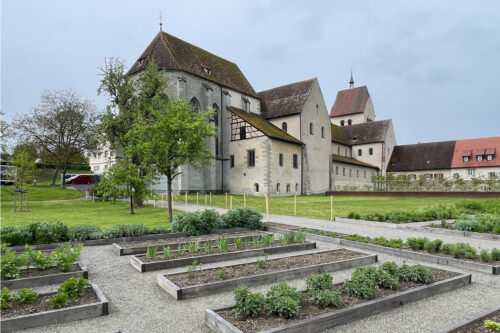
One explanation lies in the fact that the plant types driving this diversification process largely consisted of so-called arable weeds and grassland species, probably promoted by the nutrient enrichment resulting from manuring and cultivation practices associated with the transition to infield/outfield farming systems after around AD 500. Garden plants – vegetables, herbs, fruit and nuts – dominated during the period from the beginning of the Common Era to around AD 260, and again after AD 1000. The first ever garden treatise was composed by Strabo at Reichnau, where his garden has been recreated. In addition, there was a migration of plant species from southern and eastern Europe that can be identified in the period approximately 800–1000, when connectivity increased in step with rising levels of migration, trade and urbanisation.
The Emergence of a New Agricultural System
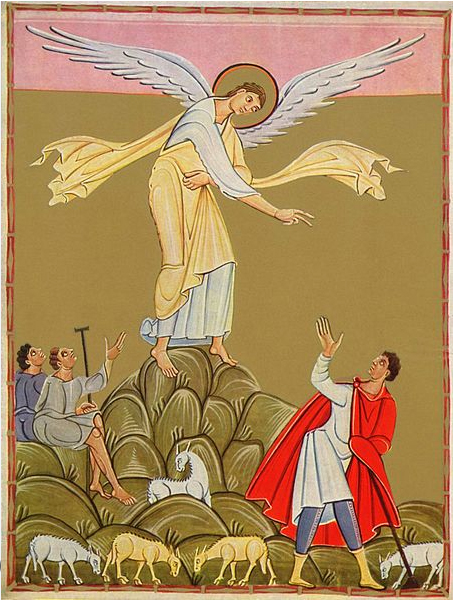
The lake is characterised by a mild microclimate and therefore attracted the Church at an early stage. As early as the fifth and sixth centuries, Irish missionaries settled by the lake at St Gallen. Slightly later—around AD 700—another monastery was founded on the island of Reichenau. Both monasteries played a crucial role in the control exercised by medieval rulers over southern Germany and the Alpine hinterland. As a result, they were actively supported by the Carolingians and later by the Holy Roman Emperors, and extensive archives have been preserved that provide detailed evidence of agricultural organisation in the area. Furthermore, Lake Constance and Reichenau formed a fixed stopping point on the pilgrimage route from Scandinavia to Rome and Santiago de Compostela.
The researchers behind the present study have now examined this material in depth. One of the noteworthy findings is that there appears to be a direct relationship between the forest clearances that took place in the period from approximately 800 to 1000—including drainage works, dyke construction and general land reclamation—and the observed increase in biodiversity. These clearances also led to the establishment of new villages and a significant expansion of the road network.
This development was accompanied by a shift from intensive cultivation of closely clustered fields to a more extensive farming system involving a much larger number of animals: oxen for traction, horses for transporting food to towns, pigs and poultry as market produce, and so forth. This was complemented by the widespread movement of people—from pilgrims to crusaders—who passed through or stopped at this important hub.
All of this came to an abrupt halt when plague struck again after 1348. The question then arises as to why a comparable development did not occur after around 1500, when population growth resumed. The answer lies in a fundamental change to the agricultural system. At this point, attention shifted towards early modern monocultures and so-called cash crops, such as flax and hemp. A key concept here seems to be that of “disturbance”, which accompanied this older agricultural system.
In their conclusion, the researchers write: “Modern research demonstrates that High Nature Value (HNV) farming systems and their associated management practices are beneficial to biodiversity (47), and that, in Europe, the maintenance of the biodiversity of many ecosystems depends directly on traditional types of agricultural land use.” Or, as the researchers themselves put it: “Learning from the Medieval Plant Diversity Optimum: Culture Can Drive Biodiversity.”
FEATURED PHOTO:
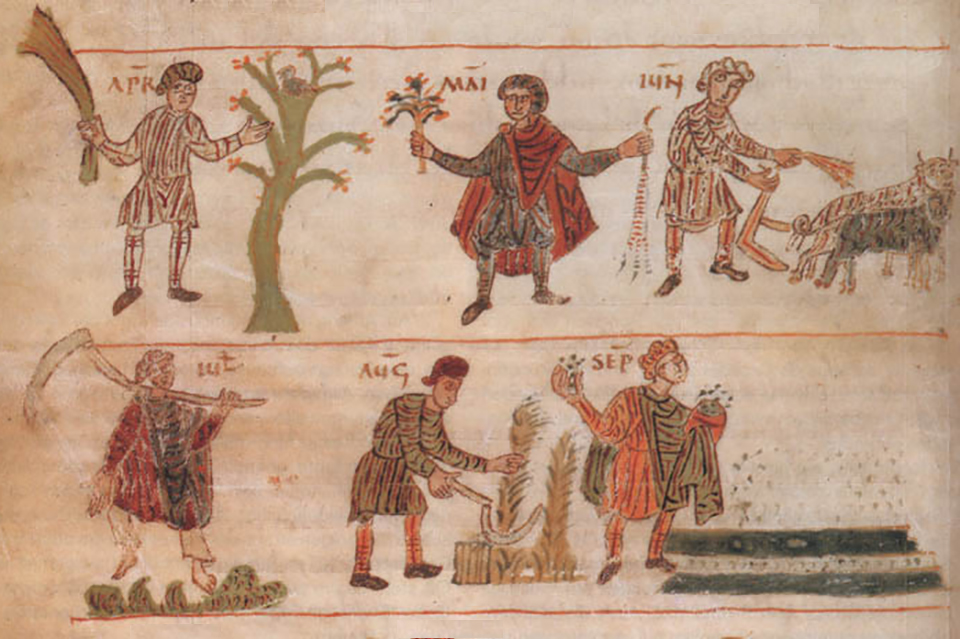
Medieval work during the summer months © Raum Salzburg, 818. Bayerische Staatsbibliothek, Clm 210, fol. 91v.. Source Wikipedia
SOURCE:
Cultural innovation can increase and maintain biodiversity: A case study from medieval Europe
By Adam Spitzig, Manfred Rösch, Jessie Woodbridge, and Adam Izdebski
PNAS 2025
READ MORE: