NEW RESEARCH PROJECT: Giants, trolls, elves, sorceresses, dragons – this is only a tiny fraction of the many otherworldly beings, which people the Icelandic fornaldarsögur…
The fornaldarsögur (legendary sagas) is a really entertaining genre of medieval Icelandic Sagas. Here the authors tell strange and wonderful stories set in Scandinavia’s legendary past long before the settlement of Iceland. In these sagas heroes encounter giants, trolls, hags, dragons and princesses galore, while generally adventuring and performing magic.
Much ink has of course been spilt on the literary genre as such. Often written in a mixture of verse and prose, this in itself poses a challenge. However, until now few have tried to figure out, what the authors and their audience actually believed. How did saga authors and their contemporaries conceive of these Otherworld beings and the human encounters with them? As tangible ephemeral beings or useful literary conventions?
In a new research project, Old Norse philologists and folklorists at the University of Tartu in Finland are raising this question in an interdisciplinary context. This will be examined through an analysis of the sagas concerning function, conditions, dimensionality and ontology of the supernatural encounters. The results will be interpreted in a frame of a non-narrative comparative material, which also includes sources from the Scandinavian 15th to 17th centuries not used in this context so far. Theoretical concepts from folklore and history will be used.
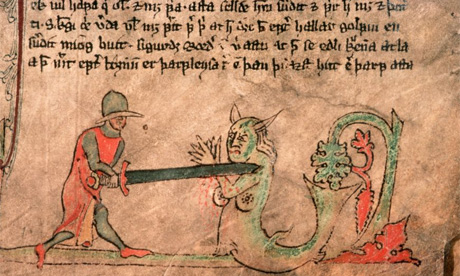
Source: Scandinavian Studies at the University of Tartu
This is indeed most pertinent. As late as December 2013 Icelandic Elf advocates joined forces with environmentalists to urge the Icelandic Road and Coastal Commission and local authories to abandon a highway project, building a direct route from the tip of the Aftanes peninsula to the Reykjavik suburb of Gardabaer. They fear disturbing elf habitat and claim the area is particularly important because it contains an elf “church”. One may very well ask: what goes on here! Apparently this is also part of what the research project aims to focus on.
The project is launched at an international conference in June 2014 in Tartu:
Sagas, Legends and Trolls: The Supernatural from Early Modern back to Old Norse Tradition.
Full presentation of the research project:
Encountering the Otherworld in Medieval Nordic Literature – New Perspectives
For a long time supernatural elements in the Old Norse saga literature (the 13th to the 14th centuries) were highly neglected among the scholars. The sagas were famous for their “realism”, and most scholars tended to focus on elements that would fit in this view, which included valuable studies on feuds and the social structure of the sagas, but left little room for encounters with Otherworld beings. During the last decades this has changed. The fantastic fornaldarsögur have been the subject of studies collected the three volumes in the series edited by Ney et al. 2003, 2009 and 2012, and the Otherworld motifs was discussed in a lot of the contributions in McKinnell et al 2006.
There is no doubt that these studies have deepened our understanding of especially the fornaldarsögur. The Íslendingasögur, however, have not been equally successfully explained regarding supernatural motifs. A main reason is their “realistic” character and their setting in an Icelandic society, which has been difficult to reconcile with encounters with Otherworld beings. Scholars tend to make a division of the Íslendingasögur in two groups, one “classical”, where the sagas are based on oral tradition, perceived as fundamentally historical, and focusing on socially based conflicts between Icelanders, and one later “post-classical” group, where the sagas are fictitious works written by creative authors, focusing on fantastic events, influenced by the fornaldarsögur. Vésteinn Ólason 2007 is a typical representative of this view. The basis of this view is that supernatural elements in Íslendingasögur are seen as exceptions in the genre and as signs of fiction. Other scholars have noted that medieval Icelanders did regard supernatural beings as reality and they have questioned the exceptional character of such episodes. Ármann Jakobsson 1998 is an example of this. Ámann and Vésteinn share, however, a literary-comparative method, where Otherworld motifs in the Íslendingasögur are analysed in the light of other sagas, both fornaldarsögur and other Íslendingasögur. This has resulted in increased knowledge in the Íslendingasögur as literary works, but it has not solved the problem of how the Otherworld stories were conceived.
A few scholars have tried to analyse the basic view of the supernatural in Old Norse literature, and interesting contributions have been made by e.g. Mundal 2006 and Mitchell 2006, who have used the concepts ‘supernatural’ vs. ‘fantastic’ to explain the difference concerning perception of truth. An approach that has been rare in these contexts is, however, the folkloristic. There are scattered references to Max Lüthi in Aðalheiður Guðmundsdóttir 2006 and Mitchell 2006, mainly to describe the distinction between fornaldarsögur and Íslendingasögur, but folkloristic concepts have hardly been used in the analysis of Íslendingasögur. An interesting attempt made by John Lindow 1986 to use Lauri Honko’s description of the Otherworld encounter in the Ingrian memorats was never followed up. The PI made an analysis of the Otherworld encounters in the Íslendingasögur using Max Luthi’s analysis of One-dimensionality (vs. Two-dimensionality) in Sävborg 2009. In Sävborg 2014 he argued for the use of later recorded folk legends as comparative material in the study of Íslendingasögur in addition to the contemporary saga literature. These approaches will be followed up in this project.
The purpose of the project is to examine one main question: How were the Otherworld beings and the human encounters with them conceived in the Íslendingasögur by the saga authors and their contemporaries? This broad question will be narrowed by focusing on some specific sub-questions: What is the ontological status of the being? What are the conditions or circumstances for the encounter? What is the origin of the being? What is the function of the encounter in the context? Were the encounters depicted understood as real/historical – or possibly historical – events, and thus a part of the belief, or as pure entertainment? Are there differences in these respects connected with the different genres and times of composition?
This research problem will be examined by the help of other theoretical approaches and by other comparative perspectives than usual in the research on the supernatural in the saga literature.
One of the new aspects of the projects is the choice of comparative material. The Old Norse contextual frame used in the analysis of the Íslendingasögur will not in first hand be other sagas, such as fornaldarsögur, for answering the questions above. Sagas are narrative works, and thus they are inevitably governed by narrative rules and influenced by traditional narrative patterns. In this project, the literary analysis is certainly relevant, but the primary focus is on what has not been examined before, the conception of the supernatural, which means that such comparison should wait. Instead, other types of Old Norse sources will be in the focus as means of interpretation. Here we have non-narrative sources, such as annals, laws, Landnámabók, learned works such as Konungs skuggsjá and Physiologus and theological works such as Homílíubók. This material will provide an alternative basis of understanding the conception of the supernatural in the Íslendingasögur. Only after a comparative analysis based on these works, the project turns to the narrative sources. Here, sagas telling of the contemporary or almost contemporary Iceland will be the comparative material used, primarily Sturlunga saga and the bishop sagas.
Also non-Old Norse comparative material is important for solving the problems of the project. Again, an alternative material will be used. Scandinavian sources from the late Middle Ages and the early Modern time (until ca 1700) will be used, and again the sources used will be non-narrative. This means e.g. court protocols and other legal documents from the 15th to the 17th century Sweden and Norway, pictures on maps and church paintings from the 15th to the 16th centuries, learned discussions about both contemporary claims (for example in Johannes Bureus Sumlen from late 16th century, where physical evidence for trolls is discussed) and the existence of Otherworld beings (e.g. Olaus Magnus Historia from the Mid-16th Century). This type of sources, between the time of the composition of the sagas and the time of the folklore recordings from the 19th and 20th centuries, has never been consequently used for examining the sagas (although Mitchell 2011 uses parts of this material, thus providing inspiration for the project). In the end, after a comparative analysis based on the sources mentioned, later folklore records will also be used. But again, the narrative texts such as folk legends will be avoided, since the distance to the events is clear and they are influenced by traditional and literary narrative patterns; they do not provide a reliable source for actual folk belief. Memorats, on the other hand, come as close as possible to such belief and will be used, though with reservation for the time gap to the sagas in focus of the project and thus analyzed separately.
Theoretically, most scholars working with similar topics have used philological or literary concepts and methods. This is the case with such important scholars as Ármann Jakobsson and Vésteinn Ólason. This is relevant here too, but since this project focuses a lot on the conception of the supernatural and the degree of belief, some folkloristic concepts will be used. Max Lüthi’s concept of One-Dimensionality (Lüthi 1992) is important, and the PI has adjusted it to better fit the saga material, also using the concept Two-Dimensionality (Sävborg 2009). These concepts concern the description of the encounter with the supernatural, but also seem to be connected (though not in a simple way) with the conception of them as realities. Honko 1964 presented a model, based on memorats from Ingria, where the conditions for an Otherworld encounter are formulated in connections with each other, e.g. perceptual conditions, psycho-physical conditions, violation of norm, cultural experience etc. In searching for patterns in the encounters in the Íslendingasögur, this model is highly valuable, which has been shown already by Lindow 1986. Linda Dégh’s claim that the legend is a genre for questioning and discussing the truth of a story rather than a story about truth is necessary to keep in mind during the project. The dichotomy of a learned discourse vs. a popular discourse in the conception of the supernatural has been frequently questioned (e.g. Chartier 1984); nevertheless Mikael Häll’s study of court protocols from the Swedish 17th century about peoples sexual encounters with supernatural beings has shown a clear discrepancy regarding the basic conception of these beings between, on one hand, the “common people” who tell about their experiences and, in the other, the interpretation of the learned legal and theological experts; the former group conceive trolls as physical beings belonging to certain races living in the nature, however fundamentally different from humans by certain supra-normal traits, while the latter see them as demons with pseudo-bodies, manifestations of the devil (Häll 2012). Since these protocols (quoted in full in Häll 2012) give the contrastive interpretations of the same events, and also discuss these interpretations thoroughly, this material and the two-discourse theory used on it provide a means of interpreting the Old Norse material, not least since the comparative Old Norse material mentioned above can be said to belong to partly a popular (e.g. Landnámabók) and partly a learned (e.g. bishop sagas, Konungs skuggsjá) culture. Here, Häll’s sources and theoretical concepts may offer a clue for understanding the different treatment of similar stories. The post-reformation dating of Häll’s sources in contrast to the medieval catholic dating of the sagas must certainly be problemized, but the learned sources remained the same in the Swedsh 17th century, St Augustine and earlier theological/learned literature. Of main importance here are the tools this material gives to establish the conception of the ontology of the Otherworld beings.
A three-partite model for analyzing the function of the Otherworld encounters has been developed by me. There, the functions of 1) omen/punishment (the encounter forebodes an important, usually disastrous event or implements it), 2) temptation (the Otherworld being tempts the human with pleasure etc.), 3) adventure (the encounter takes place either by chance or by a usually aggressive wish from either side to confront the other).
The investigations in the project will follow these steps: The Otherworld encounters in the Íslendingasögur will be analyzed regarding function, conditions, dimensionality and ontology. The corpus will be all the Íslendingasögur in the Íslenzk fornrit edition. Already this will give a new basis for understanding the treatment and conception of the supernatural in the Íslendingasögur. The results, and patterns, from these examinations will then also be analyzed in the light of the comparative material in the order presented above. Differences between certain Íslendingasögur and between these sagas and the other sources will be discussed: how much is dependent on genre and how much on conflicting conceptions?
Four annual conferences are planned, each bringing together international scholars of Old Norse philology and folklore. The conferences will provide a continuation of the two symposia already organized in Tartu about the theme in 2011 coin 2012. The first conference in the series (2014) will focus on methodological possibilities and problems with using later sources and folkloristic methods for interpreting the sagas, the second (2015) on the interpretation of the supernatural in the sagas in the light of medieval demonology, the third (2016) will make case studies of a few individual sagas, and the fourth (2017) will focus generally on the conception of the supernatural in Old Norse literature in the light of the outcomes of the project.
An important reason to go on with these studies is the fact that supernatural phenomena and encounters were important elements of the reality for people in the past, but in the studies of the literary genre Íslendingasögur these motifs have frequently either been neglected or interpreted from a pure literary, and possibly anachronistic, perspective. One aim of the project is to give these motifs the attention they deserve and to find new methods to avoid the problem of anachronism.
The project will enhance a closer cooperation between the disciplines of Folklore and Nordic philology, which have been mainly separated. It will further develop the research in Tartu on Old Norse folklore, building on the basis already started by the symposia and networks organized by Skandinavistika in Tartu.
SOURCE:
Encountering the Otherworld in Medieval Nordic Literature – New Perspectives
READ MORE:
The Legendary Sagas: Origins and Development.
Lassen, Annette, Agneta Ney and Ármann Jakobsson (eds)
Rekjavik: University of Iceland, 2012.
ISBN: 978-9979-54-968-0
Fornaldorsagaerne: Myter of Virkelighed. Studier I de oldislandske “Fornaldarsögur NordurlandaAgneta Ney, Ármann Jakobsson and Annette Larsen (eds)
Copenhagen: Museum Tusculanum) 2009.
ISBN 978-87-635-2579-4
Fornaldersagornas struktur och ideology, Handlinger från et t symposium in Uppsala 31.08. – 02.09.2001.
By Armann Jakobsson, Anette Lassen and Agneta Ney (ed)
In: Nordiska texter och undersökninger, 28
Uppsala: Uppsala Universitet, Institutionen för Nordiska språk, 2003.
Many of the fornaldursögur are available in old editions at Heimskringla