Hildegard of Bingen is appointed Doctor of the Church...
Hildegard of Bingen is appointed Doctor of the Church...
1000 Years of Russian and German Culture on show in Berlin...
Knowledge about the Medieval Royal Palaces in Sachsen-Anhalt is sporadic. New publication aims to remedy this
Can you talk about sustainability in the middle ages? This is the theme for a special session at the 49. Deutsche Historikertag
We all know by now that the earth is flat, hot and crowded. And that it will get worse the more we become. Might we learn from past techniques – and even medieval technologies – in order to find ways of living more sustainable lives? This is the overriding theme at the 49. Deutsche Historikertag, where “conflicts about resources” is the overriding theme.
As with all huge Conferences a number of sessions and papers tend to disregard this framework. However, one medieval session has tackled this question head-on.
According to the primary organiser of this session, Prof. Dr. Oliver Auge, sustainable development is a key paradigm in the global debate about our future. However, the question for medievalists is of course whether it makes sense to talk about this in a medieval historical context? Were medieval people ever voluntarily frugal in the sense that we use this concept? It is to this currently rather lively debate in scientific circles, which the session wishes to contribute – presenting a number of papers originating from historical subfields like environmental and technological history, archaeology and archaeobotany.
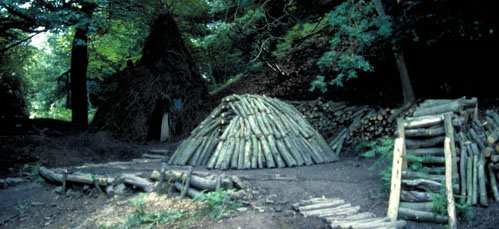
 One point of perspective in the debate will be a reevaluation of the widespread medieval practice of charcoal production. Charcoal is usually produced by slow pyrolysis, where the heating of wood or other substances takes place in the absence of oxygen. To produce charcoal the collier pile billets of wood on their ends in order to form a conical pile. At the bottom an opening lets in air while a central shaft lets the smoke escape. The pile is then covered with turf and moistened clay. The firing – which is a special craft – begins at the bottom and gradually spreads outwards and upwards
The massive production of charcoal in the Middle Ages was a major cause of deforestation. However all over Europe woods were managed as coppices, which were cut and regrew cyclically, so that a steady supply of charcoal would be available.
Archaeologists have shown how the production of charcoal usually was part of the peasant economy in forested areas; but hornbeam coppice wood as well as alder and birch swamps were systematically forested in order to feed these kilns. The use of fast growing coppiced woods was a common sustainable technique among medieval peasants. However, studies by the archaeologist, Arne Paysen, have shown that when charcoal production was instigated by the large landowners, the production was not sustainable. Here old trees were used ending in a massive and non-sustainable deforestation. Several papers will report on these aspects of medieval forest-management, more specifically in the region of Schleswig-Holstein.
It is the University of Kiel, which is active in the broad field of research into historical ecosystems.
Sustainable energy consumption in the Middle Ages and Early Modern Europe
Medieval charcoal burning is practiced at the Open-Air Museum in Schleswig-Holstein
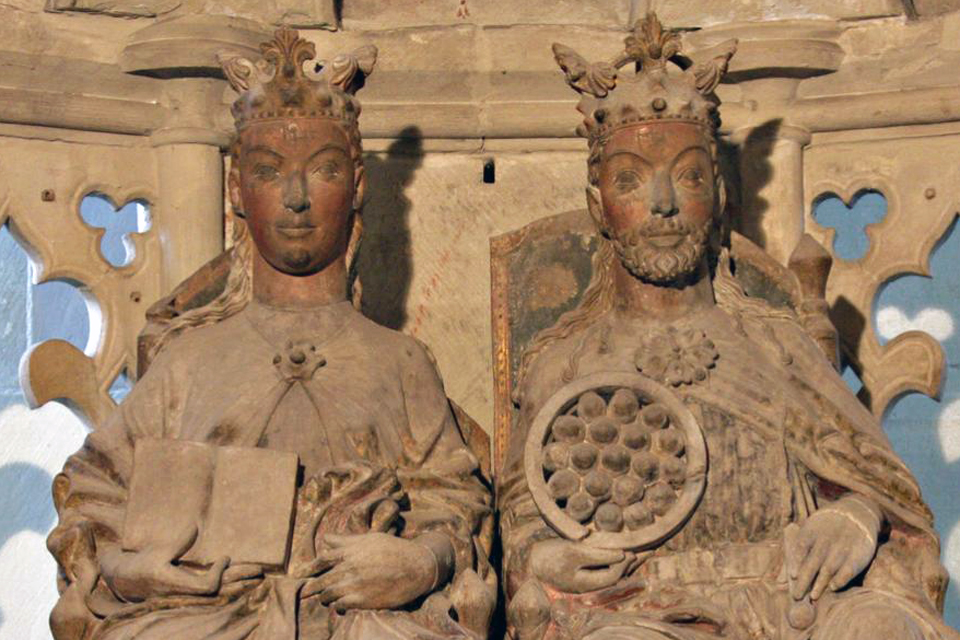
In 962 Otto the Great was crowned emperor by the Roman Pope...

Large exhibition about the German emperor, Otto the Great, and the Roman Empire opened in Magdeburg this weekend amidst growing misgivings in the rest of Europe about the future role of Germany…
Not so long ago the Italian newspaper “Il Giornale” owned by the brother of the Lombardian Berlusconi – printed a front-page showing Angela Merkel raising her right arm in a gesture associated with the Nazi-salute. As anyone could see the photo was severely tampered with in photo-shop (as was the benign waxen face of Berlusconi just below).
Nevertheless the newspaper found it appropriate to accompany an article about the so-called imperial designs of Angela Merkel with this photo, titling it “the Fourth Reich”, and claiming in the text that she is angling for the title of “imperatore de Roma”. It stands to reason the article raised a global furore in the media.
All this happened at the same time as curators, architects and historians were putting the finishing touch upon a huge “Landesausstellung” in Magdeburg, entitled “Otto the Great and the Roman Empire”. Of course, the exhibition has been planned for years in order to celebrate the anniversary of Otto the Great’s birth in 912 and his imperial crowning in 962 in Rome. Nevertheless it seems to be quite topical, although the curators has deliberately sidestepped in order not to raise the spectre of the second and third “Reichs” when the achievements of Otto the Great were so disastrously appropriated to construct the founding myths of Der Kaiser (1871 – 1918) and later Hitler (1933 – 1945).
Very prudently – probably in view of this, but hopefully also because she was otherwise engaged in cleaning up the sordid acts of the Greeks, the Spaniards and the Italians – Angela Merkel did not take part in the official opening of the exhibition in Magdeburg, which took place in the cathedral, where Otto the Great was entombed in 973. Official representation was delegated to Prof. Dr. Norbert Lammert, president of the “Bundestag”, who several years ago took it upon himself to be the official protector.
In an interview he gave to “Mitteldeutscher Rundfunk” on the day before the official opening, Dr. Lammert explained why he had engaged himself in this exhibition. In the interview he pointed to the fact that huge exhibitions such as this one might help to emphasise the need to develop a deep historical sense in the general public.
– It is often thought that the further back in history we go, the more history becomes a specialised job for historians. However, this is not the case, says Norbert Lammert and adds that he believes the development of a culture of memory is actually an important task for governements to lift.
In his opinion the history of Otto the Great and his reinvention of the idea of Rome and emperorship as a legitimate form of political institution has special relevance today in Europe. On one hand there is the need to have a legitimate form of universal government bridging the nation states. On the other hand it is necessary to balance this against the need for regional and national self-government. According to Norbert Lammert this is the exact challenge which Otto endeavoured to meet in the 10th century, but ends up adding:
– However one challenge is ours alone: how do we legitimate such a type of balanced government democratically?
Which of course is a very legitimate and pertinent question in Europe 2012 where governments in Southern Europe right now tends to be led by technocrats instead of elected politicians.
Maybe the photo from the opening of the exhibition is a sign of this new era. For Otto the Great to be crowned emperor was the same as to be divinely blessed with the job of defending the faith as well as the church and support the missionary efforts amongst the heathens. It was not his job to lead the administration of a realm geographically stretching from Rome to Schleswig. Maybe to be a European politician in the 21st century is to be the guardian of our memorial culture and the values of Europe – whatever they might be deemed to be in a global context of poly-culturalism. And less to take part in the nitty-gritty daily administration of the welfare of our future societies.
In which sense the politicians will be the future “emperors” while the technocrats will take the role of local national and regional administrators. It seems the exhibition in Magdeburg this autumn will be well worth a visit. At least it raises a number of important questions which we might have to ponder in the future.
Karen Schousboe
Read a presentation of the exhibition
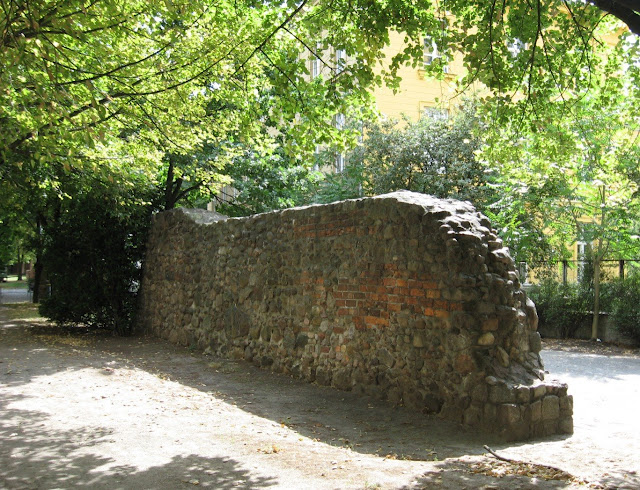
Most people think of Berlin as a modern bustling town built out of the wreckage of the 19th and 20th century. But Berlin has a much longer and interesting – medieval – history
Around 1170 Berlin was founded on two opposing plateaus: Barnim and Teltow, located on either brink of the river Spree, a tributary to Havel, which feeds the Elbe. The first Berliners were German colonists from the Harz, the Rhineland, Westphalia and Flanders. When they arrived the land was marshy, forested and in fact not very inviting. However, ancient Slavic trading routes along the rivers from West to East passed through and made it an inviting spot to locate a market.

The beginnings were modest. Berlin and Cölln were located on the sandy islands, each with a few wooden houses and a small-timbered church. However, two generations later (around 1230) the Ascanian Margraves: Johann I and Otto III presented the market with city-status exempting them from taxes. The emblem of the House of Ascania, a red eagle and bear, became the heraldic emblems of Berlin.
This investment paid off. A few decades later the Ascanians derived huge profits from customs, tolls and fees on market stands and the use of the mills of the city. The city status started a construction boom in Berlin. First of all the Mühlendamm (Mill Damm) was built on a huge number of massive oak trunks. This linked the two sister cities and at the same time dammed the Spree. This allowed the city to exploit the river in two ways. First off all this forced riverboats to reload their freights, inviting the traders to market their wares at the local market. Secondly the water was used in milling and other forms of crafts and trades (processing cloth, tanning hides etc.) At this time a series of large stone churches were built. St. Nikolai was the first. Later (1270) the Franciscans built the first brick-church echoing the prevalent mode of church building in Northern Germany.
 The city itself was the result of a planned exercise. Spandauer Strasse, Jüdenstrasse and Klosterstrasse ran parallel to each other with plots of land in given to new settlers. Amongst these were the Jews, who were given a separate gated area at the Grosse Jüdenhoff with a synagougue off the Molktenmarkt. Jewish merchants, who were involved in money exchange and the credit business, were among the first settlers. On the other side at the city’s North-Eastern edge, the Margraves reserved a piece of land for themselves.
In the mid-13th century Berlin expanded towards the north-west. The Mariensiedlung residential area grew up around the Neuer Markt, with houses with tiled roofs. At this time the twin city began building city walls in order to replace the older earthwork and palisade fortifications. Around this time more than 2000 people lived within the city’s walls and Berlin had become a major foreign trade hub. From East came wood, rye and linen, salt came from Halle, herrings from the Baltic and cloth from Flanders and the more local textile production centres in Brandenburg. At the end Berlin became a member of the Hanseatic League.
This story is told in much details in a new book, which was recently published in connection with the “Historiale 2012” focusing on the 775 anniversary of Berlin.
Information about medieval buildings and ruins in Berlin
Read more about “The Historiale 2012”

Sensational find of Greek sermons by Origen exites...

“Hyperborea – Music from the North” summons medieval music-lovers and performers in Freyburg this summer to take part in the 22. Medieval Musical Festival of Montalbâne.
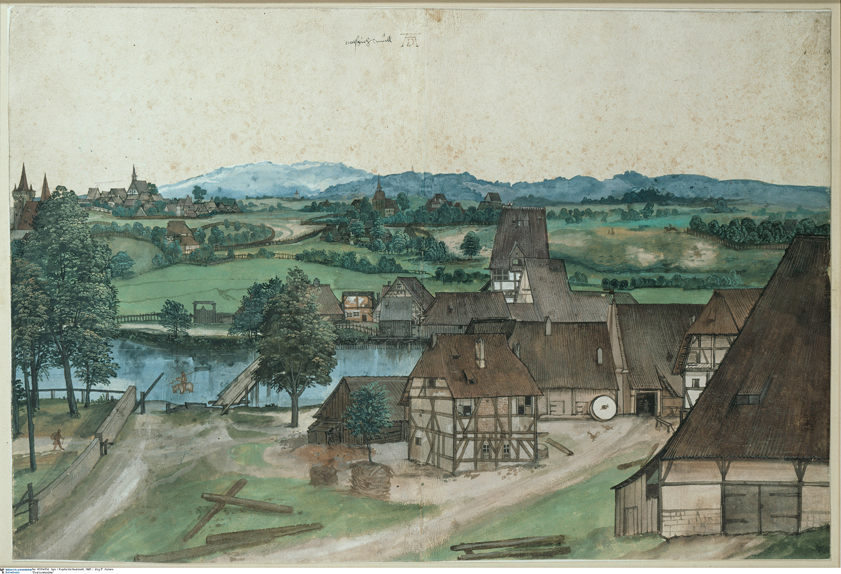
The largest exhibition of the works of Dürer in 40 years...
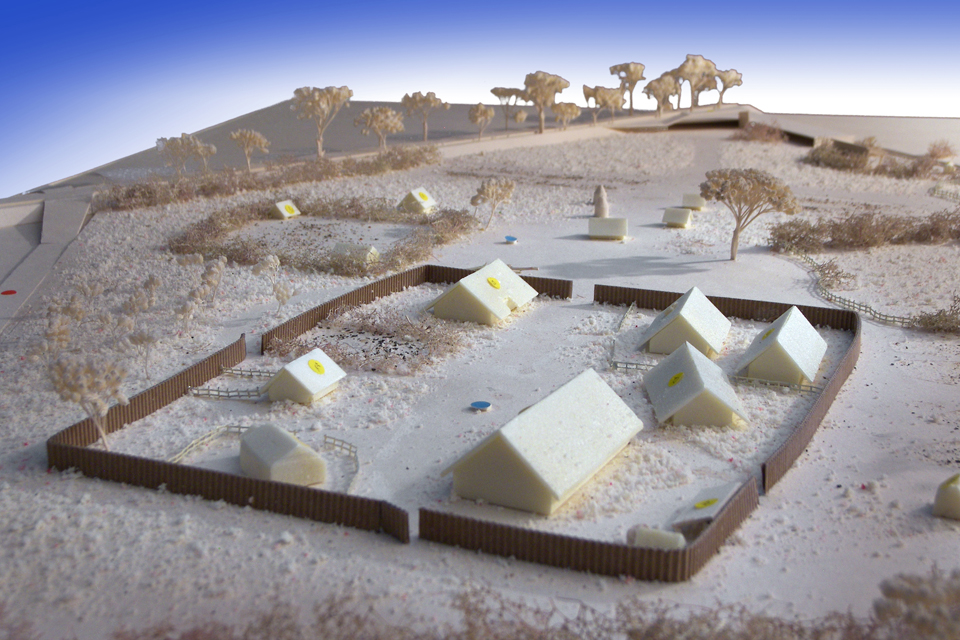
Lauresham is a Carolingian manor being rebuilt at Lorsch...
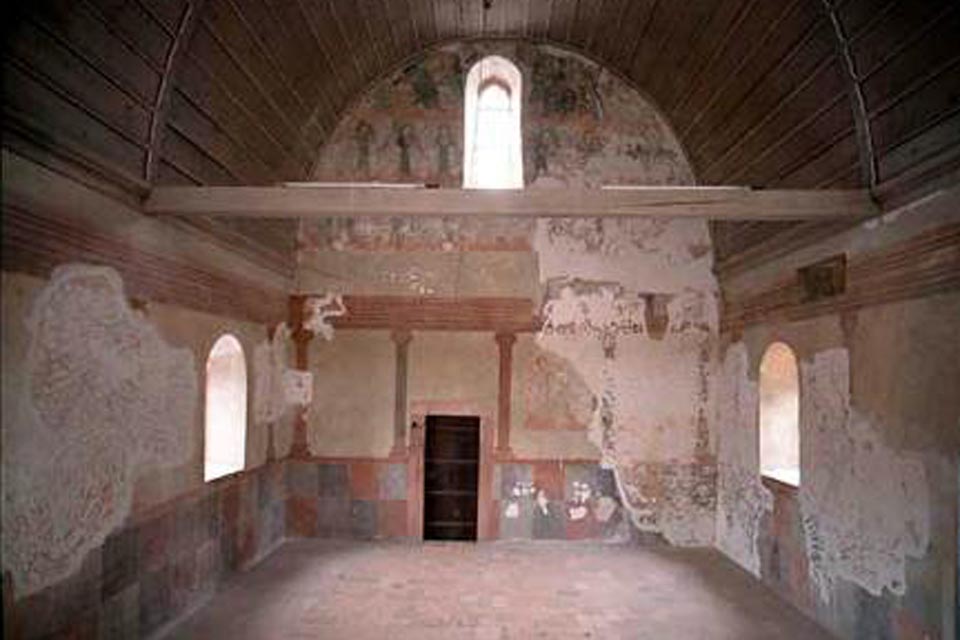
Exhibition at Lorsch tells the story of Lorsch Abbey from the beginnings around 660 AD and up until now

Two medieval shirts are on show this spring...
Euphemia had a famous “Minnesänger” as brother...

Exhibition about San Francesko in Paderborn is worth a visit
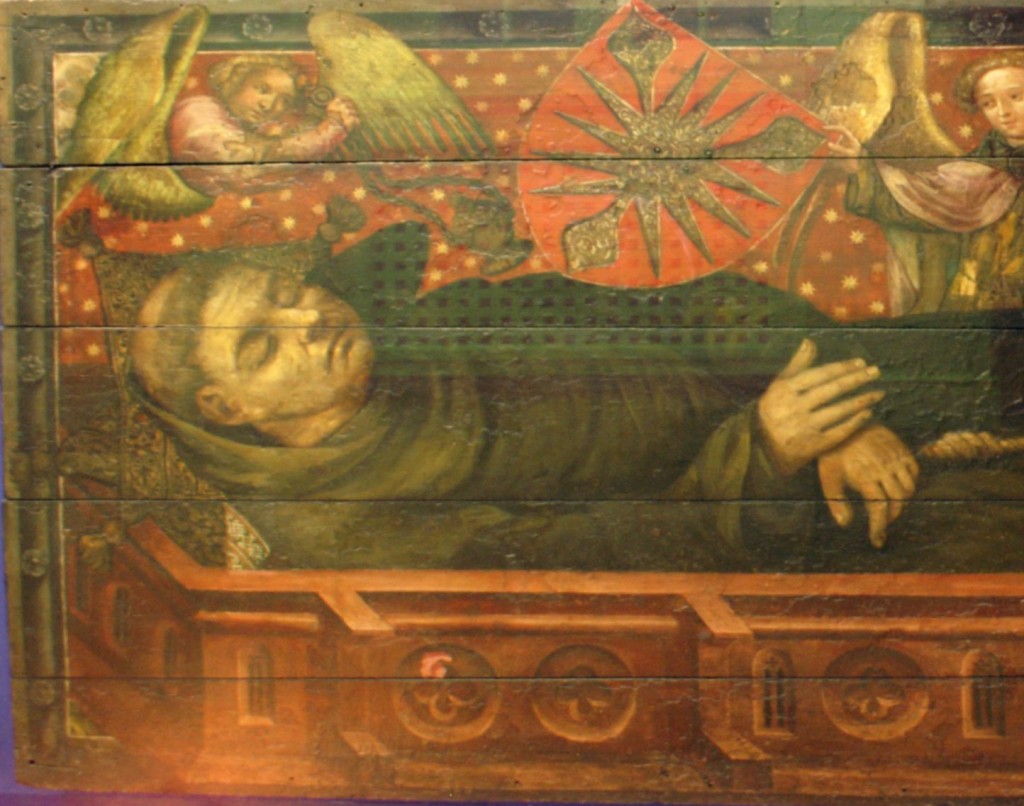
In the beginning of the 19th century, the Franciskan monastery in Hamburg was torn down. Recent archaeological excavations have provided new insigt into its early history.