Is the silver figurine from Lejre representing Odin? Freya? Or perhaps a völva, a Viking sorceress? Many interpretations have been put forward
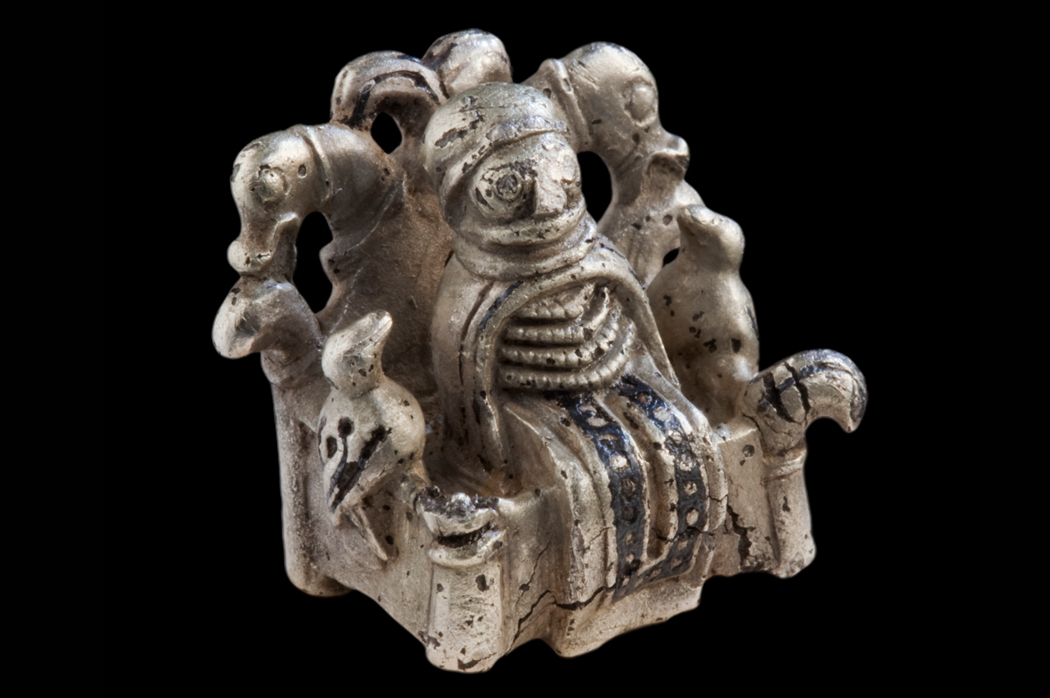
Is the silver figurine from Lejre representing Odin? Freya? Or perhaps a völva, a Viking sorceress? Many interpretations have been put forward
 Healthscaping a medieval city: Lucca’s Curia viarum and the future of public health history
G. Geltner, Department of History, University of Amsterdam, 134 Spuistraat, 1012 VB, Amsterdam, The Netherlands
In: Urban History / Volume 40 / Issue 03 / August 2013, pp 395-415
DOI: http://dx.doi.org/10.1017/S0963926813000321
ABSTRACT:
In early fourteenth-century Lucca, one government organ began expanding its activities beyond the maintenance of public works to promote public hygiene and safety, and in ways that suggest both a concern for and an appreciation of population-level preventative healthcare. Evidence for this shift (which is traceable in and beyond the Italian peninsula) is mostly found in documents of practice such as court and financial records. These augment and complicate the traditional view afforded by urban statutes and medical treatises. The revised if still nebulous picture emerging from this preliminary study challenges a lingering tendency among urban and public health historians to see pre-modern European cities as ignorant and apathetic demographic black holes.
Basis for this conclusion is a careful analysis of the records of the “Curia Viarum”, – the Court of Roads. This body was mainly concerned with “maintaing urban, suburban and regional infrastructure” but it was also held responsible for “enforcing sanitary , labour and building regulations” (p. 398). 13 volumes of early court-proceedings have been preserved from the period 1336 -1377 and presents a series of diverse complaints and rulings pertaining to environmental violations and concerns, like the neglect of maintenance of ovens, contaminations of drinking water supplies, waste thrown into streets, blockage of sewers and drains, keeping animals inside the walls of the city, washing cloth in the fountains etc. The article is according to Guy Geltner a first presentation of the material, which is currently undergoing a more detailed study.
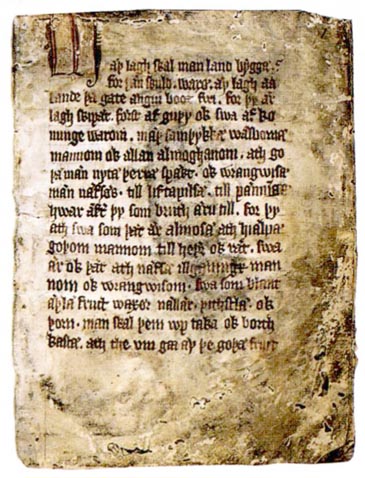
The creation of a Scandinavian provincial law: how was it done?
Stefan Brink, University of Aberdeen
DOI: 10.1111/1468-2281.12006
ABSTRACT:
It is well known that lawmaking was inseparable from kingship in England and on the continent. Therefore, there has also been a predominant tendency to see the Medieval Scandinavian provincial laws in a regal context. In this light, the initiators of laws were kings and men belonging to the upper stratum of society, and the laws themselves are seen as reflecting the societal situation, in which they were written down. This article focuses on ‘peripheral’ or ‘provincial’ laws, such as the Icelandic Grágás, the main Svea Law, the Uppland Law and not least the Hälsinge Law. It attempts to show that such laws were not inventions of any one person or group in the thirteenth or fourteenth century, and that they cannot only be mirroring the time, in which they were written down. Rather there are complex layers in the versions of these laws which survive: some old customary law, some probably newly composed law, some having their roots in Roman legal tradition and some in canon law. The picture which emerges is much less clear-cut than has been supposed, showing many regional differences and peculiarities. A key witness to this is the Law of the Hälsinger. In medieval Hälsingland a king or king-like person was very seldom present and no archaeological or historical sources witness to the presence of an aristocracy. The Land-owning class consisted of free farmers, says Stefan Brink, and goes on to argue how the law was the result of a rewriting of another provincial law, the Uppland Law, but with significant adjustments derived from local customs and inspired by Norwegian legal tradition. The conclusion is that careful shifting may uncover such complex layers in the wider spectrum of Medieval Scandinavian Laws.
The article is part of a collection of papers presented at a conference in Copenhagen in 2011 organised in collaboration between three digitisation projects: “Early English Law“, “Nordic Medieval Laws” and “Relmin”.
READ MORE:
Read also about the context of the article in “Medieval Law”

Social structures and social change in seventh-century England – the law codes and complementary sources
By John Hines, Cardiff University
In: Historical Research, Volume 86, Issue 233, pages 394–407, August 2013
DOI: 10.1111/1468-2281.12002
Even though the very early English laws are preserved only in the Textus Roffensis and Ine’s Law code only as an appendage to Alfred’s later laws it is generally believed that they represent a genuine textual tradition. However, the extent to which they should be understood as symbolic assertions of royal power or practical collections of laws which were used to guide the owners in concrete clashes has traditionally been heavily disputed. A carefully contextualized reading by John Hines of the four surviving Anglo-Saxon law codes issued in the seventh century, three from Kent and one from Wessex, shows the body of legislation they contain to be coherent and practical, and to support subtle insights into social relationships, processes of social change, and areas of social stress in that period. The importance of especially archaeological evidence, in particular that concerning the use and significance of materials and artefacts, and developments in settlement structures and the overall settlement pattern, is particularly emphasized. For instance the attention is drawn to the fact that the gold-buckle in the grave-assemblage from Sutton Hoo was made from a quantity of gold, representing 300 Kentish gold shillings corresponding to the exact “wergeld” of a nobleman.
The article is part of a collection of papers presented at a conference in Copenhagen in 2011 organised in a collaboration between three digitisation projects: “Early English Law“, “Nordic Medieval Laws” and “Relmin”.
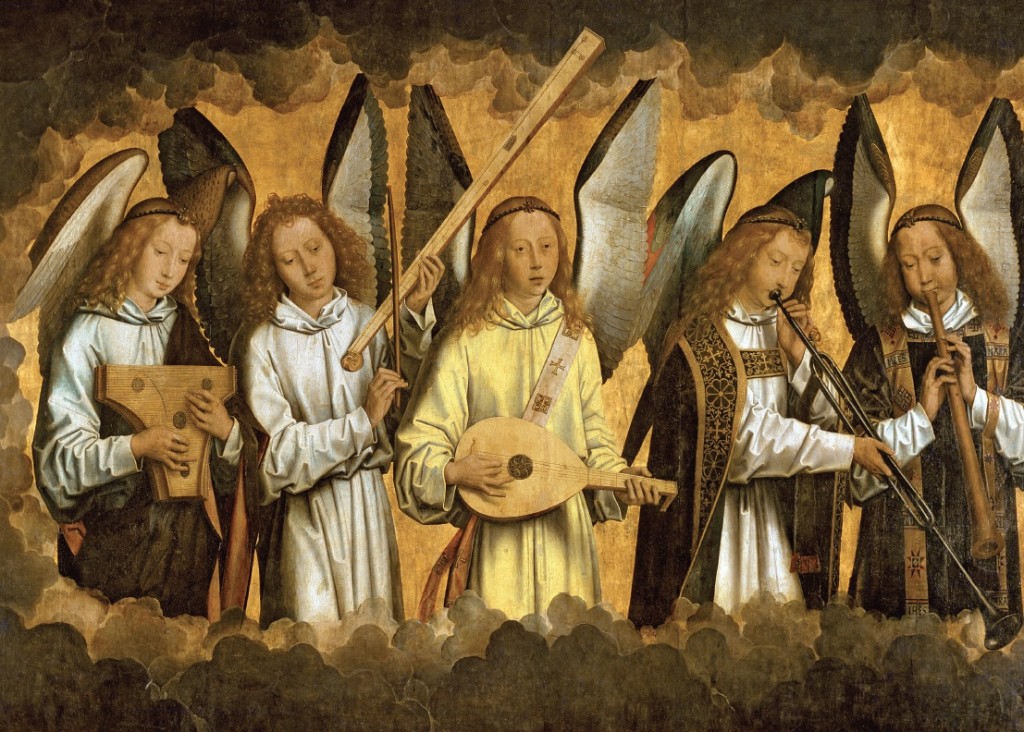
NEW RESEARCH: Early Music – the leading scholarly journal – celebrates its 40th birthday...
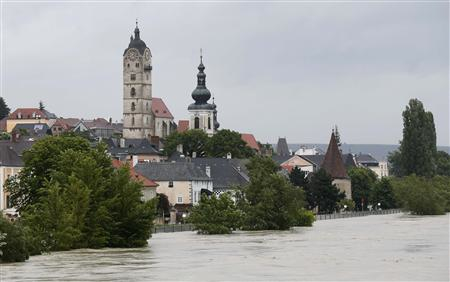
NEW RESEARCH: Once again the rivers Danube and Elbe have destroyed homes and livelihood...
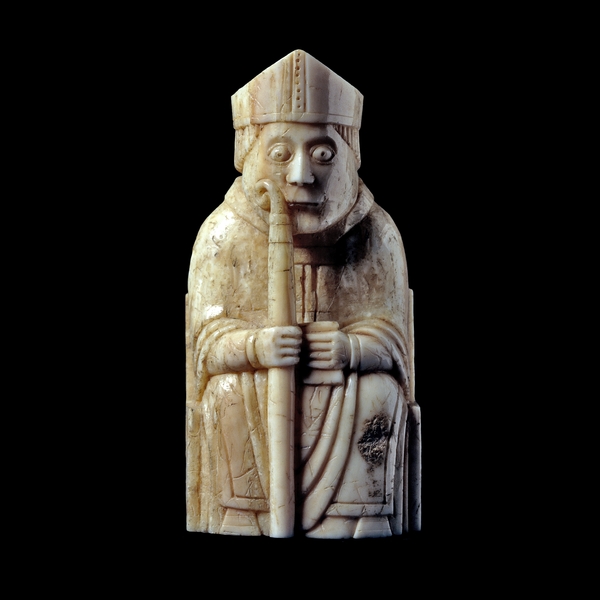
The article compares and contrasts late medieval models of episcopal identity in ‘local’ and ‘national’ chronicles. In the ‘national’ chronicles of Henry Knighton and Thomas Walsingham, bishops were constructed as models (both good and bad) of the exercise of sacral power as martyr saints, martial figures, and learned combatants of heresy. By contrast in the York Minster chronicle the model is much more based on the twelfth century “deeds of the bishop” tradition and is focussed on the relationship between the bishop and his mother church, so that the specifically ecclesiastical good lordship of the bishop looms large. However, both kinds of chronicle saw bishops as both peacemakers and defenders of the rights of the church.
Patricia H. Cullum is head of Department of History and Politics at Huddersfield University since 2003. She is primarily interested in female lay piety, but have more recently been working on masculinity and especially secular clerical masculinity in the later middle ages.
My Lord Bishop: Chronicles and the Construction of Episcopal Identity in Late Medieval England
By Patricia H. Cullum
In: International Journal of Regional and Local History, Volume 8, Number 1, May 2013 , pp. 40-53(14)
Publisher: Maney Publishing
DOI: http://dx.doi.org.ep.fjernadgang.kb.dk/10.1179/2051453013Z.0000000005

NEW RESEARCH: Knowledge Formation and the Great Divergence between China and Europe: Manuscripts and Printed Books, ca. 581–1840
ABSTRACT:
Literature dealing with the history of Chinese printed books and printing is voluminous. Yet studies of how knowledge in general and utilitarian forms of knowledge in particular were generated, accumulated and circulated by printed books and their relationship with the long-term socio-economic transformation of China are rare. This paper aims to open up the subject by examining the long-term trends in the production of manuscripts and books and focusing on the connections between the generation and dissemination of useful knowledge in China and the production and circulation of printed books over the centuries and dynasties from circa 581 to 1840 compared to Europe. It connects trends in this indicator for knowledge formation and diffusion to economic growth, urbanization, changes in higher forms of education, the rise of literacy, the development of printing technologies, and changes in perceptions of the natural world. It concludes that human capital formation in China probably proceeded at a slower rate because of centralised censorship. This is relevant for narratives of the “divergence” between China and Europe. Also as it unfolds today.
ABOUT THE AUTHOR:
Ting Xu, School of Law , Queen’s University , Belfast , Northern Ireland
Ting Xu joined Queen’s Law School as a lecturer in December 2012. Before joining Queen’s, she had been a research fellow at the London School of Economics, working on an interdisciplinary and collaborative European Research Council funded project. She was also a postdoctoral research fellow at the Asia Research Centre, London School of Economics. Her main research interests are in the fields of law, governance and development, property law, socio-legal studies, Chinese law, comparative law, and global economic history. Her work has an interdisciplinary flavour. She is also a research affiliate of Queen’s University Centre for Economic History
SOURCE:
Knowledge Formation and the Great Divergence between China and Europe: Manuscripts and Printed Books, ca. 581–1840
By Ting Xu
In: Journal of Comparative Asian Development: Published online: 30 May 2013
DOI:10.1080/15339114.2013.792455
NEW RESEARCH: Odin from Lejre as challenger of hegemonic orders...

ABSTRACT:
Although the ‘chronicle of chronicles’ compiled at Worcester c.1095–c.1140 is now firmly attributed to John of Worcester, rather than the monk Florence, major questions remain. A central issue is that the semi-autograph manuscript of the chronicle (now Oxford, Corpus Christi College, MS 157) underwent several alterations to its structure and contents, as codicological evidence demonstrates. These included the incorporation of important illuminations, which have been surprisingly little considered in their overall manuscript context. This article focuses on these illuminations, and will argue that their presence in this version of the chronicle makes it something even more distinctive than the learned, revisionist chronological work of Marianus Scotus upon which it was based. John of Worcester’s chosen images are linked not only to his political narrative but also to theological works and to cutting-edge science, newly translated from Arabic. The presence of such miniatures in a twelfth-century chronicle is unique, and they are central to the final form given to the Worcester chronicle by John of Worcester himself in this key manuscript. Their analysis thus brings into focus the impressive assembly of materials which the chronicle offered to readers, to shape their understanding of on-going events.
ABOUT THE AUTHOR:
Anne E. Lawrence-Mathers, History, University of Reading, Whiteknights, Reading, Berkshire, RG6 6AA , United Kingdom
SOURCE:
John of Worcester and the science of history
By Anne E. Lawrence-Mathers
Journal of Medieval History
Published online: 13 May 2013
DOI:10.1080/03044181.2013.798742
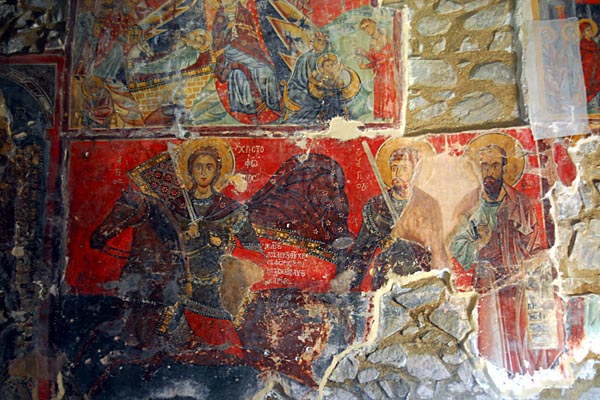
ABSTRACT
Convergence among religious rites has long been a favoured subject of study among historians of the Latin East, who have come at it from a variety of different angles, exploiting a wide array of evidence ranging from papal correspondence to works of art. At the level of popular devotion to saints and relics, research has focused on Latin piety expressed towards local Christian cults, relics and pilgrimage sites mainly in the Holy Land and Cyprus. However, the reverse – the devotion Greeks and other Eastern Christians exhibited towards cults and relics of Latin provenance – has been but little explored. This paper examines non-Latin reactions to the emergence of two ‘indigenous’ Latin cults in fourteenth-century Cyprus, those of the Carmelite Peter Thomae and Count John of Montfort. It will be argued that the cults evolved through time in response to the expectations and needs of a ‘Cypriot’ urban public, comprised of both Latins and Greeks of a high social standing.
ABOUT THE AUTHOR:
Michalis Olympiosa, Department of History and Archaeology, University of Cyprus, 75, Kallipoleos Avenue, CY-1678, Nicosia, Cyprus
SOURCE:
Shared devotions: non-Latin responses to Latin sainthood in late medieval Cyprus
Michalis Olympiosa
Journal of Medieval History: Published online: 16 May 2013
Routledge
DOI:10.1080/03044181.2013.795499
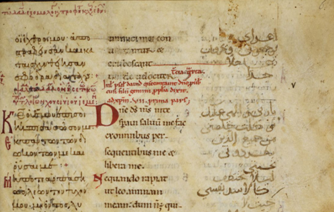
ABSTRACT:
The relationship between conquerors and conquered in the Latin Empire of Constantinople has traditionally been understood as a relentlessly hostile one, particularly on the religious level. Whatever its merits, the dominance of this view has sometimes resulted in the gross misinterpretation of important pieces of evidence. This article examines two unusual liturgical texts that were treated by their discoverers as products of a Latin campaign of liturgical proselytism. The texts themselves are bilingual presentations of the Western rite of mass, with Greek and Latin text presented in an interlinear format. Most unusually, the Latin text is written in Greek characters. This article makes the case, due to internal evidence as well as the broader context of ecclesiastical relations in the Latin Empire, that these texts were created by Greek clerics rather than by Latin authorities, and that their purpose was entirely different from that imagined by their discoverers.
ABOUT THE AUTHOR:
Brendan J. McGuire, Department of History , Christendom College , 134 Christendom Drive, Front Royal, Virginia, USA
SOURCE:
Evidence for religious accommodation in Latin Constantinople: a new approach to bilingual liturgical texts
By Brendan J. McGuire
Journal of Medieval History: Published online: 22 May 2013
DOI:10.1080/03044181.2013.798832
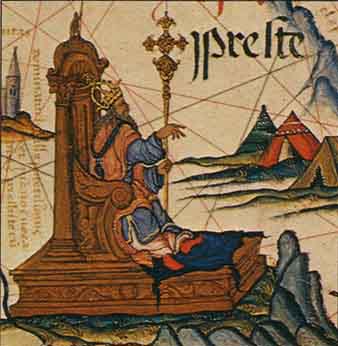
ABSTRACT:
The Prester John myth of a rich and powerful Christian saviour-sovereign beyond the Muslim Middle East was enmeshed for centuries in the desire for a revival of the crusading cause. This article examines a later phase when the legend shifted to Africa, the significance of which has not been wholly appreciated, nor the ensuing contacts between continents fully elaborated. Embassies between Ethiopia and Christian potentates of the Mediterranean – in Aragon, Portugal, Italy and Burgundy – were perceived as exchanges with the Prester. Steps were taken by both sides in the hopes of building a powerful alliance against Islam. Europe gained new information on sub-Saharan Africa and found its racial paradigm challenged. Yet reality could not match all that was imaginatively imposed on Christian Ethiopia, as gradually reflected in historical narratives and literature from the late fifteenth century. The strength of the myth and its impact on global events is nonetheless extraordinary.
ABOUT THE AUTHOR
Andrew Kurt, Department of History, Georgia State University, Atlanta, Georgia, United States of America. Currently Dr. Kurt is investigating the many contacts between European and Ethiopian rulers in the 14th to 16th centuries aimed primarily at a Crusade against Muslim states in the Red Sea region. He hopes his examination of Muslim sources and Christian sources (Italian, Spanish, Portuguese, and Ethiopian) will help him to create a narrative of the multi-faceted relations between peoples of different continents at a time of continuing discovery. In May of 2009 he delivered a paper titled “Mapping Prester John as African (1350-1600): the Italian, Spanish, and Portuguese Perspectives,” at the International Medieval Congress at Western Michigan University. In October 2012 he gave a paper at the Southeast Regional Middle East and Islamic Studies Seminar titled “Between Holy War and Symbiosis: the Delicate Balance of Late Medieval Ethiopia, the Neighboring Sultanates, and Mamluk Egypt.” Both are being expanded as articles
SOURCE:
The search for Prester John, a projected crusade and the eroding prestige of Ethiopian kings, c.1200–c.1540
By Andrew Kurt
In Journal of Medieval History: Published online: 22 Apr 2013
Routledge
DOI:10.1080/03044181.2013.789978
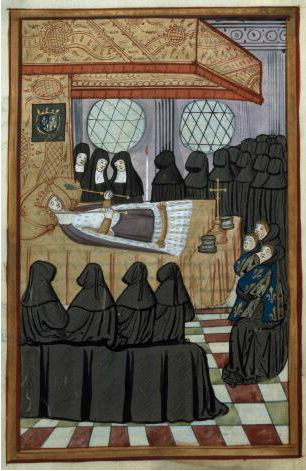
Anne of Bretagne died at Blois in 1514. Her funeral was exceptionally extravagant...
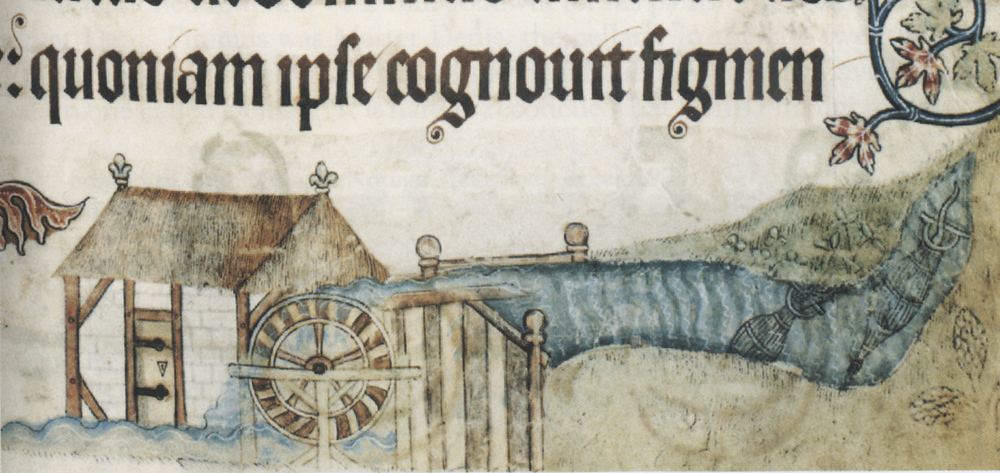
New research: Water landscapes on the River Thames from the Middle Ages until the 19th century…
How to envisage the future? And does literature play a part? Basically this question is raised by a number of Arthurians in the latest issue of Arthuriana