Home » Other Medieval News

Tag: Other Medieval News

Other Medieval News presents articles of a wide variety of medieval history, archaeology and other general news

Empire

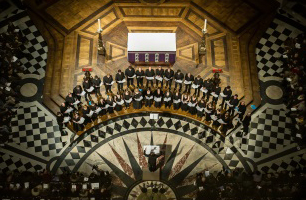
empire-call for papersEach year IMC in Leeds choose a special thematic strand; for 2014 it is “Empire”.

2014 is the year when the world will celebrate two important anniversaries –the 2000 years since Augustus died and the 1200 years since Charlemagne passed away. Both events will be duly celebrated all over Europe with conferences, exhibitions and publications. Probably inspired by this, the thematic strand for the IMC next year is “empire” or “imperium”.

In the call for papers the organisers write that: “Although the last Western Roman emperor was deposed in 476, the Roman Empire continued to shape imagination even when it had ceased to play a major political role. Throughout the Middle Ages, “Empire” suggested a claim to universal lordship. The concept of imperium implied not only the ability and power to exercise authority over others, but could also be used to distinguish spiritual from secular spheres of power. There was also the concept of “informal empire”, a term often employed by modern historians to describe a group of distinct territories held together by ties of commerce, ideology, dynastic traditions, or conquest. “Informal empires” were forged by King Cnut in the 11th century and by the rulers of Aragon in the 14th. The papacy, the western Empire, and Byzantium all claimed to inherit the mantle of Rome, while the Caliphates expressed a similar claim to universal leadership. The meaning of imperium, in turn, became a central issue in medieval scholarship, whether in scholastic theology, medieval philosophy, canon law, or the writing of history and literature. No type of empire was unable to avoid challenges (and challengers). Each type exercised a profound influence not only on politics, but on every aspect of daily life: on commerce and trade as well as the environment, cultural practice, social structures and organisation, the movement of ideas and people. Empires and their rulers could also be products of political and cultural memory and myth-making, with Charlemagne, Arthur, and Troy perhaps among the more famous examples. “Empire” was not limited to the regions surrounding the medieval Mediterranean. Universal monarchy was central to the self-representation of imperial China, while informal empires rose and fell in Africa as well as in Asia and pre-Columbian America. Christian, Confucian, Buddhist, and Islamic scholars discussed ‘Empire’ in all its varieties and forms. Empire was a universal phenomenon, and thus calls for sustained exploration across a wide range of disciplines, and geographical and chronological areas of expertise.”

Points of discussion could include:

  • The role of settlers, merchants, rulers, and others in creating and fashioning empire
  • The decline and fall of empires
  • The typology of empire
  • The governance and organisation of empires
  • The experience of empire by individuals and communities
  • The representation of Empire in music, art, literature, and material culture
  • Traditions of empire, their use and development
  • Theoretical models of Empire: Medieval and modern
  • Concepts and practices of empire in the Islamic world, Africa, America, and Asia
  • The role of imperium in medieval philosophy, theology, and literature
  • The role of universal authority in medieval thought and practice
  • The influence of medieval concepts and practices of empire on their post-medieval successors

READ MORE: See the full call for papers at the IMC Website

Read about a recent symposium in Germany in connection with the exhibition on Otto the Great: Otto der Grosse und der Römische reich. Kaisertum Zum Mittelalter.

Read about the Karlsjahr 2014

Hot or not – in Leeds

Word-counts can be used to uncover what the hot topics were at the Medieval Congress in Leeds …

Doing a work–count–analysis is very simple. You just run a text through a site like WriteWords and the list crops up.

What then are the results of an analysis of the sessions at the International Medieval Congress in Leeds this year apart from the 145 times “pleasure” and “pleasures” was mentioned? (Pleasure was the overarching thematic strand)

First of all it is pertinent to mention that the most frequent word was English (24). Paired with England + Britain (22) the slant is apparent. Participants may come from all over the world, but a significant number does come from England and give presentations on such topics as local history in Chester and elsewhere. However it is worth mentioning that Europe also played a significant role, mentioned 23 times.

Bodmer+Causa+6

Looking at perspectives it is pertinent to mention that the word culture may only have been mentioned 14 times. However cultural was used 12 times, making it by far the most important orientation (26). Compared to this political and politics (22), social (14) and spiritual (13) perspectives were much less prominent.

Considering topics, the most important was text(s) (30). This was followed by medieval law (23), literature (21) history (16) saints (13) and finally violence and military (12). Less prominent but still important were topics like crusades (10), communities (10), music (9) landscapes (9) and the Venerable Bede (9). Finally a bit further down the list we find Cistercian (8) and Byzantium (8) mentioned topped off by such locations as Italy, Ireland and Scandinavia.

To sum it up: Anyone in search of a hot topic in Leeds this summer might have focused on Cultural Perspectives on Early Medieval English Laws and their Textual and Literary Qualities. Not that anyone gave such a paper but someone might very well have done…


READ MORE:

Read the word-count-analysis done on the programme at Kalamazoo 2013

Medieval Power Struggle

Gardiner-Musto

The Medieval Academy of America torn in a new power  struggle

Last week The Medieval Academy of America announced that co-executive directors, Eileen Gardiner and Ron Musto have resigned, effective immediately. Richard W. Unger, president of the Academy, who made the announcement, called it regrettable. In an e-mail statement to Inside Higher Ed the two ex-directors said “they left because the board of the Academy was changing procedures to minimize the power of the staff members, who led the daily operations of the Academy, and forcing them to spend excessive time responding to “oversight” from board members.”

As far as can be gleaned from twitters and comments in blogs, observers are of the opinion that the fall-out is a reflection upon the many changes, which have taken place in the last two years, where Gardiner and Musto have worked to renew the internet-presence and the publications strategy of the Academy. So far no real explanation has been forthcoming.

However, it is a remarkable fact that a new survey on Medievalists and the Scholarly Digital Edition which was presented at the recent annual meeting in Knoxville, shows that about 50% of medievalists in 2011 still preferred to read at least some of their journals in print, while none professed to prefer exclusively to use scholarly editions in electronic form. Although the survey was done before the advent of the ipad and the other tablets on the market, it is an astounding fact that medievalists seem to be somewhat averse to electronic publishing.

In view of this it may seem a safe bet that the board might have felt inclined to reign in a future strategy whereby the Academy might move to render the established publishing houses obsolete in a situation where the new directives concerning open-access are calling for new business models. With more than 4000 members worldwide, one of the Academy’s assets is its ability to foster genuinely anonymous peer-reviews at a grand scale while at the same time turn itself into a proper medieval publishing house paid for by the money, which scholars in the future are expected to put down the publication of their work. A business model which the current publishers as opposed to a not-for-profit association cannot follow since they are in the business of making money. At the annual meeting several announcements were made, which points in this direction,  amongst these a revival of the Speculum Books Series and a possibility to discontinue reading Speculum in Print.

Gardiner and Musto have worked in various aspects of the book trade since 1967 and cofounded Italica Press in 1985. They have individually and jointly authored and edited numerous books, articles, reviews, and websites, with a concentration on medieval studies and e-publishing. They have most recently been working together on the book, The Digital Humanities: A Primer for Scholars and Studies, to be published by Cambridge University Press. However, both are also acclaimed medievalists.

Digital Medieval Editions

Screen Shot 2013-03-24 at 2.12.38 PMWe all know what a proper edition is! Way back the standard was set by such gigantic projects like Monumenta Germaniae Historica or the homunculus Patrologiae Cursus Completus. Such projects later resulted in more nationally oriented editions of charters, manuscripts and other literary left-overs from both ancient and medieval history. Any medievalist worth his or her salt knows of the pertinent editions inside their field and that is all well; especially now when they are becoming digitized and generally more available for scholars and students in the periphery of minor universities and colleges around the world.

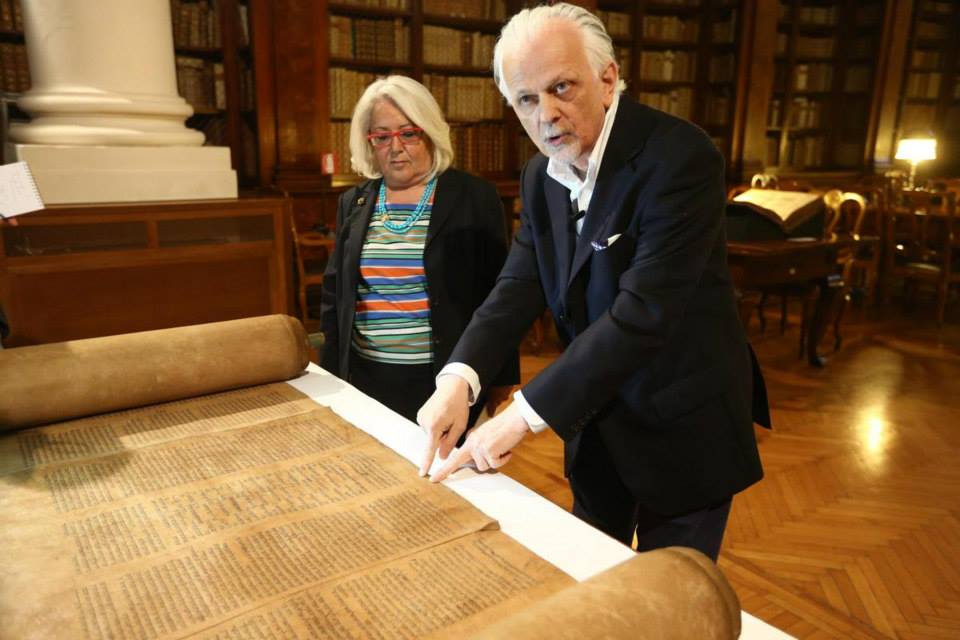
However, recent years have witnessed a whole new genre: the proper digitized edition of texts – complete with not only text-editions and translations, but also photos, links to relevant literature etc. Examples are The Roman de la Rose Digital Library  and the edition of the plan of St. Gall presented at the very comprehensive website, Carolingian Culture at Reichenau and St. Gall. A new initiative is the ongoing digitization of the Vatican Apostolic Archive with over 80.000 manuscripts and 8900 rare incunabula in the pipeline towards the digital printing press. The digitization is going to fill up 2.8 petabytes and cover any publication before 1501. The digitization is sponsored by the EMC Corporation, which is a global leader in enabling businesses and service providers to transform their operations and deliver IT as a service.

Whether the last initiative will just provide storage or the plan is to supplement it later with proper editorial work is a yet unknown. The project, however, is part of this on-going trend: to deliver state-of-the-art-editions, which properly uses the medium to present not only content but also context.

Focus for the two scholarly roundtables at the upcoming meeting of the Medieval Academy 201 in Knoxville are initiatives as these. At the first roundtable “A New Age of Exploration: Scholars and Digitized Manuscripts” will be debated, while the next morning the debate will be broadened: Back to the Future: Exploring New Digital Initiatives in Medieval Studies.

Speakers will – amongst others – be:

  • Abigail Firey, University of Kentucky
Chair, who will talk about the The Carolingian Canon Law Project, The Carolingian Canon Law project, which is a searchable, electronic rendition of works of canon law used by Carolingian readers. This project maps the extent of variation in “standard” legal texts known to Carolingian readers, and identifies particular points of variation. In addition to clarifying the textual history of medieval canon law, the project will provide historical and bibliographic annotation of several hundred canons used by jurists before, during, and after the Carolingian period.
  • Patrick J. Geary, Institute for Advanced Studies, who is in charge of the digital edition of the plan of St. Gal at “Carolingian Culture at Reichenau and St. Gall”
  • Elizaveta Strakhov, who will talk about “The Canterbury Tales Project”, which aims to investigate the textual tradition of Geoffrey Chaucer’s Canterbury Tales in order to achieve a better understanding of the history of its composition and publication before 1500. This project is housed at the Institute for Textual Scholarship and Electronic Editing at the University of Birmingham.
  • Lynn Ramey, Associate Professor of French at Vanderbilt University, who will speak on her involvement in the Digital project: The Discoveries of the Americas
  • Timothy Stinson, North Carolina State University, who is working on the Piers Plowmann Electronic Archive plus meta-reflexions on digital editing and publishing in connection with the Medieval Electronic Scholarly Alliance run by Dot Porter.
  • Wolfgang-Valentin Ikas, Bayerische Staatsbibliothek, who will present European regia, a project, in which five major libraries located in four countries and with the support of the European Commission, digitized more than 1000 rare and precious manuscripts from the Middle Ages and the Renaissance. All of them were once part of three great royal collections that are currently dispersed and which represent European cultural activity at three distinct periods in history: the Bibliotheca Carolina (8th and 9th centuries), the Library of Charles V and Family (14th century) and the Library of the Aragonese Kings of Naples (15th and 16th centuries). These manuscripts are now fully accessible on the websites of the partner libraries and have also been included in Europeana. For a reflection on types of readers and users and the formation of the project in general see the article on “Consultation of manuscripts online: a qualitative study of three potential user categories” in Digital Medievalist 8 (2012)
  • Charlotte Denoël, Bibliothèque Nationale de France, who is also involved in the Europeana regia project.
  • The Rev. Columba Stewart, OSB, who is executive director of the Hill Museum and Manuscript Library at St. John’s University, will talk about the work with the manuscript preservation project, largely focused on the Middle East, Turkey and India. The initiative aims to help threatened communities to digitize their manuscript heritage just in case. Among the treasures now safely in digital form are all of the surviving Armenian and Syriac manuscripts held by churches in Turkey, some as old as the seventh and eighth centuries. Another initiative has been the work in Syria, which began several years ago, when the country appeared to be stable. As of now two churches have been shelled, one of them largely destroyed while the offices of a cathedral in Aleppo, whose library Hill has digitized, have been ransacked, and the archbishop has fled to Lebanon. These events serves to underline the importance of this ongoing work.

READ MORE:

Preparing for the debates at the roundtable?
– read the illuminating article:

Medievalists and the Scholarly Digital Edition.
By Dot Porter.
In: Scholarly Editing: The Annual of the Association for Documentary Editing. Vol 34, 2013.

– delve into the fascinating material made available at www.digitalmedievalist.org, where all the digitizers convene.

– check out the Medieval Electronic Scholarly Alliance

History of Italian Archives

AR.C.H.I.ves – A comparative history of archives 
in late medieval and early modern Italy

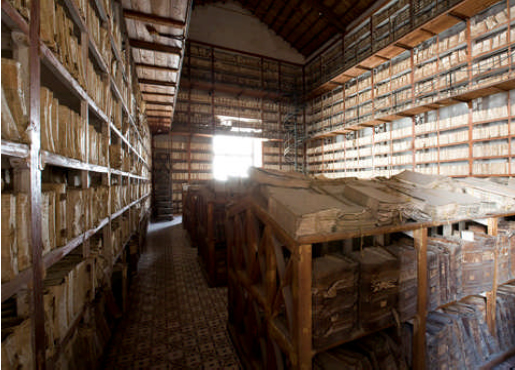
Most historians work in archives, but generally have not made archives their primary object of research. While we tend to be preoccupied by documentary loss, what is striking is the sheer amount of paperwork preserved over the centuries. We need to study the reasons for this preservation.

The project’s general aim is to study the history of the archives and of the chanceries that oversaw their production storage and organization in late medieval and early modern Italy from the late twelfth century to the opening of the Archivi di Stato that – after the ancient states’ dissolution – preserved documents as tools for scholarship rather than administration.

Italian states were at the forefront of the institutionalization of documentary preservation on a large scale, and the country as a whole has an extraordinary rich and diverse archival patrimony. Because of its fragmented political history, concentrating on Italy means having access to the archives of a wide variety of regimes; archives, which lend themselves to comparison, even though Italian archives often seem disorderly to scholars who have no local knowledge. However, this project builds precisely on the basis of the plurality of Italy’s archives, and on their overwhelming closeness to the pre-modern institutions that created them. The proposed research intends to approach their history in a doubly comparative framework, by focusing on a series of seven case studies of chanceries disseminated across Italy: Venice, Modena, Florence, the Vatican, Milan, Naples, and Palermo; and by comparing Italian chanceries with those of other European and non-European states and cities, chiefly by organizing and encouraging exchanges between scholars working in different countries.

Secondly, while histories of archives are generally inscribed in the framework of institutional history, the proposed research wishes to test the chanceries’ interactions within a wider social and cultural context, by focusing on six interconnected themes:

1)      the political role of archives, and the efforts devoted by governments to their development;

2)      their organization, subdivisions, and referencing systems;

3)      the materiality of record-keeping;

4)      the social characteristics of the staff, their education and selection;

5)      the archives’ place in society, including their access and (mis)use;

6)      their use by historians.

As implied in the choice of these themes, the project is deliberately interdisciplinary, and aims at the mutually beneficial exchange between social, political, and cultural historians, historians of art, and archivists.

The research team
The project has a deliberately long timeframe, it tackles a large variety of sources, and it needs to combine local knowledge with a wider vision. In order to tackle these challenges the project will employ a research team trained in different disciplinary skills, formed of five people:

▪        The Principal Investigator, Dr Filippo de Vivo, who will also be responsible for supervising the team’s work as a whole.

▪        Two post-doctoral research assistants, Dr Andrea Guidi, a specialist of the Florentine Chancery, and Dr Alessandro Silvestri, a specialist of the Aragonese Chancery of Palermo.

▪        Two PhD students who will research specific themes on the basis of one or two case studies alone. Mr Fabio Antonini will work on the theme of Archives and the writing of history, especially the use of archival sources by late medieval and early modern antiquarians and historians, with special reference to the Venetian case. Mr Giacomo Giudici works under the joint supervision of Dr de Vivo and Professor Evelyn Welch (QMUL) on the theme of “Paper and place”: the physical and material aspects of documentary evidence, such as the architecture and furnishings of the repositories, or the decoration and making of the records, with special reference to the cases of Milan and Venice.

There will be regular workshops with invited international participants, where team members will be able to present their findings before discussants. A final conference will conclude the project and it is expected that selected papers from the conference and the workshops will be published in a volume edited jointly by the PI and the PDRAs.

A first workshop on “Recent tendencies in the history of archives, documentary production and organization” has been planned for the 12th of December 2012.

The project is funded by a European Research Council Starting Grant

SOURCE:

AR.C.H.I.ves

Recent tendencies in the history of archives, document production and organization. Conference on Wednesday, the 12th of December 2012, Birkbeck, University of London, 2-6pm. Dreyfus Room, 26 Russell Square (TBC)
Conference program


Medieval Settlement Research

The Medieval Settlement Research Group

The Medieval Settlement Research Group (MSRG) is a long established, widely recognised and open multi-disciplinary group that facilitates collaboration between archaeologists, historians, geographers and other interested parties.

The Group is dedicated to developing understanding of rural landscapes and settlements including villages, hamlets and farmsteads between the 5th and 16th centuries AD. For information about membership, conferences, grants and other activities, please see the MSRG website.

The MSRG’s journal, Medieval Settlement Research (MSR), is published each year in the autumn. The journal is an internationally recognised publication, containing peer-reviewed research papers, fieldwork reports and news, reviews and an annual bibliography. Although the Group’s interests are concentrated on British and Irish medieval landscapes between the 5th and 16th centuries AD, it actively encourages wider chronological and pan-European perspectives. Medieval Settlement Research therefore welcomes papers on Britain, Ireland and Europe that help us to improve our understanding of medieval settlements and landscapes from the level of individual sites to the international scale.

A digitisation project is currently near completion and back issues of the MSR and its predecessor the MSRG Annual Report are now available to users free of charge via the Archaeology Data Service (ADS). Other bibliographic details of past content can be found on the British and Irish Archaeological Bibliography (BIAB).

Back issues of the Annual Report (1986-2007) and Medieval Settlement Research journal (2008-2010) are now available online from the ADS

Viking and Crusader Swords Sold at Steep Prices

The Crusadersword captured from Mamluk Arsenal in Alexandria gave £163.250 edge to Bonhams Arms and Armour sale. Viking swords sold for up to six times the evaluation

A rare medieval sword taken from the Mamluk Arsenal at Alexandria was the top item in Bonhams sale of Antique Arms and Armour on November 28th in London. The sword, estimated to sell for £40,000 to £60,000, was eventually bought for £163,250 after stiff competition in a sale that made a total of £1m with 90% sold.

The medieval Crusader Italian-made sword was given as a gift to the Mamluk rulers of Alexandria by the Christian ruler of Cyprus and Jerusalem, King Peter I as part of a gift sealing a treaty.

King Peter I, the King of Cyprus and Jerusalem, launched the last Crusade in 1362 against the Muslim Mamluk Empire in the region. A fleet set out from Cyprus and proved victorious, taking the city of Alexandria with immense amounts of plunder returned to Cyprus, including this sword. Such was the treasure and weapons taken from the captured city that many of the overloaded ships had to jettison cargo.

David Williams, Head of Bonhams Antique Arms and Armour Department, says: “The fascination of this sword is that it has survived some six centuries having been gifted by a Christian King to a Muslim ruler and kept in the famed Alexandrian armoury and then taken by force by Crusaders and returned to Europe. It is a remarkable survivor of the Crusader period.”

The sword has a flat tapering double-edged blade 92.5 cm. long and overall with the hilt 115.7cm. The weapon bears an inscription that reads: ‘Hubs Khazain al-Silah bi thughri al-Iskandariyya ayyam al-Sayfi Faris al […d.]’, ‘Donation to the armoury in the frontier city of Alexandria in the days of al-Sayfi Faris al- [Muhammadi]. Amir Faris was an inspector in 840H, corresponding to 1436-7 AD. Only three other swords appear to be recorded inscribed in the name of the Amir Faris. One in a private charitable foundation, another in Leeds Castle, Kent and the other in the Military Museum at Istanbul.

A stunning array of death-dealing swords from the Medieval period and earlier, including Viking weapons, formed the main thrust of Bonhams sale of Antique Arms and Armour on November 28th in Knightsbridge.

David Williams, Director of Arms and Armour at Bonhams, comments: “Many of these rare and remarkable weapons would have been used in battle. The scarring and damage goes some way to confirm this, though the years have also taken their toll.”

Among the collection of swords in the sale from the distinguished Danish collector the late E.A. Christensen, there were some seven Viking swords dating from the 9th and tenth centuries when the Vikings were invading the British Isles on a regular basis.

Lot 55, a Viking sword similar to one found in Ireland and estimated at £4,000 to £5,000, sold for a whopping £30,000.

A rare Viking sword from the 9th Century, found in 1887 in the mouth of the River Thieles, in Switzerland, (lot 57), estimated to sell for £6,000 to £8,000, made £27,500.

Lot 54, found in the River Meuse in Belgium estimated to sell for £3,500 to £4,500 made £10,625.

The Viking Age spanned the late 8th to 11th centuries.

The Viking destruction of Lindisfarne was reported by a Northumbrian scholar who wrote: “Never before has such an atrocity been seen”. More than any other single event, the attack on Lindisfarne cast a shadow on the perception of the Vikings for the next twelve centuries.

For more information please contact www.bonhams.com


Chronographia of Ioannes Malalas

Byzantine History of the World to be Studied and Made Accessible
Tübingen Historian, Professor Mischa Meier, heads new 12-year project examining the Chronographia of  Ioannes Malalas (490 -578 AD). He  wrote his Chronographia in Greek in the 6th century. In recent years, researchers have come to believe he was an official in the provincial administration of the Eastern Roman Empire. In that position, Malalas appears to have had access to important archives – which was important for the final books in the chronology, which dealt with the contemporary history.

Read more at University of Tübingen