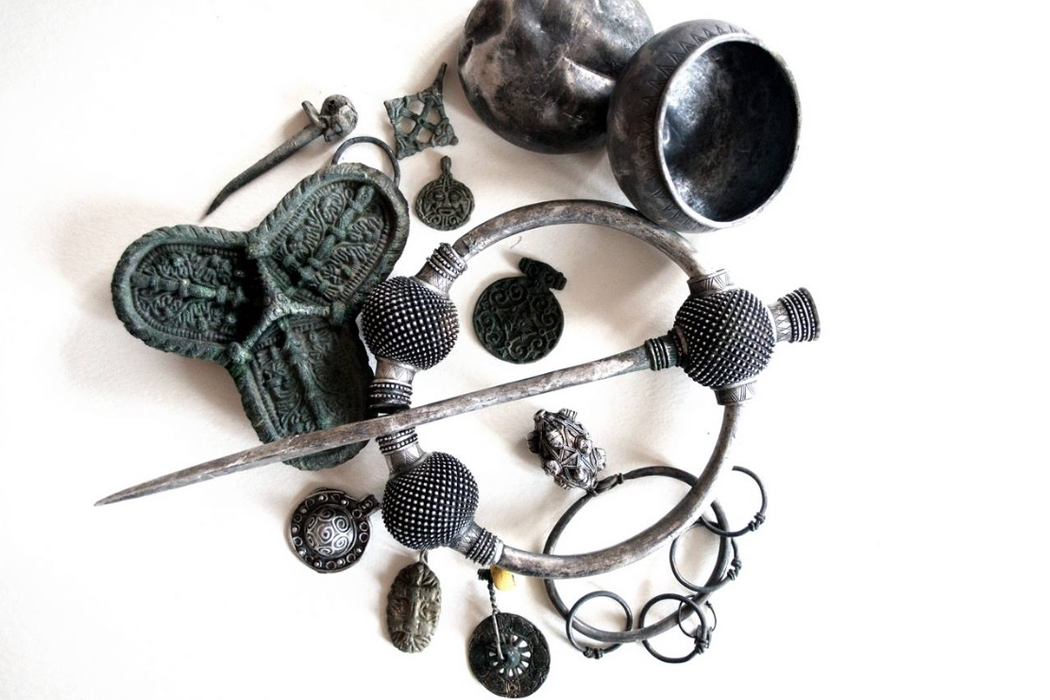
The hoard from Ll. Karleby found in 2015 about 10 km from the royal centre in Lejre sheds important light on the life of Vikings in the 10th century
Laws in Europe differ. Some countries strongly forbid metal-detecting, while others encourage the praxis. In Denmark, a welcoming attitude has turned the field into a very fruitful network of amateur and professional archaeologists happily collaborating to uncover new facets of the Danish prehistory. The results are rich finds, which continue to surface. Sometimes these finds even happen to be parts of important hoards, literally enriching our knowledge of lives lived millenniums back.
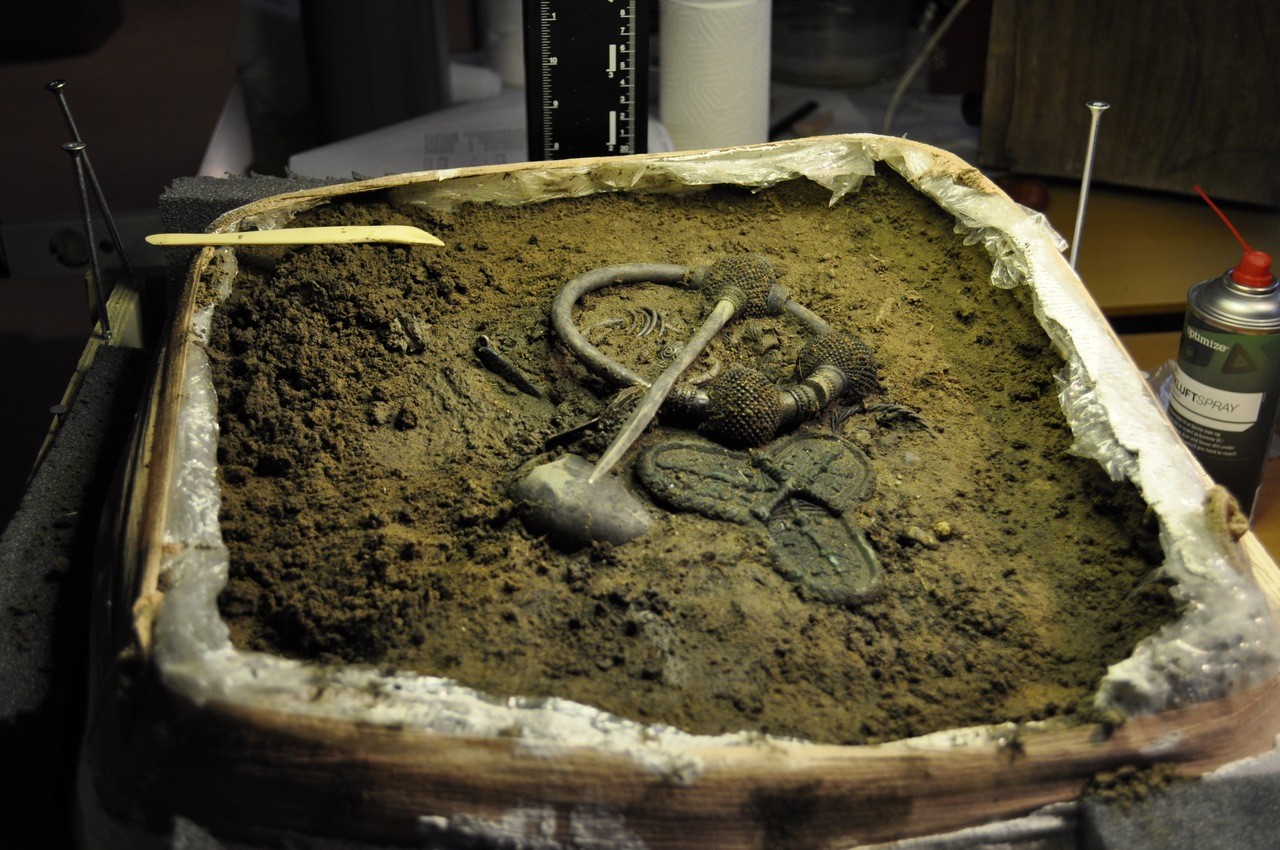
One such lucky find was the result of metal detecting carried out by Søren Bagge, who in August 2015 found a couple of Arabic coins and later a small silver cup near Karleby, 10 km from Lejre. As it was weekend, he did the proper thing and reburied the cup. On Monday he then contacted the local Museum in Roskilde. Later that day the archaeologists encountered multiple artefacts and removed the entire block of black earth in order to CT-scan the lot and excavate it under laboratory conditions.
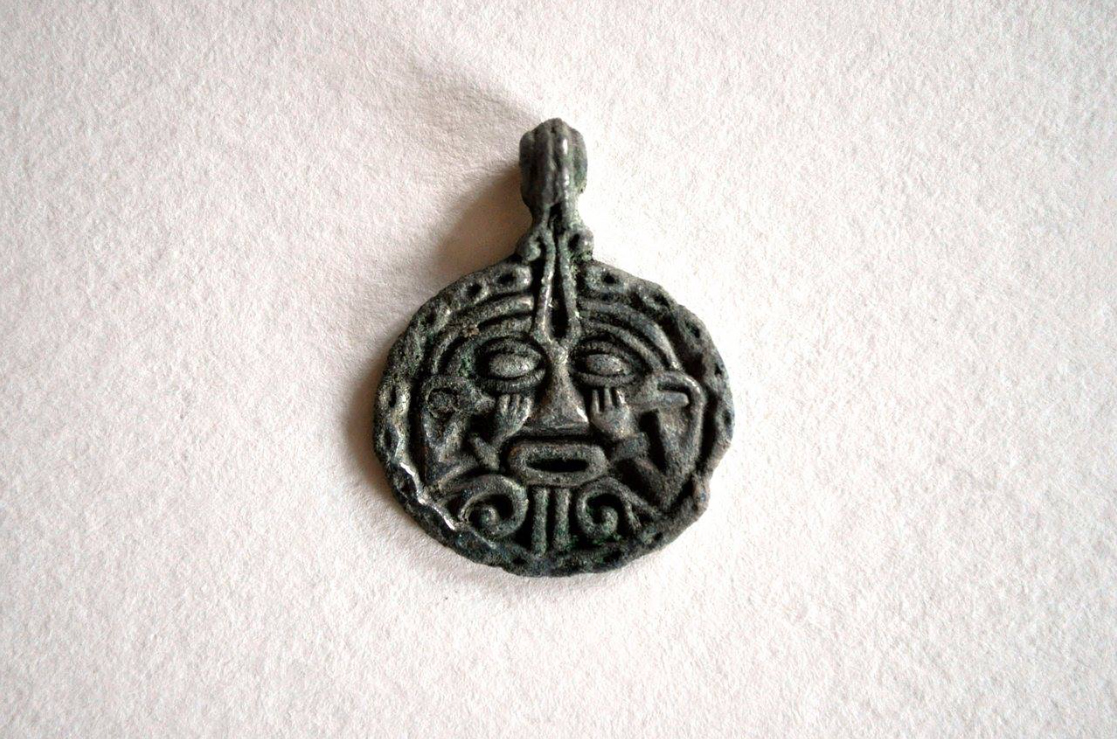
The excavation revealed an exceptional treasure consisting of 392 pieces – 53 gilt bronze gilt bronze and silver pendants, more than 300 beads made of glass, amber, rock crystal and silver, 18 Arabic and Western European coins, a braided silver chain, a bracelet or arm ring with five smaller rings attached, two silver cups and a large thistle brooch. The different pieces were obviously of different national extraction – France, Eastern Europe and Ireland or Scotland. A preliminary study of the treasure has dated it to the second half of the 10th century.
One of the more elaborate finds was a penannular thistle brooch, which measures 25 cm. Such a brooch actually helped to gain Scotland its national flower. According to a legend a Viking marauder happened to step on such a pin during a nightly raid. His yelp raised the Scottish troops who succeeded in repulsing the attack. Whether the brooch is of Scottish or Irish extraction remains to be decided.
Another remarkable find was the trefoil strap-mount with acanthus decoration. The French used such trefoils as fittings on sword straps. However, later it became a coveted motif used for brooches by the Vikings.
Seven hollow beads were of either Scandinavian or Slavic origin. Some were probably manufactured in Poland or West Russia, while others were more home-grown. This is also the case with the bracelet, which would have clinked merrily while worn on the arm of a woman, perhaps reminding her of Odin’s Draupner, dripping rings every 9th night.
Finally the silver cups are remarkable pieces representative of the double sets known from other hoards. It is believed such sets of cups were used to honour guests; the larger and more decorated would have been offered to the guest, while the host would drink from the lesser and non-decorated cup.
SOURCE:
READ MORE:
The hoard from Ll. Karleby was found no more than 10 km from Gl. Lejre and thus helps to outline the cultural context of life in the last phase of the royal centre there. Consisting of disparate artefacts, It presents itself in the same way as the hoard from Lejre.
READ THE FULL STORY HERE:
 ‘Medieval News’ from May 2016 brings you stories about Lejre in the land of the Scyldings and Beowulf, which is about to be unlocked. But it also shares a lot of notices about upcoming conferences, new books etc….