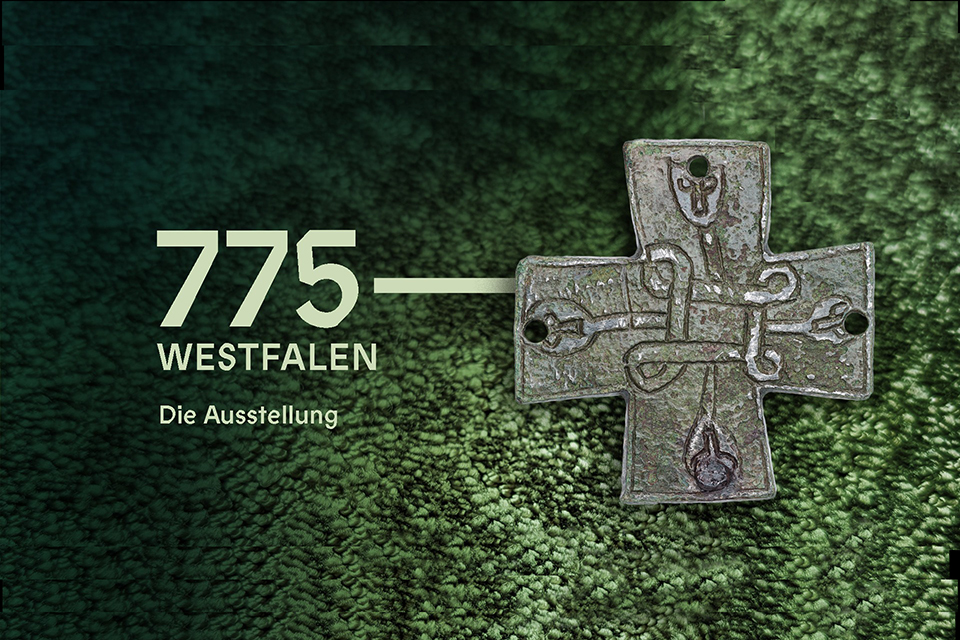
Westphalia celebrates 1250 years of its history and remembers the Saxon Wars and its Carolingian heritage
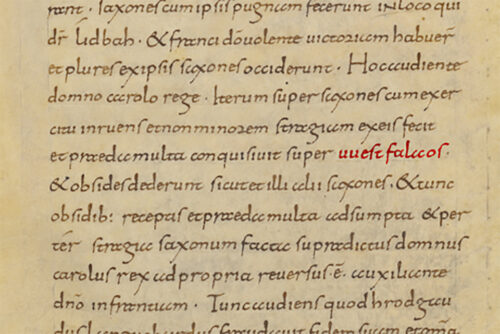
Detail from the Royal Frankish Annals for the year 775 © BnF
Westphalia is part of the North Germain plain, reaching into the hillier Sauerland in the south. It lies roughly between the rivers Rhine and Weser and north of Franken.
This region, whose coat of arms features the characteristic horse, has always been a historically significant area: From the Neanderthals through the ancient Battle of Varus to the Prussian province (in the 19th and early 20th centuries) and the integration into the federal state of North Rhine-Westphalia (after 1945), a broad historical arc is drawn. Today, Westphalia is home to over eight million people – nearly half of the population in NRW.
The Year 775
However, the history of the region, can be dated quite precisely. Although
the Saxons and the Franks had been neighbours to the Roman Empire and each other, the relationship foundered in the 8th century, when the Carolingians took over. Then, in AD 775 – Charlemagne decided, full of anger at the “treacherous Saxons“, to conquer the region and convert the Saxons. This led to the Saxon Wars (772-804). Indeed, Westphalia is first mentioned in the Royal Frankish Chronicles dealing with these campaigns.
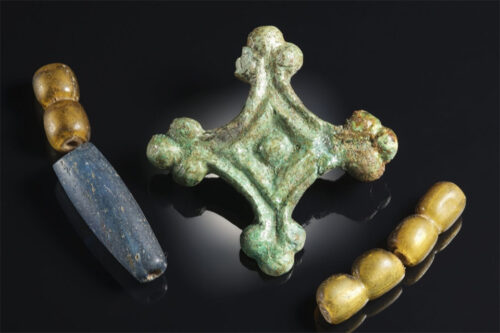
2025 marks this anniversary, and the LWL Cultural Foundation has put together an impressive cultural program, including several exhibitions. For example, the one in the Imperial Palace in Paderborn, which is under the patronage of the Federal President, looks back to the early Middle Ages and showcases recent finds from a cemetery in Schieder-Schwalenberg, which was only recently discovered. Another sheds light on the battle at Braunsberg in AD 775.
Additionally, the anniversary will be celebrated with stage shows, crossover projects, events related to building culture, film, regional studies, literature, and music, as well as podcasts. A collection of essays and scholarly work has been published by Schnell & Steiner.
One of the main questions raised in connection with the exhibition touches upon the identity of the people at the end of the 8th century.
Were the Westphalians a collection of long-existing Saxon subtribes – the Austreleudi, the Angraii, and others? Or a new distinctive and defensive formation of a “Saxon people” created in view of the military threat posed by the Frankish king Charlemagne?
The accompanying volume “775 – Westphalia. A Region is Made” deepens this topic. The Book offers contributions from 41 authors and focuses on different aspects of Westphalian history.
VISIT
775 – Westfalen. Die Ausstellung.
16.05.2025 – 01.03.2026
Paderborn
BOOK
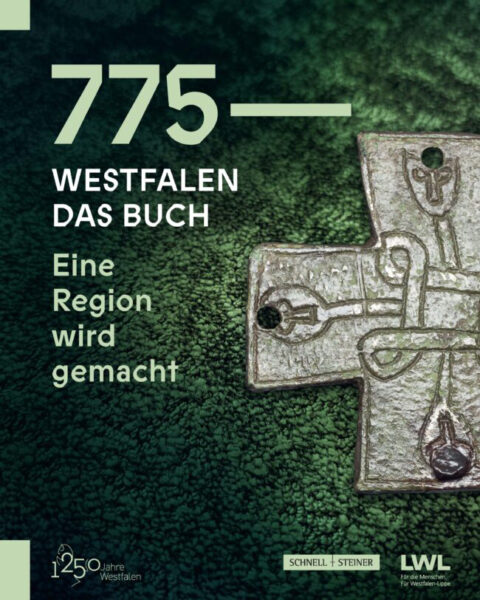 775 – Westfalen. Das Buch. Eine Region wird gemacht
Contributors: Matthias Becher et al
Schnell & Steiner 2025
READ ALSO: