A conference entitled "The Influences of the Dominican Order in the Middle Ages" will be held at the University of Oxford in September 2016

‘Medieval Histories’ offers medievalists all the news about exhibitions, books, research, archaeology, travel-tips and much more from the Medieval World
A conference entitled "The Influences of the Dominican Order in the Middle Ages" will be held at the University of Oxford in September 2016

How shall we understand the events on New Years Eve in Cologne? As the acts of sexually famished young men? As the reflection of another culture? Religion? Or were they primarily culturally inspired coordinated political acts? Comparison with the medieval charivari institution points in that direction

During Christmas 1205 a group of brave Norwegians set out on a perilous journey in order to bring the heir to the Norwegian throne to safety in Trondheim. Fifty years later the story was told by the king's chronicler, forever turning the feat of the Birkebeiners into a national myth
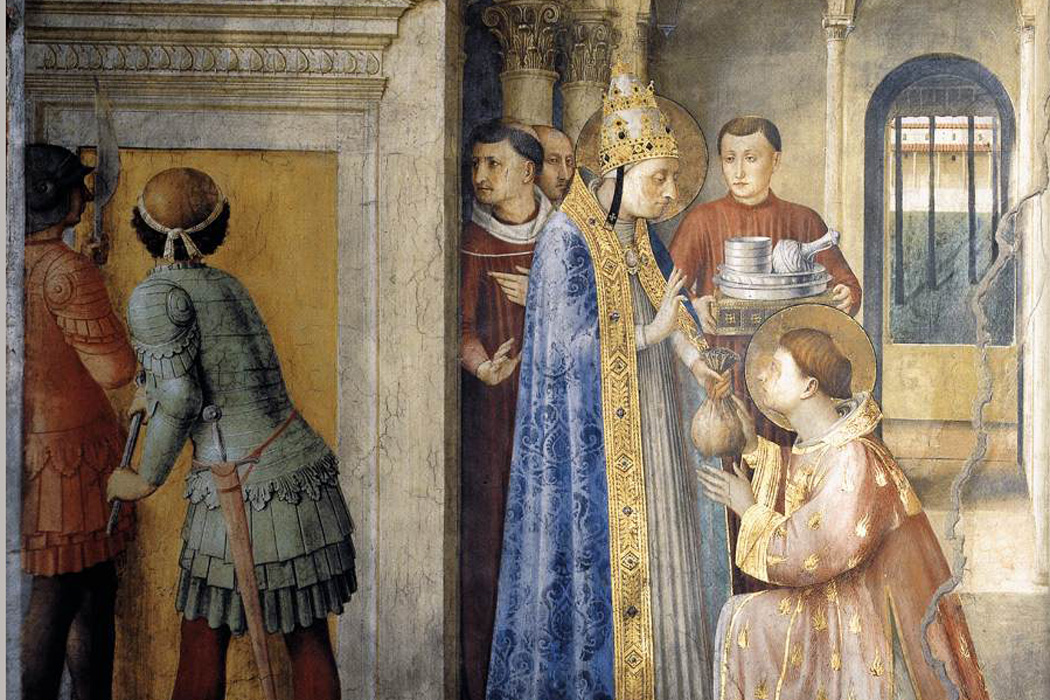
The medieval roots of the doctrine of papal infallibility are traced in this new book by Donald S. Prudlo

Arabic-Islamic Views of the Latin West provides an insight into how the Arabic-Islamic world perceived medieval Western Europe in an age that is usually associated with the rise and expansion of Islam, the Spanish Reconquista, and the Crusades

Medieval Jews and the Christian Past: Jewish Historical Consciousness in Spain and Southern France
by Ram Ben-Shalom (Author) with Chaya Naor (Translator)
Littman Library Of Jewish Civilization 2016
ISBN-13: 978-1904113904
ISBN-10: 1904113907
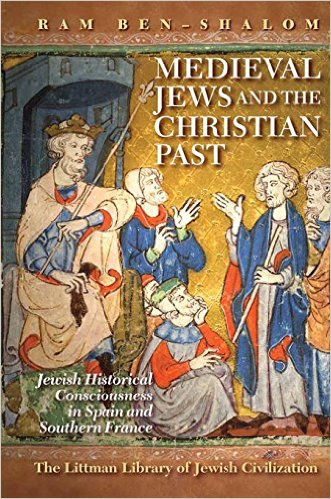 The historical consciousness of medieval Jewry has engendered lively debate in the scholarly world. The focus in this book is on the historical consciousness of the Jews of Spain and southern France in the late Middle Ages, and specifically on their perceptions of Christianity and Christian history and culture. In his detailed analysis of Jews’ understanding of the history of the communities they lived among, Ram Ben-Shalom shows that in these southern European lands Jews experienced a relatively open society that was sensitive to and knowledgeable about voices from other cultures, and that this had significant consequences for shaping Jewish historical consciousness. Among the topics that receive special attention are what Jews knew of the significance of Rome, of Jesus and the early days of Christianity, of Church history, and of the history of the Iberian monarchies. Ben-Shalom demonstrates that, despite the negative stereotypes of Jewry prevalent in Christian literature and increasing familiarity with that literature, they were more influenced by their interactions with Christian society at the local level. Consequently, there was no single stereotype that dominated Jewish thought, and frequently little awareness of the two cultures as representing distinct theologies.
This book contributes to medieval Jewish intellectual history on many levels, demonstrating that, in Spain and southern France, Jews of the later Middle Ages evinced a genuine interest in history, including the history of non-Jews, and that in some cases they were deeply familiar with Christian and sometimes also classical historiography. In providing a comprehensive survey of the multiple contexts in which historiographical material was embedded and the many uses to which it was put, it enriches our understanding of medieval historiography, polemic, Jewish-Christian relations, and the breadth of interests characterizing Provencal and Spanish Jewish communities. This fascinating and well-documented study will appeal not only to scholars of Jewish studies and of medieval history and literature, but also to those interested in Christian history and historiography and in the long saga of Jewish-Christian relations. The Hebrew edition of the book was awarded the Samuel Toledano Prize for its contribution to understanding the Sephardi part in its Christian context.
Ram Ben-Shalom is Professor of the History of the Jewish People at the Hebrew University of Jerusalem, and Director of the Center Hispania Judaica; he is a member of the academic board of I-Core Center for the Study of Conversion and Inter-Religious Encounters and chair of the International Society for Sephardic Studies. He has served as head of the Department of History, Philosophy, and Judaic Studies at the Open University of Israel. He has been a visiting scholar at the Oxford Centre for Hebrew and Jewish Studies, the Institute of Advanced Studies at the Hebrew University of Jerusalem, and the Humboldt University of Berlin. He has published widely on medieval European Jewish history and is a specialist in the Jewish–Christian discourse of the Middle Ages. The Hebrew edition of the present volume, published in 2006, was awarded the Samuel Toledano Prize for its contribution to understanding the Sephardi past in its Christian context. He is the co-editor of Conflict and Religious Conversation in Latin Christendom (2014). His The Jews of Provence: Renaissance in the Shadow of the Church (Hebrew) is forthcoming, and his current projects include an edition of the letters of a Jewish scribe in Aragon and a study of Isaac Nathan of Arles.
Expulsion of Jews. From: Grandes Chroniques de France 1182
Voice and Voicelessness in Medieval Europe forges connections between medieval voices and contemporary ones, giving "voices" to a fresh generation of scholars

Medieval Jewelry and Burial Assemblages in Croatia have been studied to provide relative and absolute chronologies

We all know what a Viking is: a heathen, gruesome and wild Scandinavian, who sailed, raided and traded throughout Europe from c. 799 – 1066.
THESE TERMS AND CONDITIONS OF SALE GOVERN YOUR PURCHASES OF Subscriptions from Medieval Histories Inc. on https://www.medieval.eu
EVERY TIME YOU MAKE A PURCHASE ON OUR SITE, YOU ACKNOWLEDGE AND ACCEPT THESE TERMS AND CONDITIONS OF SALE.
Every order you place through https://www.medieval.eu will be deemed your offer to purchase. We may accept your offer either through an e-mail confirmation or through delivery of the items you requested. Our acceptance of each offer as specified is expressly subject to and conditioned on your acceptance of these (and only these) Terms and Conditions of Sale.
Purchases of Subscriptions (as defined below) are purchases of a limited, non-transferable, revocable license. The license may be terminated immediately if your account is terminated for any reason, in Medieval Histories’ sole and absolute discretion, or if Medieval Histories discontinues providing the services on the Site.
Subscriptions have no monetary value, are non-refundable and cannot be used to purchase or use products or services other than gaining access to the page wherefrom it is possible to download pdf’s or other electronic files.
Subscriptions are deemed consumed upon purchase and end upon any termination of your account.
All prices shown on this site are subject to change without notice. The prices stated at the beginning of delivery apply.
We will collect sales tax in any states we are obligated to do so by law and any applicable sales tax will be added to your purchase.
All Medieval Histories Subscriptions are non-refundable, except, in our sole and absolute discretion or as required by applicable law. Virtual products purchased will be available for use as soon as reasonably practicable.
You can review Medieval Histories Privacy Policy here.
Access to pdf’s or other electronic files takes the form of a membership subscription
You agree that by completing the subscription service registration at the site, you authorize Medieval Histories Inc to charge applicable recurring Subscription fees to your designated billing payment method.
Purchasers of ongoing Subscriptions are billed on a yearly basis, which begins upon membership subscription service registration and ends thirty (365) days thereafter (each a “Subscription Year”). The fee for each Subscription is charged on the 1st day of the Subscription. Renewals are charged one month prior to next year’s subscription begins.
You represent and warrant to Medieval Histories that you are authorized to use the billing payment method (including, without limitation, all accounts, credit cards and such associated therewith) for the purposes of purchasing Subscriptions as described herein.
You can cancel your ongoing subscription in the following way by sending an email at any time until one month is left of the subscription covering the prior year.
It is important to us that you feel secure and safe when you shop at Medieval Histories Inc. Please see our Privacy Policy to understand how we protect your personal information. As part of the shopping process, you may give your credit card information to our Merchant Account at payment processing vendor. We note that payment processing vendor takes the responsibility of protecting that information very seriously.
All Medieval Histories Subscriptions, are non-refundable, and non-returnable except in our sole and absolute discretion.
We reserve the right to cancel any excess portion of an order. We shall not be held in default if delivery is delayed, hindered, or rendered impossible by forces of nature, civil commotion, governmental acts, terrorism, war, storm, fire, flood, explosion, walkouts, strikes, other industrial problems, utility, services, network or transportation or interruptions, server crashes, hackers, viruses, technical issues or any other cause beyond our reasonable control. We reserve the right to revise or modify products, product information or pricing without prior notice. We are not responsible for typographical or printing errors.
These Terms and Conditions of Sale will be interpreted and governed pursuant to the laws of Denmark; and only to those laws.
YOU IRREVOCABLY WAIVE ALL RIGHTS TO BRING OR PARTICIPATE IN ANY CLASS ACTION SUITS OR CLAIMS REGARDING THE MATTERS RELATED HERETO AND CONSENT TO THE MANDATORY ARBITRATION PROVISIONS IN THE Terms of Use.
If any part of these Terms and Conditions of Sale is void, unlawful or unenforceable, that part will be deemed severable and will not affect the validity and enforceability of any remaining provisions. These Terms and Conditions of Sale constitute the entire agreement among the parties relating to this subject matter.
Last updated: Jan. 2, 2016
Medieval Histories Inc.
Paradisstien 5
DK 2840 Holte
Registration number: DK 29 93 42 15
Contact:
Karen Schousboe (Editor-in-Chief and owner of company)
Email: info@medievalhistories.com
Phone: 0045 24 23 36 10

The Royal Studies Network connects scholars who are working on monarchal topics in any geographical or temporal context. Conference in 2016 announced
The 91st Annual Meeting of the Medieval Academy of America will take place on February 25-27 2016 in Boston
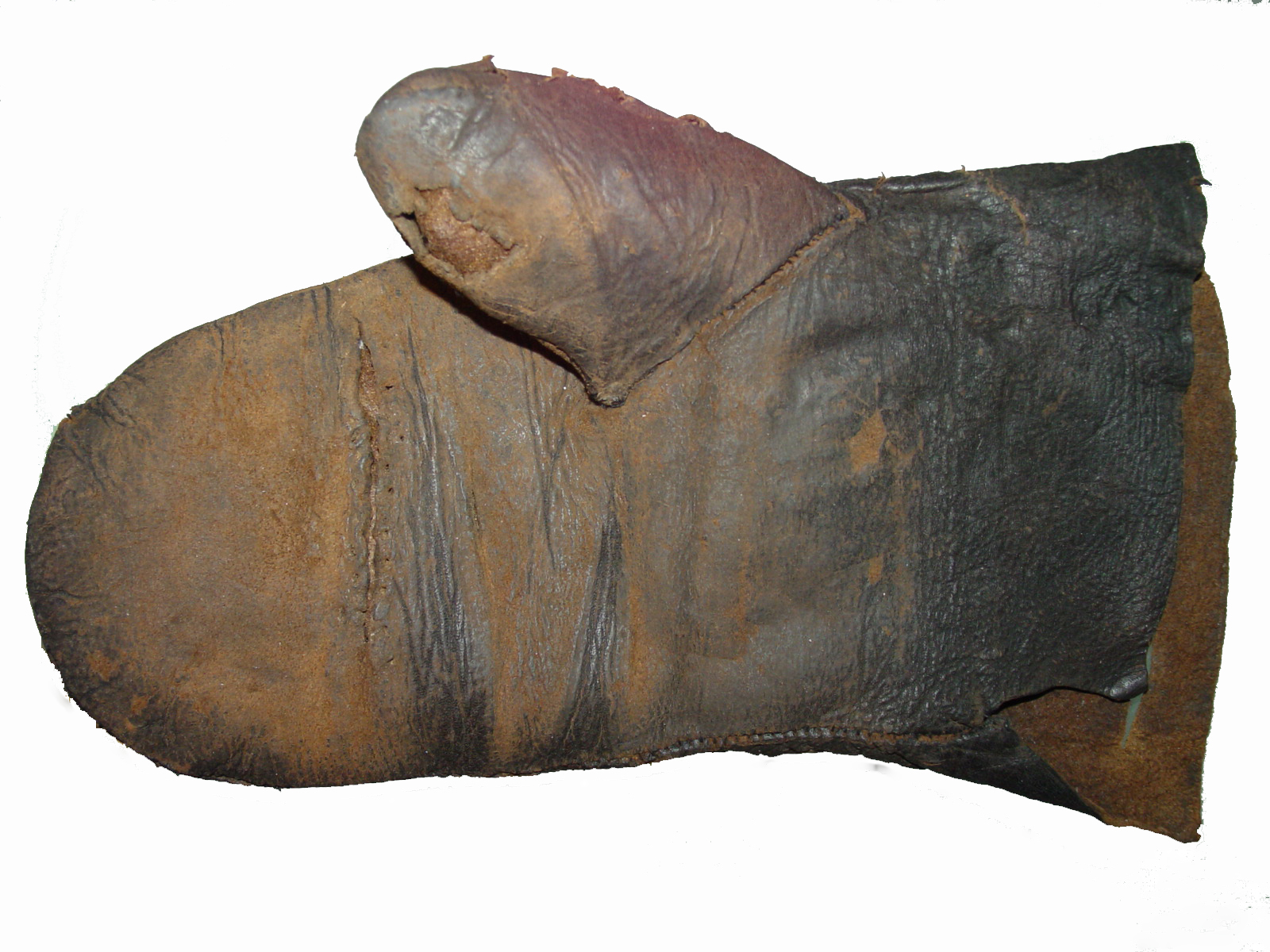
Mittens, gloves and gauntlets represent a number of different types of protective gear for the hands. Their history has recently been told in a new Dutch book.

Dreaming of waking along the ramparts of a massive castle from the 11th century with a view of Donau? Now the time has come

Estonia is known for its very old tradition for using knitted mittens for prestigious gifts. The oldest fragment is from the 13 th century.

The viking hoard from Ll. Karleby found in 2015 about 10 km from the royal centre in Lejre sheds important light on the life in the 10th century