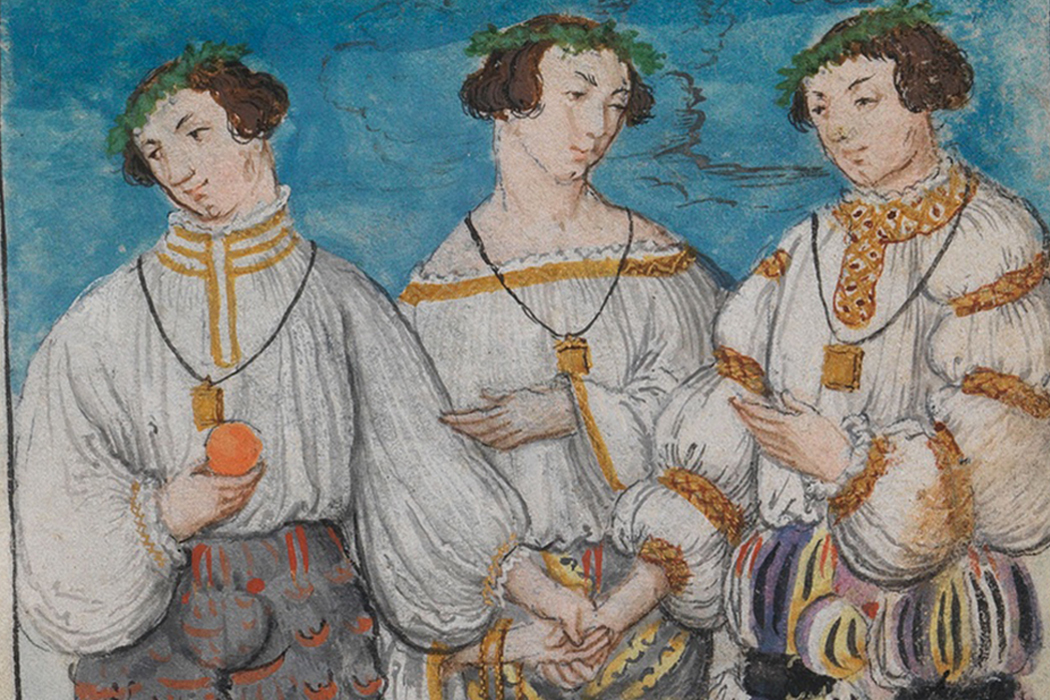
The First Book of Fashion is a unique fashion-journal written and illustrated by a German Clerk from Renaissance Augsburg
‘Medieval Histories’ offers medievalists all the news about exhibitions, books, research, archaeology, travel-tips and much more from the Medieval World
The First Book of Fashion is a unique fashion-journal written and illustrated by a German Clerk from Renaissance Augsburg

In Nürnberg they have an amazing collection of costumes, which is usually hidden away. Now for the first time in decades they are put on show.

Facts or fairy tale? Each year we tell the wondrous story about the brilliant star and the magi bringing gifts to Baby Jesus. New book about the Star of Bethlehem explores the ancient context of the story and its role in the formation of Late Antiquity.
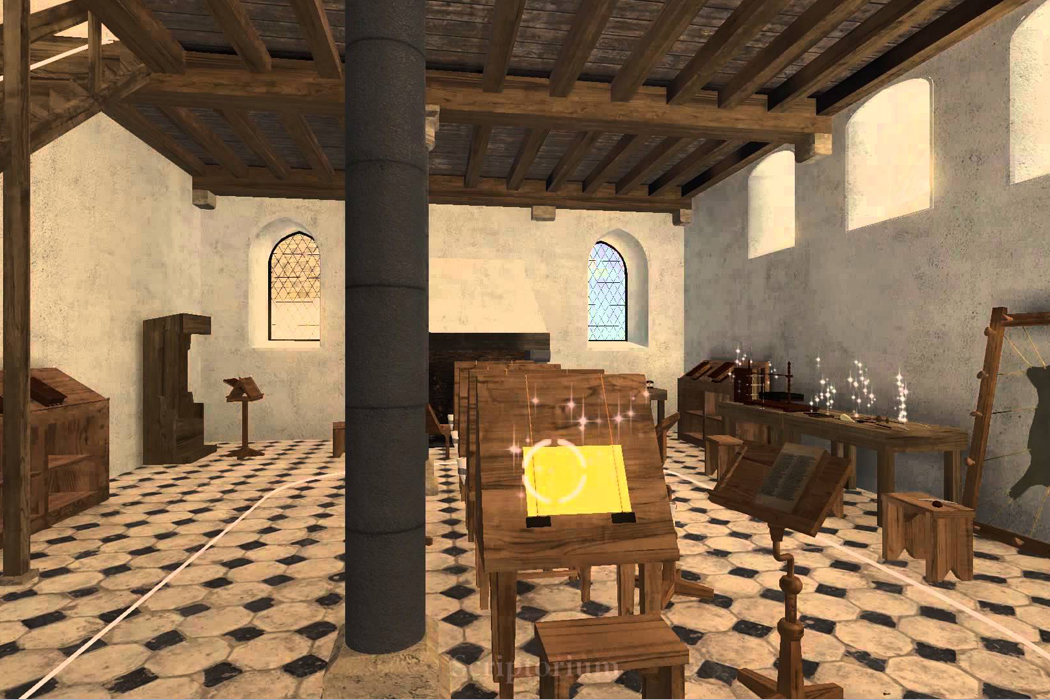
The usage of virtual worlds for simulating history has been little discussed although projects in design schools have repeatedly used "the medieval world" to teaching the technicalities.
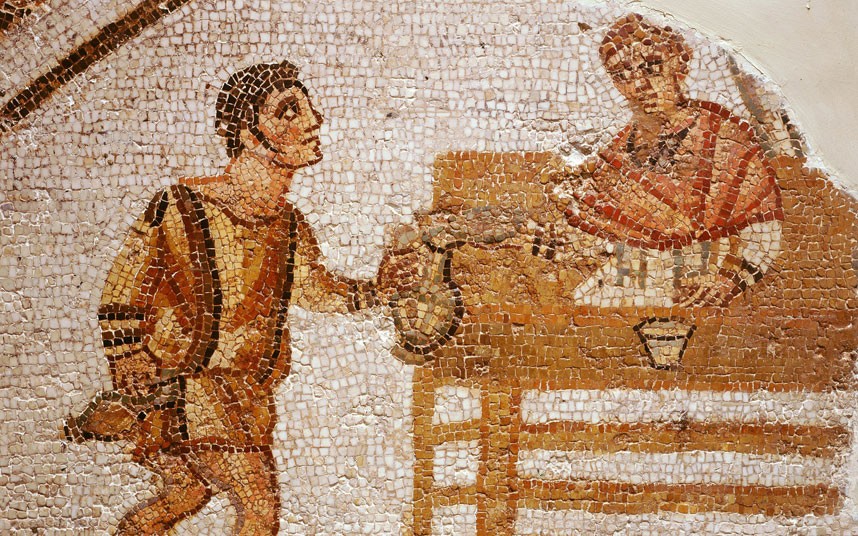 In Antiquity mulled wine was known as “conditum paradoxum”. According to Apicius, a Roman gourmet from the 1st century AD, it was prepared by first mixing wine and honey in order to boil, skim and reduce it ever so slowly. To this mixture should be added ground pepper, some mastic from your wine-stock, a bay leaf, safran, roasted date stones and the flesh of the dates softened in wine and squashed to a smooth pure. Finally it should all be mixed with wine and served cool and strained. Apicius lists the measures, but frankly the measure between honey and wine seems improbable. Another Greek recipe seems more reasonable. In the classical cookbook [1] the following tried and tested recipe is given:
Mix the honey with the same amount of wine (1 ½ dl) and bring to boil. Skim and repeat. Add the spices to the mixture while hot and let it steep until cold. Add the rest of the wine and allow to stand overnight. To serve, strain through a fine sieve or muslin and serve cold. The best way to explain the taste is to think ‘Martini’ (shaken, not stirred).
Curiously enough Apicius and his De coquinara has always been associated with Roman Antiquity. The fact remains however that the earliest manuscripts date from the 8th and 9th centuries. One of these manuscripts was written at the monastery of Fulda and the other at Tours, while the origin of the third is unknown. In a recent PhD Wanessa Asfora has explored the possibility that this collection of recipes was in fact copied in the early Middle Ages for dietetic reasons and that it should rather be considered a medieval collection of recipes. A key to decipher this text as medicinal is the widespread use of the verb tempero and its cognates fundo and condio, all designating mixing. According to Asfora the verbs designate the practice of blend, temper and flavour in order to create a ‘balance’. This is obviously important in the concoction of the 200 or more sauces and condiments, but also – as here – for the forerunner of what we later knows of as a hypocras or mulled wine. The origin of the name comes from the invention of a cloth sieve by the 5th century BC Greek physician Hippocrates.
It is nice to imagine a gout-ridden Charlemagne drinking hot mulled wine when spending christmas in Aachen in the beginning of the 9th century.
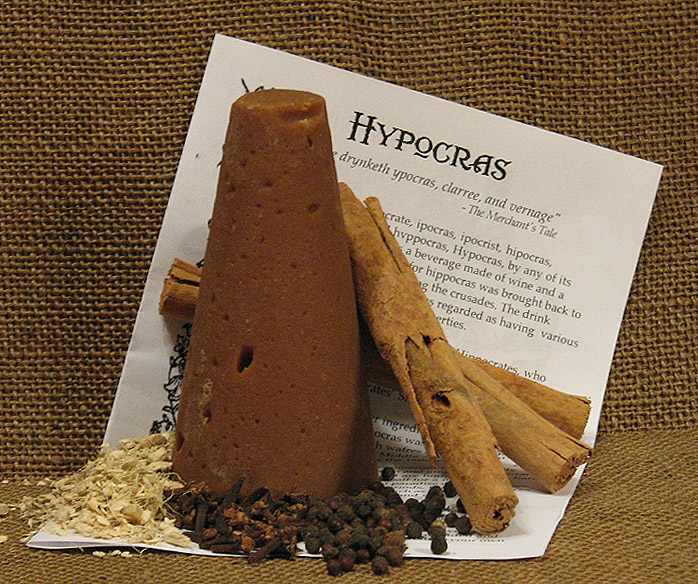 In the later middle ages the hippocras, hypocras (ipocras) or mulled wine became an important part of the last course, the desserte. This consisted of cheese, candied fruits and light cakes, which were often served together with a sweet wine like malvasia (malmsey) and other such wines, which originally came from South-Eastern Europe. Except, of course, these wines were highly prized and more often than not simply substituted by an artificially sweetened concoction, the hypocras
The first recipe for making hypocras is from the 13th century and can be found in the Tractatus de Modo. At that point the drink was called a piment or pimen. However from the 14th and 15th centuries several recipes are known. Here is a recipe from the Menagiér de Paris from the late 14th century [2] on how to make “hippocras”.
To make hippocras powder pound together (app)
For 1.8 litre of wine the Good Wife was ordered to mix it with 15 – 20 gr of this mixture plus 250 gr of sugar.
But if she was preparing a hippocras as served in Bésiers, Carcasonne or Montpelier she was recommended to pulverize 20 gr cinnamon with 12 gr white ginger and all together 5 gr of clove, grains of Paradise, mace, galingale, nutmeg and spikenard “more of the first and then less and less of the others as you go”. This should be mixed with 500 gr of sugar. Put some of the sugar and some wine to boil and mix it with the spices. Then strain it as many times as is necessary until it comes out clear and red. “Nota that the tastes of sugar and cinnamon should dominate”.
This sound as a rather sweet mixture, but we all know that the further south in Europe you travel the sweeter cakes seem to be.
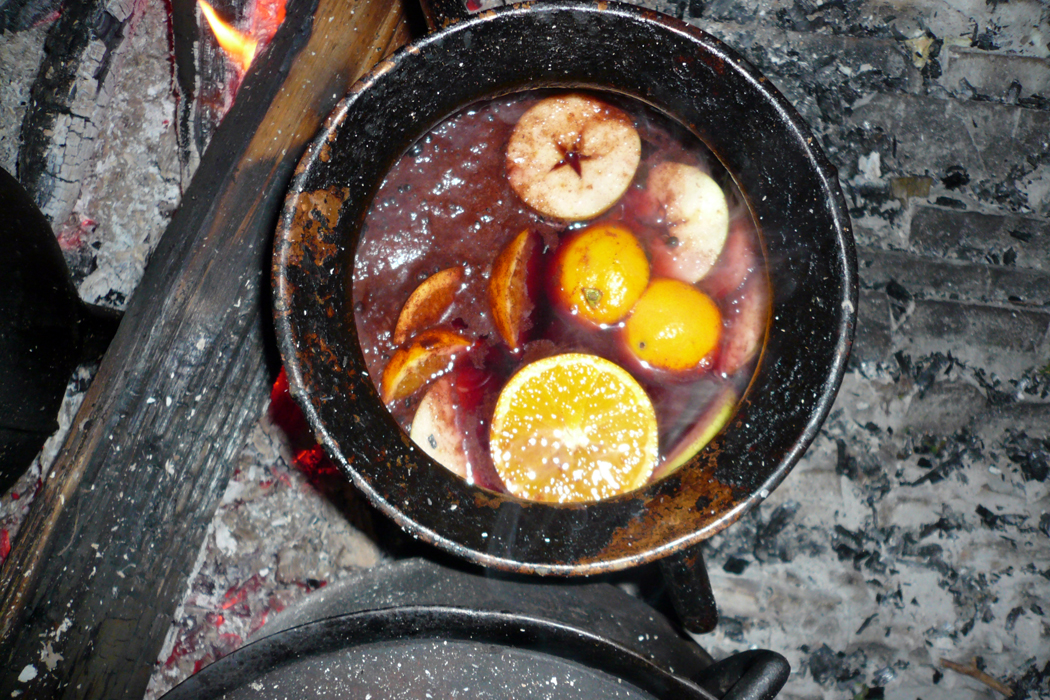 In the later Middle Ages small bags of the spices meant for making hippocras or mulled wine could be bought ready-mixed in the markets. (As they may today in December at all street -corners).
However, from later cook books we know of a plenitude of recipes for different types of hippocras very much like the one, which the “Good Wife” was ordered to serve to her elderly husband. Apparently, any good housekeeper knew how to make her own mixture. Here is one with cardamom added [2]:
Mix it with 2 dl wine and 100 gr of sugar and set it to boil for five minutes. When cold, strain it and mix the rest of the bottle of wine into the strained liquid. Together this mixture is then poured through the cloth with the spices.
Another recipe describes a mixture consisting of
Here the spices are supposed to be mixed with some of the wine and just set aside for a day, when the rest of the wine should be added. This should be left standing for yet another day, after having been strained, the wine should be carefully warmed up with sugar.
The recipes do not say whether they should be served hot or cold. Probably it depended on the weather and the doctor’s order.
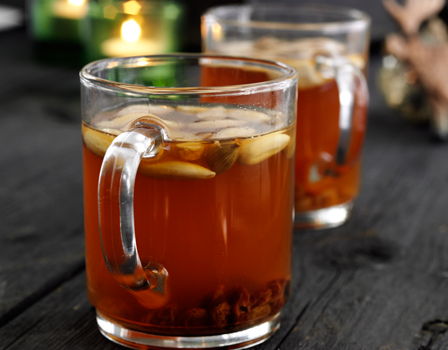 A very nice modern version is to mix and bring to boil
As soon as it boils the mixture should be taken off the stove and set aside for 1 – 1 ½ hour. Strain the mixture and heat it. Can be mixed with a finely chopped apple, chopped almonds and/or chopped dried apricots or plums. Nice for children (non-alcoholic). And Really nice laced with Calvados (apple brandy)…
Tip: If you are preparing a large batch for a party with friends and family, it might make sense to make a spicy syrup by placing the spices in a teabag and cook them with half and half of honey (sugar) and juice (wine). This is what we do…
[1] From: Apicius: history of incorporating a cookbook on Early Middle Ages (the 8th and 9th centuries.)
By Wanessa Asfora.
[2] The Good Wife’s Guide. Le Ménagier de Paris. A Medieval Household Book.
Translated by Gina L. Greco and Christine M. Rose
Cornell University Press 2009
The recipes can be found on pp. 329 -30
[3] The recipes are from: Renæssancemad. Opskrifter og køkkenhistorie fra Christian 4’s tid. Gyldendal 2006, p. 144 – 145.
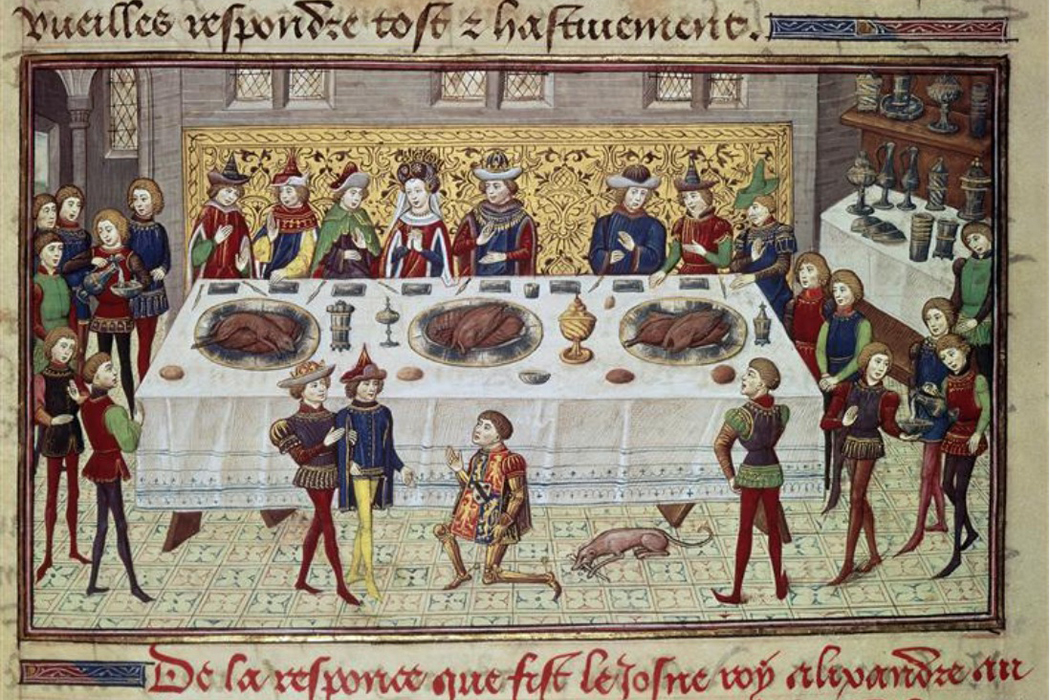
Le Livre des conquêtes et faits d’Alexandre was made for the Duke of Burgundy, Philip the Good (1396-1467) . It is preserved in the Musée du Petit Palais.Source: Pinterest
In AD 481 Clovis, son of Childeric was only sixteen years old, when his father died. How did he grab his throne? Wonderful new exhibition in Mainz tells the story
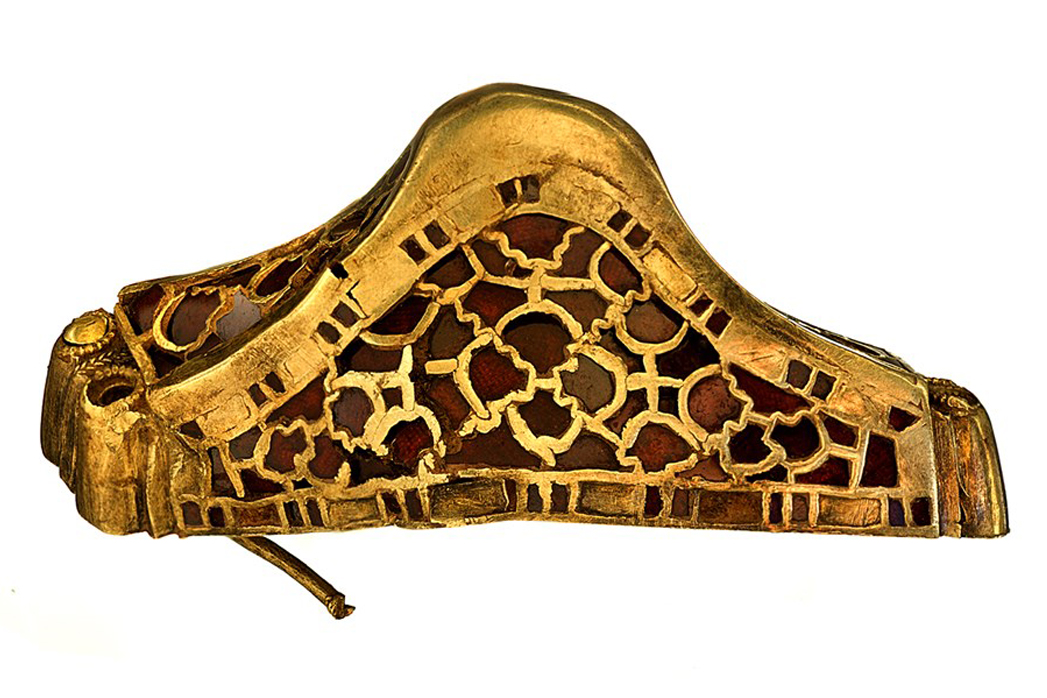
Apart from the information concerning the upcoming final publication – a simply must have coffee-table book to be published in 2016 – the December issue of the newsletter tells us about the helmet crest, the organic filling beneath the cloisonné and inside pommel caps, the analysis of the metal, pommel art and the intriguing die-sheet showing off an equestrian warrior.

Plans are unveiled to create a new interactive experience to showcase the events leading up to the construction of the Sutton Hoo Landscape in the 7th century.

REVIEW: Joan de Valence c. 1230 – 1307 was a great heiress with powerful roles to play as wife, mother and head of a princely household. New book tells the story

Medieval Histories Magazine 2015, No. 21 bring you stories about Advent and the Truce of God, a recipe for Medieval Whigs and Lacemaking and Catherine of Aragon
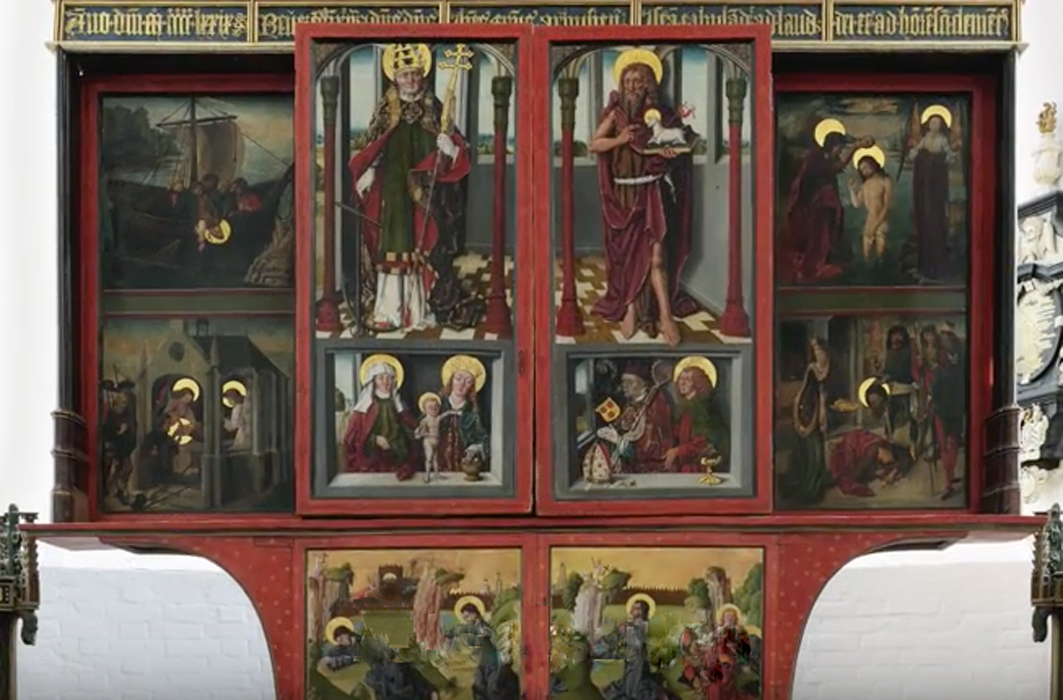
Bernt Notke (c. 1440 – 1509) was a German Painter and wood-carver responsible for the intricate altarpiece in Århus Cathedral, which has three positions, Feast, Passion and Advent
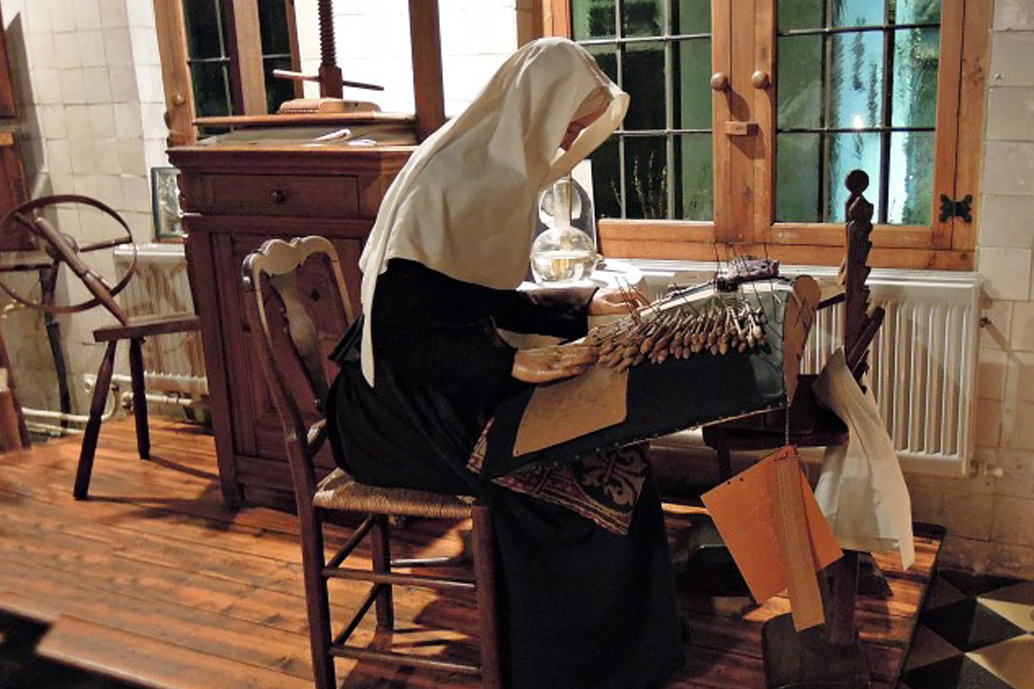
Tanner’s Day – also known as St. Andrew’s Day – falls on the 30. November. It used to be a holiday celebrated by the lace makers in Bedfordshire. The tradition might go back to Catherine of Aragon.
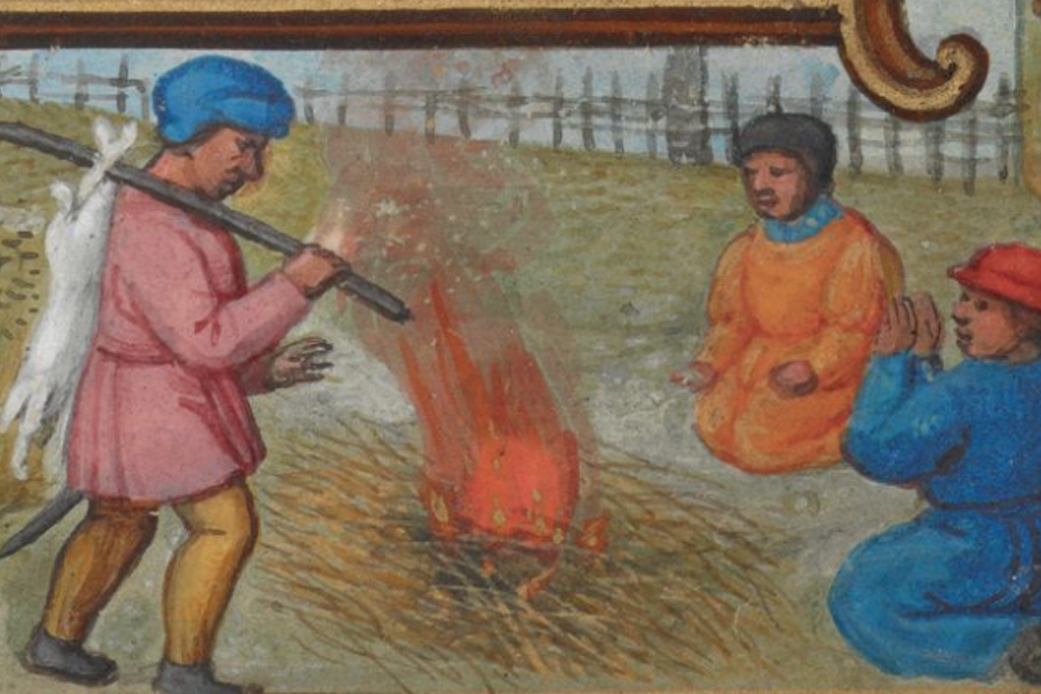
Tandry Whigs are soft buns served on St. Andrew's Day on the 30th of November. The modern version has medieval roots. Here is a recipe.

The Utrecht Centre for Medieval Studies coordinates the manifold research initiatives developed by the medievalists working at Utrecht University.
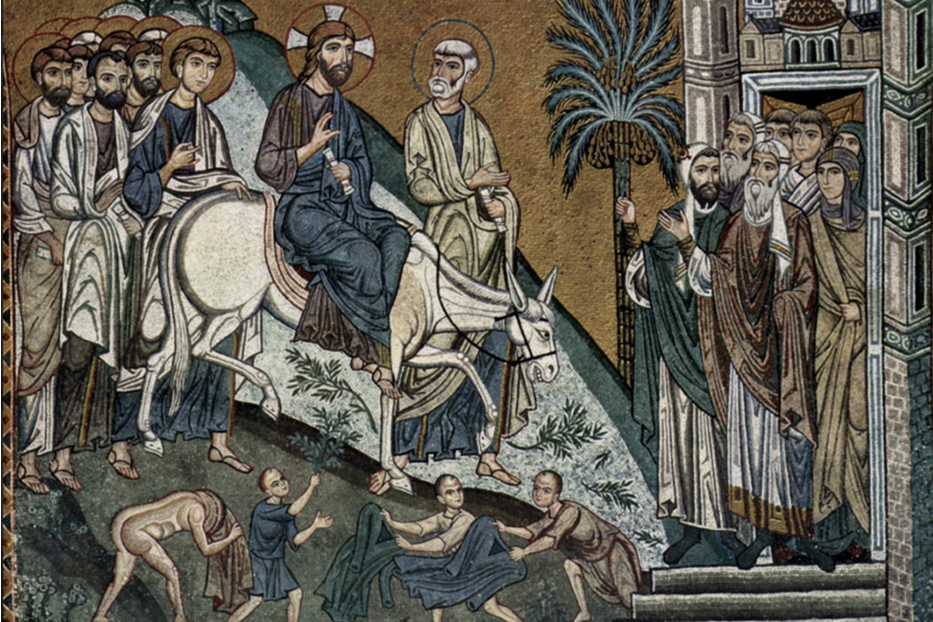
Originally Advent was a period of Parousia with Christmas signalling the Second Coming of Christ. Later it became a period set aside for peace when warring and feuding was strictly prohibited. Signalled by the Triumphant Coming of Christ and his earthly representative, the King heralded a new worldly peace
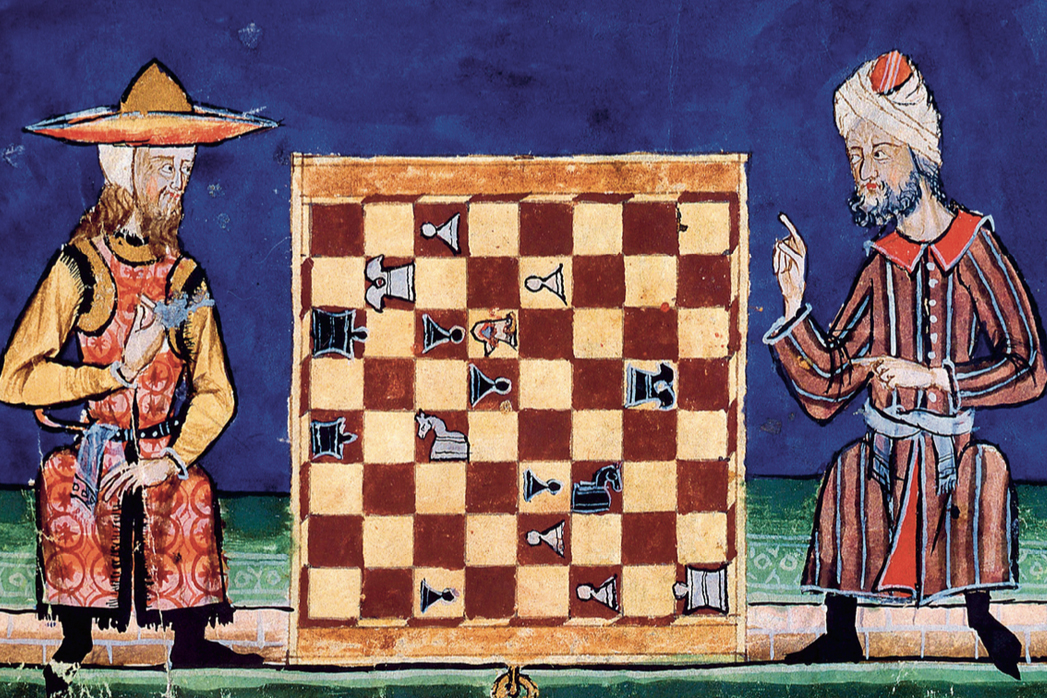
The concept of Convivencia refers to the way in which Christians, Muslims and Jews lived together in Medieval Iberia. But what is the history behind this concept?