Home » Medieval Histories » Page 57

Category: Medieval Histories

‘Medieval Histories’ offers medievalists all the news about exhibitions, books, research, archaeology, travel-tips and much more from the Medieval World

The Viking Way – Religion and War in Late Iron Age Scandinavia

The_Viking_WayThe Viking Way: Religion and War in Late Iron Age Scandinavia

Magic, sorcery and witchcraft are among the most common themes of the great medieval Icelandic sagas and poems, the problematic yet vital sources that provide our primary textual evidence for the Viking Age that they claim to describe. Yet despite the consistency of this picture, surprisingly little archaeological or historical research has been done to explore what this may really have meant to the men and women of the time.

This book examines the evidence for Old Norse sorcery, looking at its meaning and function, practice and practitioners, and the complicated constructions of gender and sexual identity with which these were underpinned. Combining strong elements of eroticism and aggression, sorcery appears as a fundamental domain of women’s power, linking them with the gods, the dead and the future. Their battle spells and combat rituals complement the men’s physical acts of fighting, in a supernatural empowerment of the Viking way of life. What emerges is a fundamentally new image of the world in which the Vikings understood themselves to move, in which magic and its implications permeated every aspect of a society permanently geared for war. In this fully revised and expanded second edition, Neil Price takes us with him on a tour through the sights and sounds of this undiscovered country, meeting its human and otherworldly inhabitants, including the Sami with whom the Norse partly shared this mental landscape. On the way we explore Viking notions of the mind and soul, the fluidity of the boundaries that they drew between humans and animals, and the immense variety of their spiritual beliefs. We find magic in the Vikings’ bedrooms and on their battlefields, and we meet the sorcerers themselves through their remarkable burials and the tools of their trade.

Combining archaeology, history and literary scholarship with extensive studies of Germanic and circumpolar religion, this multi-award-winning book shows us the Vikings as we have never seen them before.

The Viking Way: Religion and War in Late Iron Age Scandinavia
By Neil Price
Published by the Department of Archaeology and Ancient History, Uppsala University 2002. New edition will be published 2014 by Oxbow
ISBN:         91-506-1626-9

Viking Ships

viking-ships-museumViking Ship Museum Boats

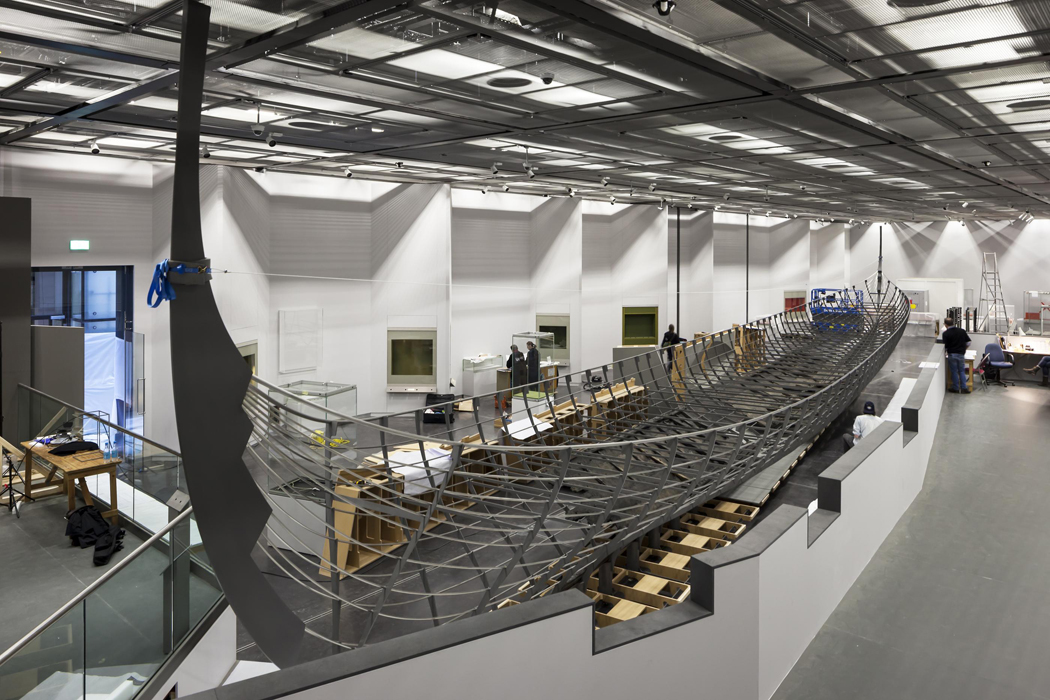
The Viking Ship Museum in Roskilde is the Danish museum for ships and shipping in prehistoric and medieval times. The museum collection is based on the five viking ships which were excavated at Skuldelev in 1962 and through reconstructions of those and other vessels, the museum aims to bring life to the archaeological finds. The boat collection continues to grow and reveals how the wooden vessels of today still show visible evidence of having viking forefathers – it has not been necessary to change the basic principles of boat construction in a thousand years! The book provides an overview of the various boat types in the collection. Leveringstid kan forekomme.

 The Viking Ships Museum Boats
By Max Vinner
Vikingeskibsmuseet 2002
ISBN 978-87-85180-48-3.
Price: €20

Viking Ship Roskilde 6

Viking 2013

Viking – The National Museum of Denmark Special Exihibition 2013 – English Catalogue

Viking 2013
By Peter Pentz, Gareth Williams, Matthias Wemhoff (ed)
The National Museum of Denmark and the British Museum 2013
ISBN: 9788776022006

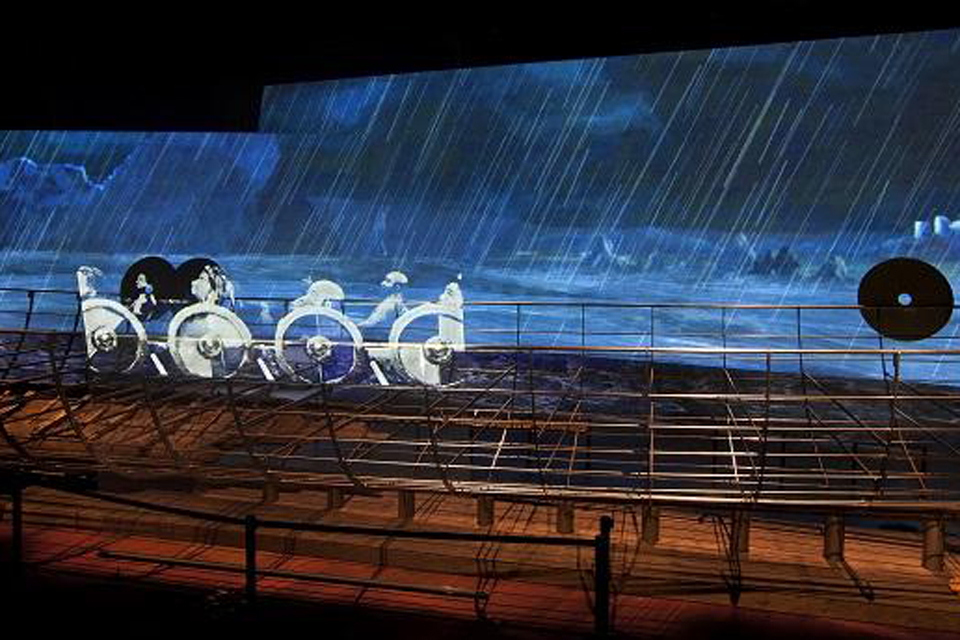
Catalogue covering this year’s massive Viking exhibition. The book spans 288 impressive pages, containing vivid colour photo and exciting information about the Viking age. The exhibition’s focal point is the 37 meter Viking ship, Ægir, and the Vikings as travelers, warriors, politicians and merchants. Beside the ship, the exhibition contains several objects and some recent archaeological finds, which have never been shown to the public before. The catalogue is very well written and presents a fresh and new scientifically grounded vision of what the Vikings were all about. Highly recommended!

The catalogue is a perfect supplement to the exhibition, which is open from June 22. – November 17. 2013 at The National Museum in Copenhagen. The exhibition then moves onto London and Berlin.

Read more about the exhibition


More good reads about the Vikings and lots of other merchandise may be found in the Museum Shop at the National Museum in Copenhagen


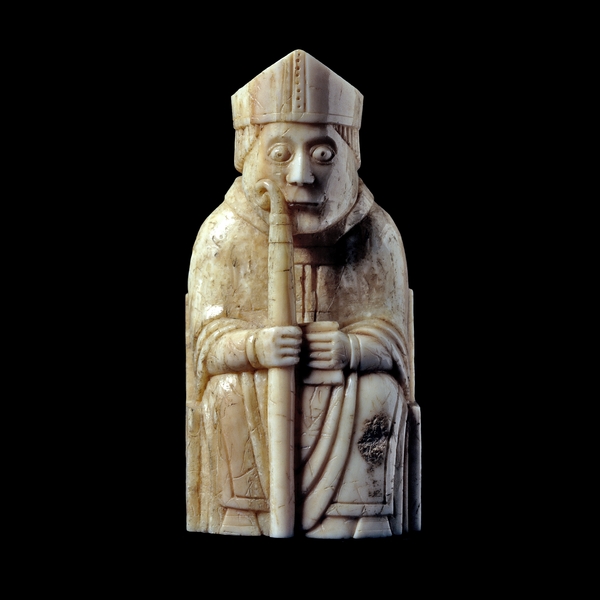
lewis-chess-bishop

My Lord Bishop – Chronicles and the Construction of Medieval Episcopal Identity

My Lord Bishop: Chronicles and the Construction of Episcopal Identity in Late Medieval England

ABSTRACT:

The article compares and contrasts late medieval models of episcopal identity in ‘local’ and ‘national’ chronicles. In the ‘national’ chronicles of Henry Knighton and Thomas Walsingham, bishops were constructed as models (both good and bad) of the exercise of sacral power as martyr saints, martial figures, and learned combatants of heresy. By contrast in the York Minster chronicle the model is much more based on the twelfth century “deeds of the bishop” tradition and is focussed on the relationship between the bishop and his mother church, so that the specifically ecclesiastical good lordship of the bishop looms large. However, both kinds of chronicle saw bishops as both peacemakers and defenders of the rights of the church.

ABOUT THE AUTHOR:

Patricia H. Cullum is head of  Department of History and Politics at Huddersfield University since 2003. She is primarily interested in female lay piety, but have more recently been working on masculinity and especially secular clerical masculinity in the later middle ages.

SOURCE:

My Lord Bishop: Chronicles and the Construction of Episcopal Identity in Late Medieval England
By Patricia H. Cullum
In: International Journal of Regional and Local History, Volume 8, Number 1, May 2013 , pp. 40-53(14)
Publisher: Maney Publishing
DOI: http://dx.doi.org.ep.fjernadgang.kb.dk/10.1179/2051453013Z.0000000005

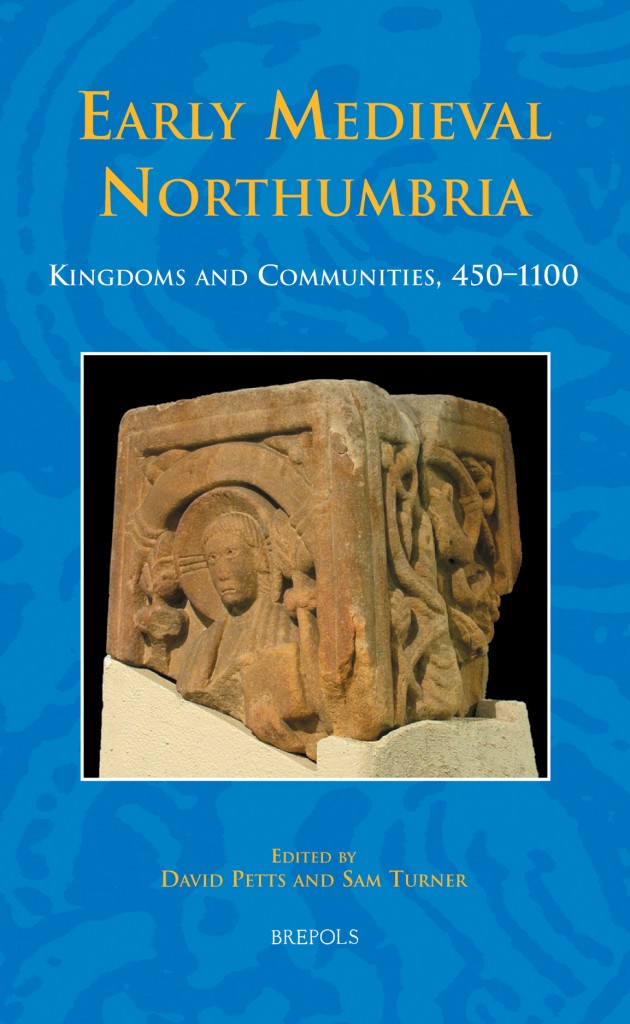
Early medieval Northumbria

Early Medieval Northumbria. Kingdoms and Communities, AD 450 -1100.
David Petts and Sam Turner (eds).
Studies in the Early Middle Ages. Vol 24.
Brepols 2011.

In a sense, early medieval Northumbria is an enigma. On one hand it presents us with some of the most evocative historical sources – foremost the writings of Bede, but also other material like hagiographies and letters. On the other hand charters are non-existent as are compilations of law. This leaves the Early Medieval Northumbrian historian with a dire need to consult archaeologists, art historians, onomastic scholars, biologist and zoologists in order to get a better grip on the lives and thoughts of people at that time. And vice versa!

In 2006 a group of researchers got together in Newcastle in order to try and bridge the many traditions and see if the merging of their different nitty-gritty and specialised enquiries might throw new light on the region as well as raise the interdisciplinary awareness of the need for further collaboration.

The papers from this conference are now available in a very interesting edition prepared by Davis Petts from Durham University and Sam Turner from Newcastle.

Of course, as with any collection of papers, you have to sift the wheat from the chaff. Nevertheless it is a very interesting collection, in so far as it really tries to bring the reader up to date on the many lingering questions and scholarly controversies: To what extent constituted the Anglo-Saxon immigration a brutal subjugation of the British? Or was there rather an atmosphere of “continuity and convivencia ”, which the archaeological excavations of Yeavering have hinted at? Should Early Medieval Northumbria be considered a homogenous kingdom albeit marked by strife and upheavals? Or was it rather a poly-cultural region consisting of an Anglo-Saxon coastal region and a less subdued hinterland in the West, characterised as a frontier zone – a zone of process more than place?

Lots of good questions and many interesting answers! As an example may be mentioned the analysis by Jenny Walker of the great halls at Doon Hill and Yeavering, showing how the “later” halls from the first half of the 7th century might be interpreted as evidence for a more hierarchical social structure, organising space for ritual processions and gatherings in order to showcase might and power of a new kind. Or as claimed by Colm O’Brien in his revaluation of the excavations at Yeavering: “ Here the elite played out inside great timber constructions, clad to simulate Roman stone, the drama of the Hall in which a king received and gave honour, and fealty was confirmed with gold and mead”.

There is definitely and increased appreciation of the need for regional studies as well as the need for more holistic oriented studies of the material culture in order to grasp Early Medieval History. For a long time this was a specialty of German Historians.

Now, it seems the English are getting there…

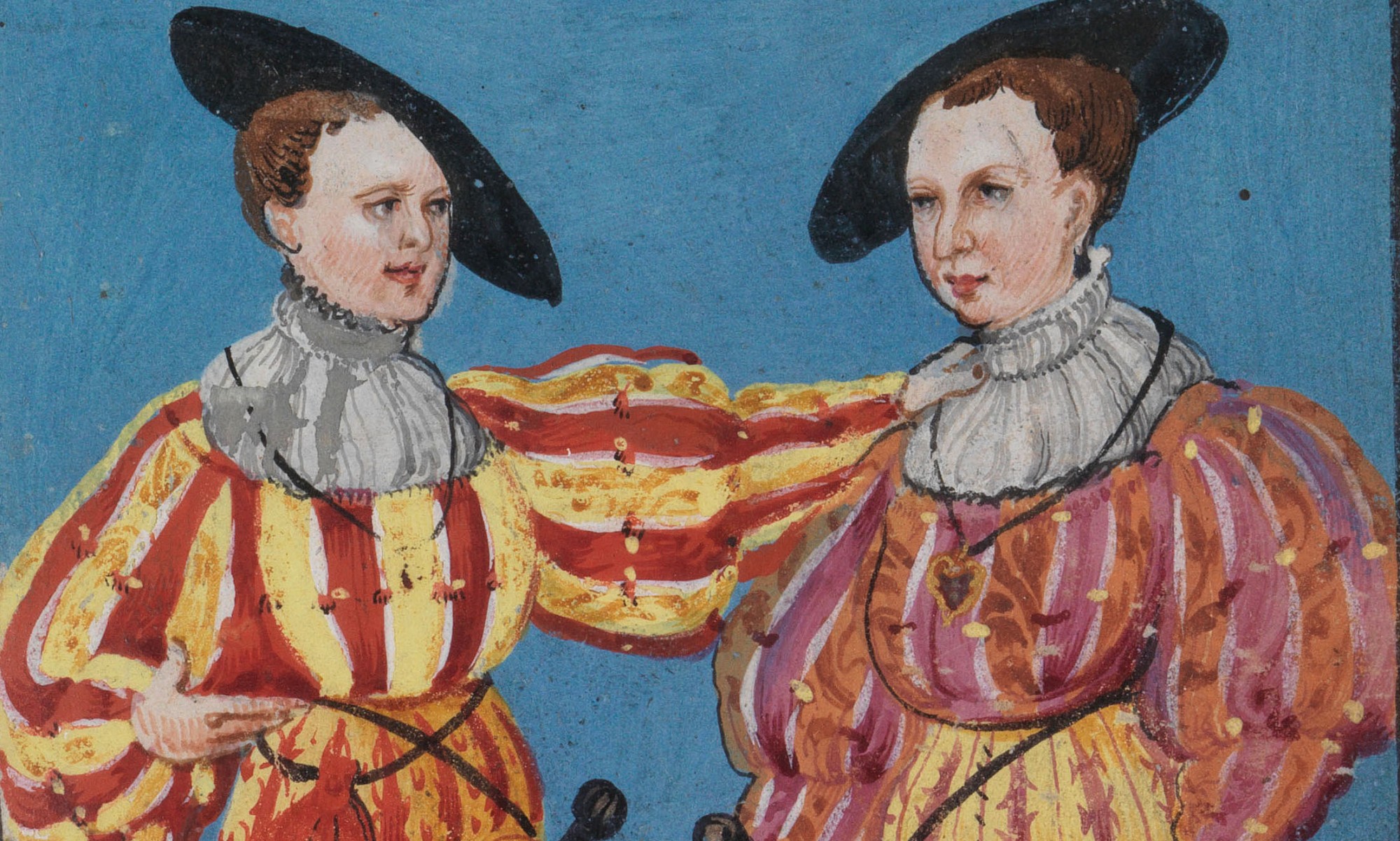
First book of fashion dress for meeeting with the emperor

Dressing Up

Dressing Up by Ulinka Rublack tells the fascinating story of how clothes in the 16th century were used in order to imagine a new and frightening world

Read more

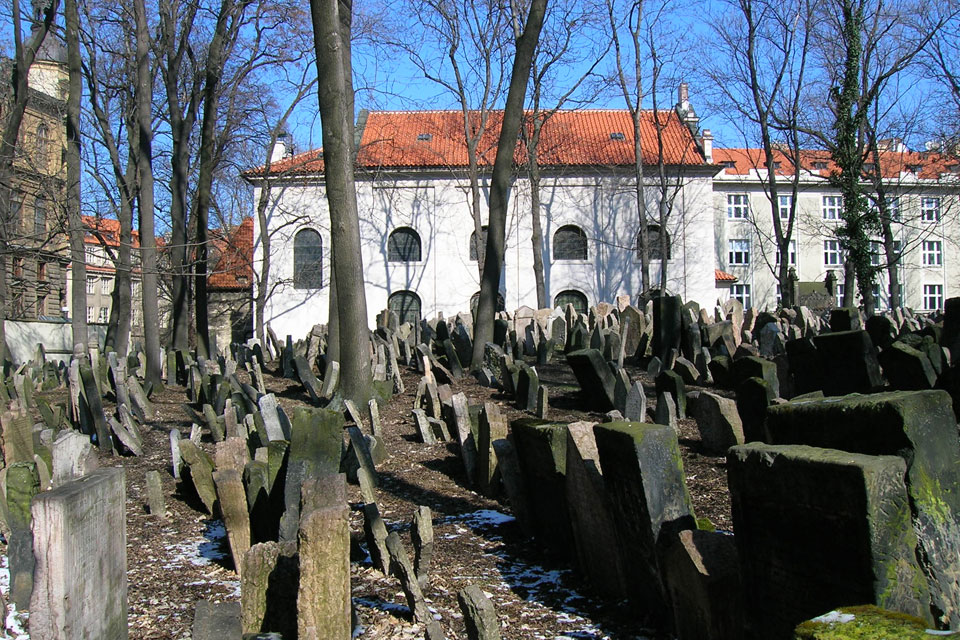
The Jewish cemetery in Prague. Source: Private Prague Guide

Passion in Prague

One of the more evocative places in Prague is the Jewish churchyard and the the oldest synagogue in Europe. In 1389 it was the scene of a terrible pogrom.

Read more