Vikings are bare-breasted colossal men of Nordic descent with long flaxen hair, plaited beards, filed teeth and wearing helmets with horns. We explore the reality behind the myth...
Category: Medieval News
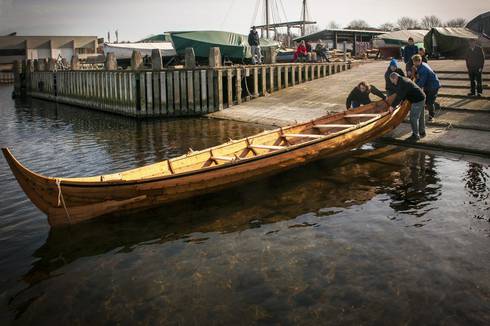
Gokstad Boat
A copy of one of the small clinker-built boats from 900 AD found at Gokstad in Norway in 1880 was recently launched…

Vikings – Life and Legend
A review of the reviews of the 2014 exhibition of the Vikings - Life and Legend at the British Museum
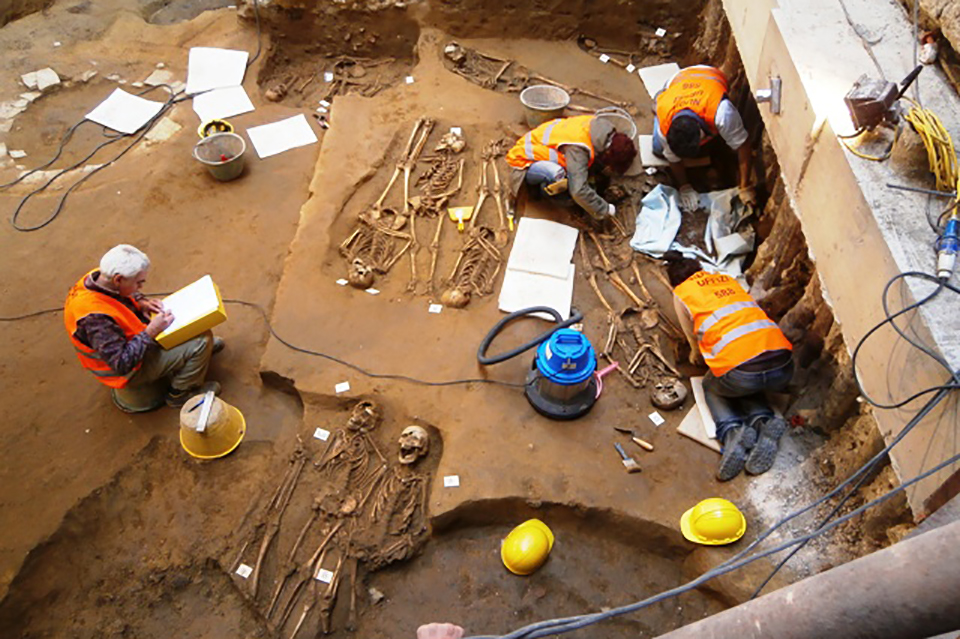
Plague Victims?
ARCHAEOLOGY: Sixty skeletons buried in a graveyard from the 5th – 6th century have been found in Florence

Noah’s Flood
RESEARCH AND POETRY: Gaelic poetry from the 15th century paints a vivid picture of a flooded Welsh landscape...
Richard III’s Genome
The University of Leicester is moving ahead in order to sequence his full genome. Will somebody also clone him in the future?

Getting Closer to the Emperor
The exhibition of an original door of Charlemagne's from 766 - 850 is one way of getting closer to the man himself...
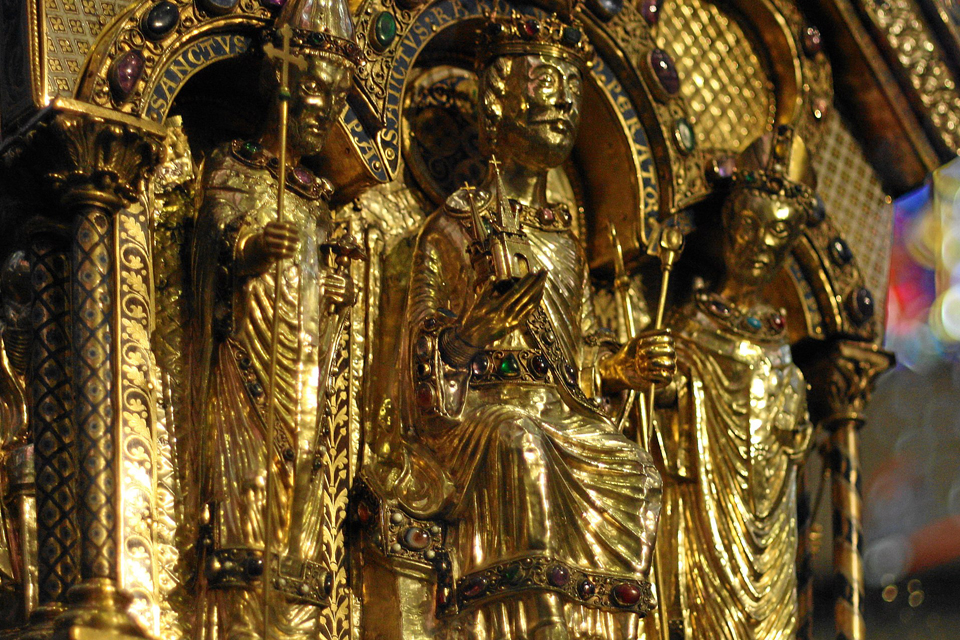
Bones of Charlemagne
Recent scientific examinations of Charlemagne's bones have brought us a bit closer to the man, who was both lean and graceful...
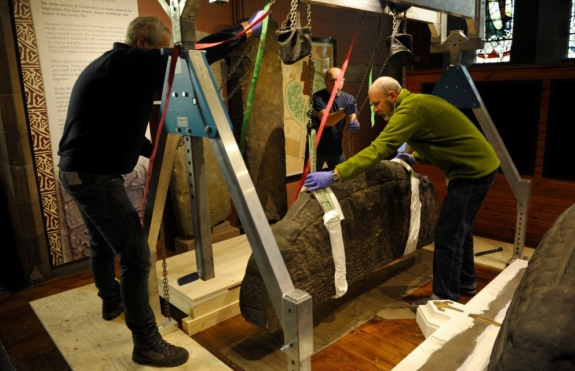
Viking Hogbacks
One of the impressive hogbacks is shipped to London to be exhibited among Viking treasures...
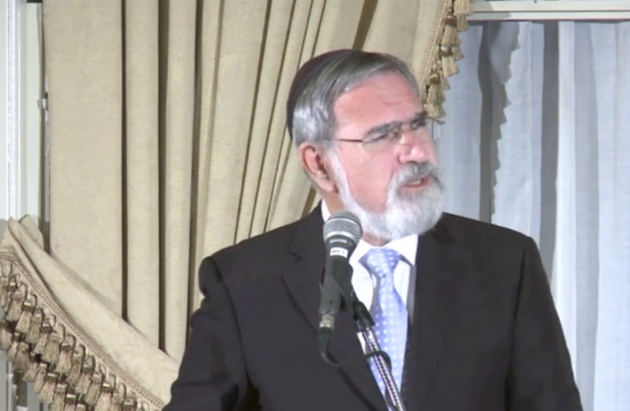
Creative Minorities
Christians can learn from Jews and the history of the Jews, unfolding their lives as a “Creative Minority”, says Jonathan Sacks in the Erasmus Lecture 2013...
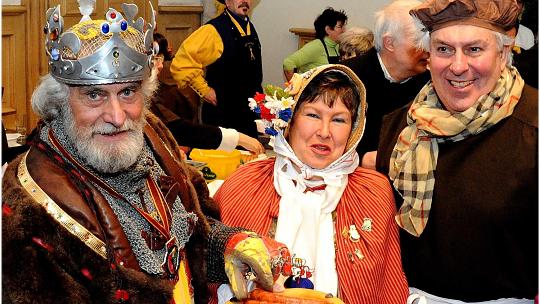
Karlsfest 2014
EVENT: In Aachen Charlemagne is celebrated with a Pontifical High Mass and a medieval market...
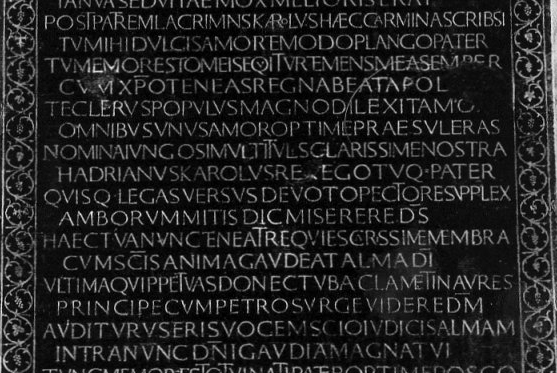
Charlemagne 1200
EVENT: Charlemagne is celebrated in London on the 1200th anniversary of his death...
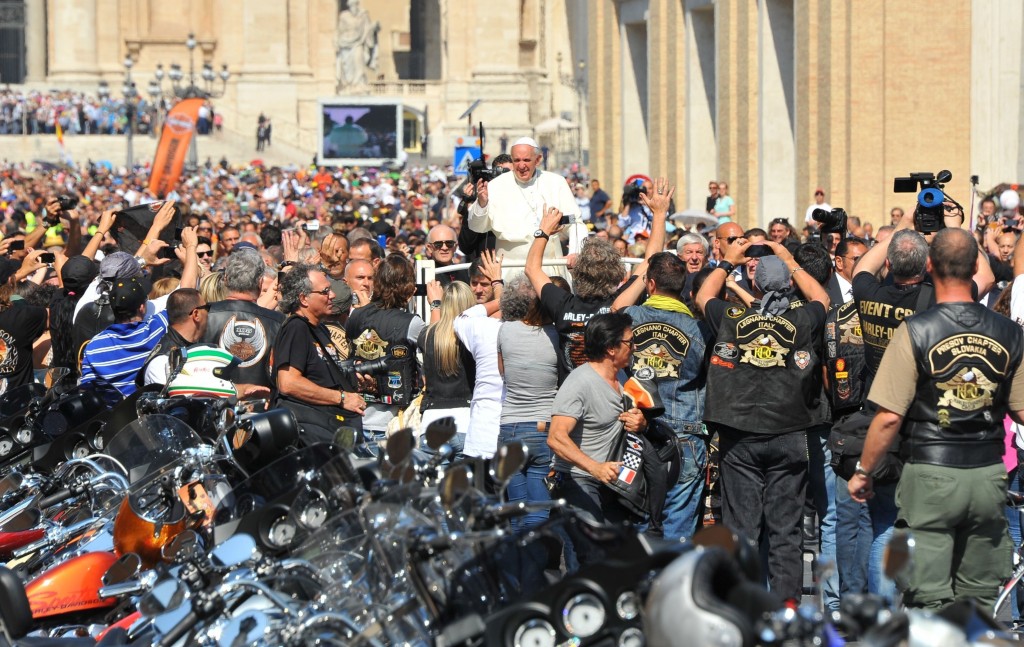
Papal Biker
The present pope has a predilection for public transport. And apparently loathes the bulletproof papamobile. But will he return to the tradition of being carried around?
Summer 2013 Harley- Davidson presented the new Pope with a 1,585 cc Harley Davidson Dyna Super Glide, signed Francesco on its tank to mark the mortorcycle brand’s 110th anniversary. Now the Pope has put it up for sale at Bonhams at an auction next week in Paris. The mortorcycle has been especially signed by the Pope and is accompanied by a leather jacket, also bearing his signature.
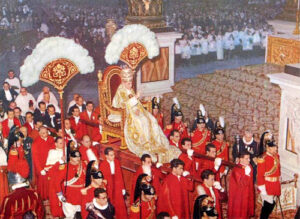
The proceeds will be given to Caritas Roma, a charity working on behalf of the Catholic Church. Another new invention has been the constant use of open “popemobiles” in order to increase the access of ordinary people to the ministry of the pope. After the assassination attempt in xxx the world experienced the pope enclosed in a series of more and more bulletproof display glass cases. This praxis was discarded during the visit to Buenos Aires’ last summer. And will probably continue, since it allows the Pope to interact in a very lively way with the crowds, as recently witnessed by the Pope inviting a friend from Argentina for a ride across the Piazza di San Pietro in the current popemobile, which looks more and more like an ordinary platform truck painted white for the occasion. More privately the Pope is currently driving himself around in an ancient Renault4 from 1984, a gift from an old priest from Northern Italy. This followed his sale of the more ordinary Mercedes-Benz popemobile, which was sold earlier this year.
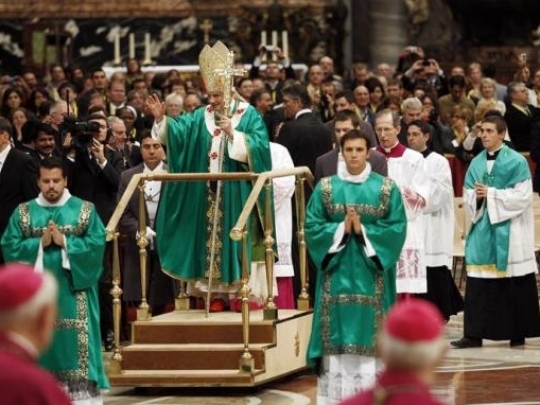
It is a fair guess that the present Pope is not going to experiment with introducing new forms of the traditional Sedia Gestatoria – or chair for carrying – as his predecessor did with the wheeled walker especially designed to lift him above the crowds. Benedict probably itched to be carried around as his forebears were up until 1978, in line with his rediscovery of carmine plush hats, red shoes and ermine; but he prudently refrained.
It is not quite known when the tradition of carrying the Pope around began. A fair guess, however, is that the tradition derived from the ancient ritual of carrying the newly elected Roman consuls though the city of Rome with their sella curulis in front.
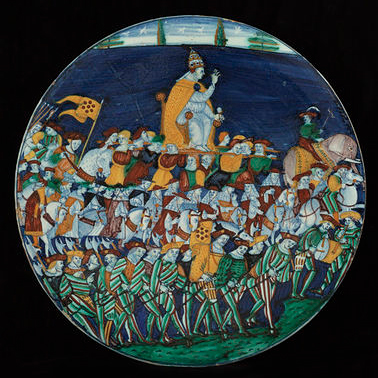
© Victoria and Albert Museum, Museum number:
8928-1863
Sedia gestatoria were richly adorned , silk-covered armchairs, fastened on a suppedaneum, on each side of which were two gilded rings, through which long rods were passed allowing twelve footmen to carry the throne on their shoulders. Alongside two flagella or fans made of white ostrich feathers were traditionally carried.
These are absent, however, from an early depiction of a pope being carried around at a memorial plaque now in the V&A. The plate was probably made to commemorate the visit of the medici-Pope, Leo X, who visited Florence in 1516. Such depictions of contemporary historical events are rarely found on maiolica, rendering this a particularly interesting scene with the authentic Florentine trees in the background and the throng of people circling the Sedia gestatoria. The plaque is exhibited at V&A in Medieval and Renaissance, room 64, case 12 and carries the number 8928 -1863.

Davos 2014
This year the spirit is definitely downcast. Maybe Davos-man ought to "go medieval"...
Digitized Manuscripts
RESOURCE: Digitized Medieval Manuscripts – or DMMmaps – is a fantastic new resource ...
Medieval Travels 2014
Get an overview of the ten most important medieval exhibitions spring and summer 2014