Fond of Puzzles? Help reconstruct the Pictish Cadboll Stone out of 3000 x-rayed fragments...
Fond of Puzzles? Help reconstruct the Pictish Cadboll Stone out of 3000 x-rayed fragments...
Tales of a boy wizard and stories about elves and world-shattering fights about an uncomfortable iron throne might have something to do with an increased flow of students interested in medieval studies, tells the new director for the Medieval and Renaissance Studies Program at the University of Ottawa, Cristina Perissinotto, to the The Ottawa Citizen. While enrolment in the university’s small interdisciplinary program has usually hovered around 40 students, last year there were 58, she said. This represents a growth of more than 45%. The reason for the spike isn’t clear, Perissinotto said to journalist Neco Cockburn, but she suspects that massively popular books, movies and TV series could be playing a role.
‘They’re at that age that when they started to become interested in reading — serious books, not children’s books — Harry Potter was around. These stories come out, with beautiful packaging, and people start looking at them and being fascinated by them, and then it becomes one of those passions. … It creates a point of entry, but then they want to know more,’ she said to the newspaper.
The Harry Potter generation, however, who started out reading about the exploits on the Hogwarts School of Witchcraft in 1997 have already graduated. More likely the inspiration stems from the filming of Tolkiens trilogy from 2001 and the later surge in series like Henry VIII, the Borgias and not least the Game of Thrones, which Perissinotto also mentions. This observation coincides with some remarks, which were phrased by the acclaimed medievalist, Dame Janet Nelson in an interview in 2008. In the interview the professor with a 38 year career at King’s College in London said that she had noticed that undergraduates studying modern history generally claimed that they had been inspired by watching films and TV. “But that doesn’t so often happen with medieval history because there just isn’t so much available”, she said adding that there had been some programs and that she did not think there was “any reason why medieval history shouldn’t join in this flourishing [area]”.
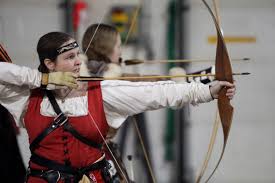
A few days ago (18.10.2013) the University opened its doors and so did the Medieval Studies programme with a bonanza of lectures and fun celebrating modern medievalism. Andrew Taylor, the vice dean of undergraduate studies in the faculty of arts gave a lecture on “Harry Potter, or Game of Thrones….What were the Middle Ages really like?”. In it he tried to decipher the “real Middle Ages” and tell a bit about some of the misconceptions of the era. Later parents and students were treated to a session “Telling stories from the Middle Ages and the Renaissance”. Here nationally acclaimed novelist and storyteller Marie Bilodeau, of the Kymeras Group, gave a public performance for students and parents visiting the University of Ottawa, while weaving myths and stories form the Middle Ages and the Renaissance, adapting them to a to a modern sensibility. Finally the day ended with “The Society for Creative Anachronism” which paid an extraordinary visit to the University of Ottawa Open House. A variety of medieval and renaissance Lords and peasants showed up in period attire to demonstrate fencing and teach any willing guests a few period dances.
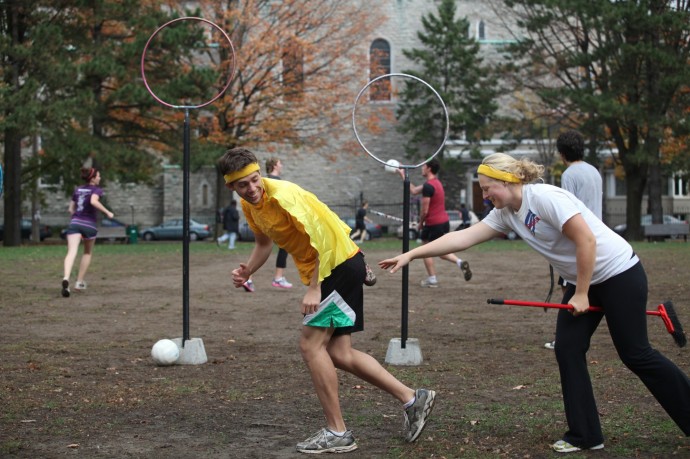
Some might consider these activities daring in an academic context. To Ottawa University, however, this is not something new. Already some years ago the University established a Quidditch team, which plays with broomsticks and all the other paraphernalia both in the Canada Tournament and on the world stage (See video here)
Some high school students, who attended the lecture on Friday said to Neco Cuckburn “that they had already been interested in history outside the fictional series, though they acknowledged that Potter’s adventures in particular may have piqued their interest or turned it in new directions. ‘I wasn’t really interested in the whole fantasy or even medieval stuff, and then I started reading books like Lord of the Rings or Harry Potter and then I was drawn to it because people who wrote the books wrote them so well that it made me interested,’ said Grace Macfarlane, a Grade 12 student at Holy Trinity Catholic School” to Neco Cockburn.
SOURCE:
Harry Potter, Game of Thrones possibly behind surge in interest in medieval studies at uOttawa
by Neco Cockburn – twitter.com/NecoCockburn
Making History: Interview with Dame Janet Nelson 2008
See video presenting the University of Ottawa Quidditch team
Recently Pope Francis canonized Blessed Angela of Foligno, a Franciscan mystic from the 13th century – but why?...
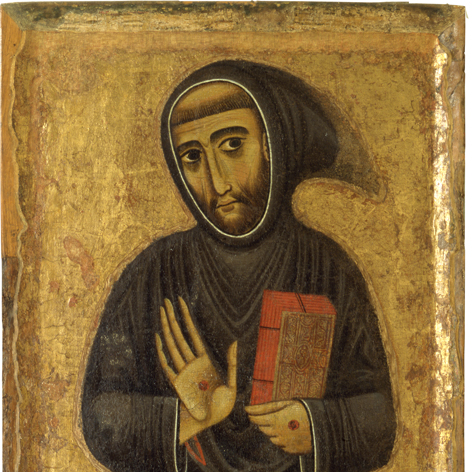 This week Pope Francis visited the crypt in the Basilica in Assisi and prayed for less “wordliness”. But what were the life and times of his namesake, St. Francis. A series of recent biographies tries to tackle the conundrum once more…
Assisi in the autumn is a evocative place, suggestive of endless possibilities for more peaceful, simple lives filled with charity. This week the new Pope – who dared to name himself after the beloved man from Umbria – visited the city, prayed at the tomb of St. Francis and asked for less “worldliness”. The “World does not care if so many families have nothing to eat”, he said later at lunch at the caritas centre, where he listened to the stories of poor people suffering from hunger and promised to open up the many derelict and empty convents and monasteries for the homeless.
But who was St. Francis and what were his life and times like? This has of course been the subject of and endless stream of more or less novelistic and scholarly works, some of which have been recently published in new editions in order to cater for the “market”.
For anyone “new” to the phenomena – and who wants to get a better grasp of the facts – we bring a list of the more recent publications of scholarly interest written by medieval historians:
[ws_table id=”25″]
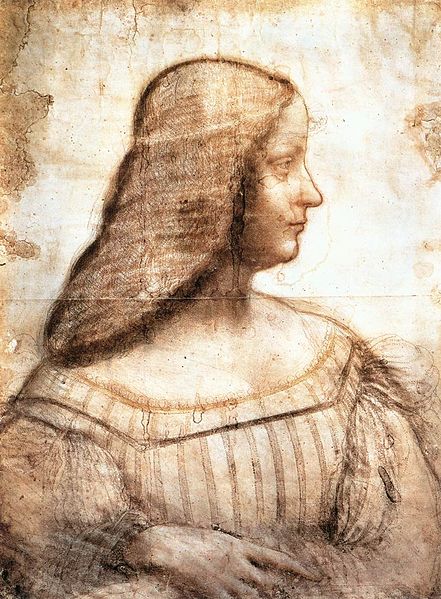
SENSATION: Lost painting of Isabelle d'Este by Leonardo da Vinci said to be found in Swiss vault…

Source of Mysterious Medieval Eruption from 1258 identified as Indonesia’s Samalas volcano, part of the Rinjani Volcanic Complex on Lombok Island

Treasures of medieval statuary - two mourners of alabaster from the tomb of le Duc de Berry from the 15th century - are on sale...
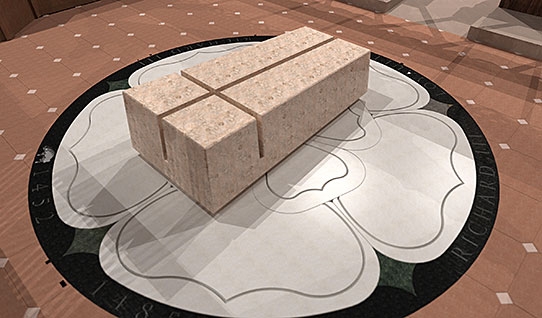
Shadowed by legal wrangling, the Cathedral of Leicester is moving forward with their plans for the future re-interment of Richard III. Last week the design for the future tomb was unveiled – a modern tomb made of white fossil limestone from Swaledale in Northern Yorkshire. (Perhaps a slight nod towards the growing enmity between York and Leicester over his bodily remains). It will be placed on an inlaid floor with a rose carved in limestone and surrounded by a band of dark Kilkenny limestone.
The tomb itself is nearly undecorated except from a cross deeply slashed through the cover-stone. The name of the King, the dates of his birth and death (1452-1485) his personal motto, ‘Loyaulte me Lie (Loyalty binds Me)’ and his ‘boar’ badge will be carved into the dark circular band on the floor around the tomb. The area will be defined by wooden screens. The site of the tomb is in what is now the Chancel of the Cathedral, a traditional place of honour. This is equivalent to the position of the King’s original grave in the Grey Friars Priory.
Already – in what is busily turning into a lurid farce – the Richard III Society claims they will no longer contribute to the funding since (as quoted by BBC) Philippa Langley, the instigator of the excavations of the King in the Carpark, said “it was unfit for a medieval warrior king”. It is believed the Society was deeply hurt that their suggestion – a neo-gothic design – had been turned down in the final process; her comment, however, is in opposition to the first comment voiced by Dr. Phil Stone, who is Chair of the Society. According to the press release from the Cathedral of Leicester, he considers the design “utterly inspired”.
So far the Cathedral, which of course has the final say together with the Cathedrals Fabric Commission for England, has not issued a formal statement concerning the withdrawal of the support of the Richard III society. However to BBC, the Canon Peter Hobson has said that the Cathedral would wish for the support of the Society, but that money was not the issue. There is no formal statement to be found at the website of the Richard III Society (24.09.2013)
The tomb and interior designs were created by the firm of van Heyningen and Haward, Architects. The designs were presented to interested groups earlier in the week, including local MPs and Peers, the Richard III Society and the wider Cathedral community. The cost of the re-interment and the reordering of the Cathedral in connection with it will be around £1.3m. The tomb and vault will cost in the region of £96,000. The Society had promised £40.000.
See a video presentation of the future tomb of Richard III
Read about the design of the future tomb of Queen Margaret II of Denmark
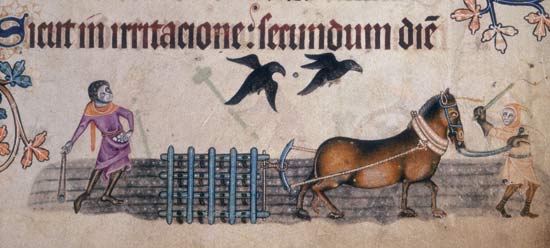
Luttrell Psalter is now fully digitized inviting historians of medieval daily life to dig into the treasures...
Art and culture of the dynasty of the Jagellonians 1386 -1572…