Each year an international Viking Age Symposium is organised by the Universities of Copenhagen, Odense, Århus and Kiel. May 2016 will focus on Facts & Fictions about the Vikings

Each year an international Viking Age Symposium is organised by the Universities of Copenhagen, Odense, Århus and Kiel. May 2016 will focus on Facts & Fictions about the Vikings

More than 200 coins from the early 1300s have been discovered by chance in a forest near Zürich. They provide clues as to how money networks around Switzerland worked during the Middle Ages.

Totally unfair, we have highlighted a handful of books on Medieval History, which we are looking forward to in 2016

Devotion and Spirituality are highly sensual and materialistic practices. This book explores the devotional world of late medieval northern Europe

This year opens with a number of exhibitions on medieval matters of the more select kind. Autumn will bring a major exhibition in Paris on the Merovingians.

WATCH OUT FOR: Medieval Anniversaries 2016

A conference entitled "The Influences of the Dominican Order in the Middle Ages" will be held at the University of Oxford in September 2016

Winter is coming... The first issue of Medieval News in January brings you 26 pages packed with stories

How shall we understand the events on New Years Eve in Cologne? As the acts of sexually famished young men? As the reflection of another culture? Religion? Or were they primarily culturally inspired coordinated political acts? Comparison with the medieval charivari institution points in that direction

During Christmas 1205 a group of brave Norwegians set out on a perilous journey in order to bring the heir to the Norwegian throne to safety in Trondheim. Fifty years later the story was told by the king's chronicler, forever turning the feat of the Birkebeiners into a national myth

A few years ago archaeologists made a breath-taking find: a 1300-year old ski with the binding intact. Last year the skis were reconstructed. Now they have been tested and the ancient way of skiing has been reconstructed
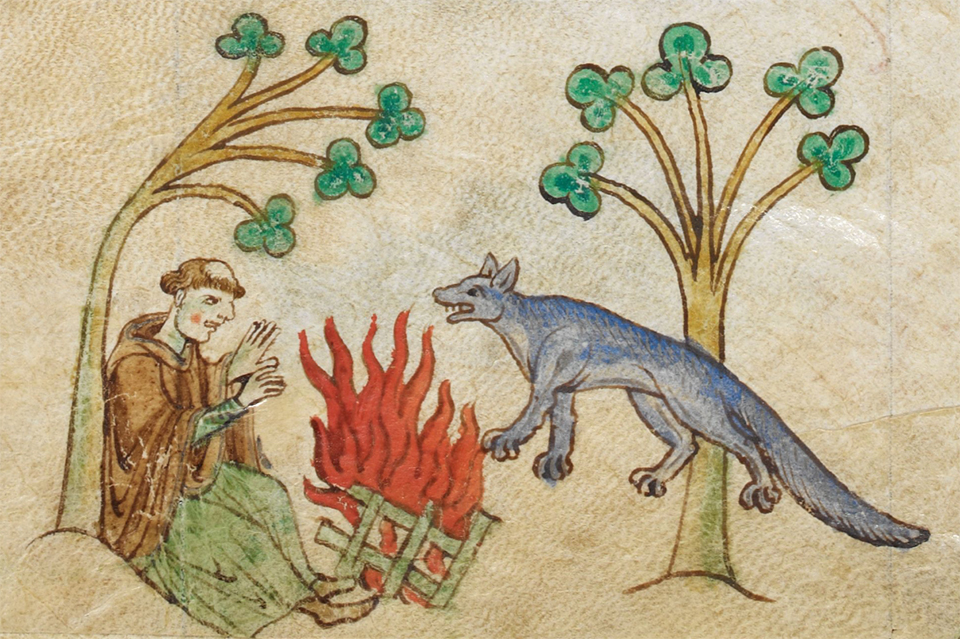
Werewolves are not a distinct species nor a common European literary motif. Rather the idea of the werewolf constitutes a collection of histories or genres differing through time and space.
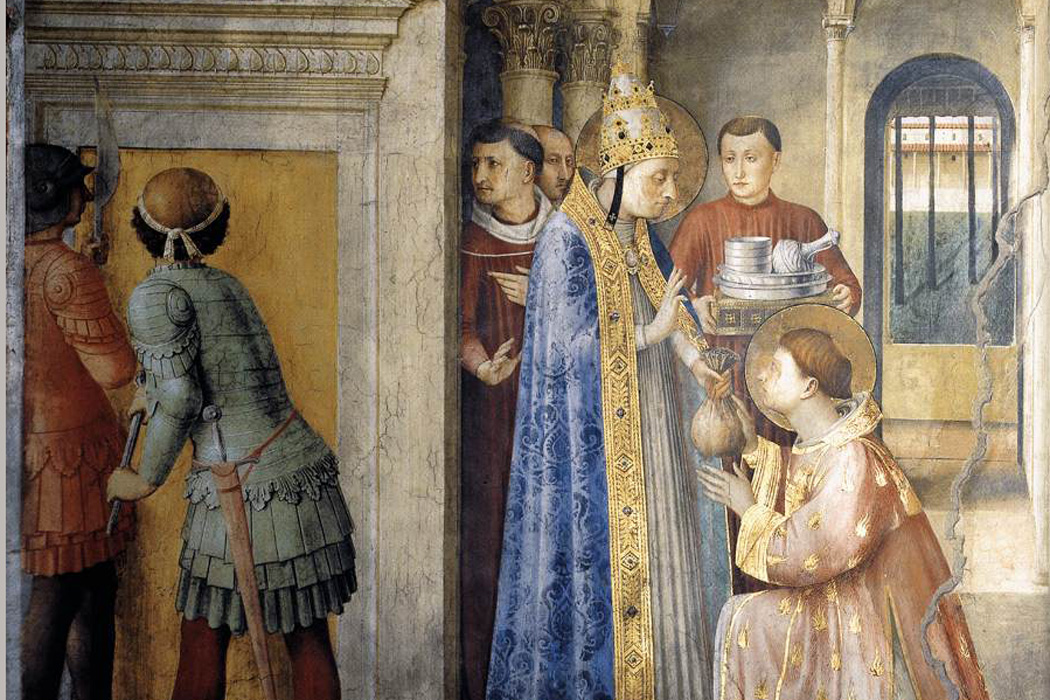
The medieval roots of the doctrine of papal infallibility are traced in this new book by Donald S. Prudlo

Arabic-Islamic Views of the Latin West provides an insight into how the Arabic-Islamic world perceived medieval Western Europe in an age that is usually associated with the rise and expansion of Islam, the Spanish Reconquista, and the Crusades

Medieval Jews and the Christian Past: Jewish Historical Consciousness in Spain and Southern France
by Ram Ben-Shalom (Author) with Chaya Naor (Translator)
Littman Library Of Jewish Civilization 2016
ISBN-13: 978-1904113904
ISBN-10: 1904113907
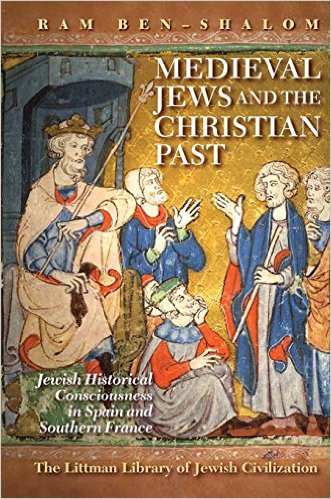 The historical consciousness of medieval Jewry has engendered lively debate in the scholarly world. The focus in this book is on the historical consciousness of the Jews of Spain and southern France in the late Middle Ages, and specifically on their perceptions of Christianity and Christian history and culture. In his detailed analysis of Jews’ understanding of the history of the communities they lived among, Ram Ben-Shalom shows that in these southern European lands Jews experienced a relatively open society that was sensitive to and knowledgeable about voices from other cultures, and that this had significant consequences for shaping Jewish historical consciousness. Among the topics that receive special attention are what Jews knew of the significance of Rome, of Jesus and the early days of Christianity, of Church history, and of the history of the Iberian monarchies. Ben-Shalom demonstrates that, despite the negative stereotypes of Jewry prevalent in Christian literature and increasing familiarity with that literature, they were more influenced by their interactions with Christian society at the local level. Consequently, there was no single stereotype that dominated Jewish thought, and frequently little awareness of the two cultures as representing distinct theologies.
This book contributes to medieval Jewish intellectual history on many levels, demonstrating that, in Spain and southern France, Jews of the later Middle Ages evinced a genuine interest in history, including the history of non-Jews, and that in some cases they were deeply familiar with Christian and sometimes also classical historiography. In providing a comprehensive survey of the multiple contexts in which historiographical material was embedded and the many uses to which it was put, it enriches our understanding of medieval historiography, polemic, Jewish-Christian relations, and the breadth of interests characterizing Provencal and Spanish Jewish communities. This fascinating and well-documented study will appeal not only to scholars of Jewish studies and of medieval history and literature, but also to those interested in Christian history and historiography and in the long saga of Jewish-Christian relations. The Hebrew edition of the book was awarded the Samuel Toledano Prize for its contribution to understanding the Sephardi part in its Christian context.
Ram Ben-Shalom is Professor of the History of the Jewish People at the Hebrew University of Jerusalem, and Director of the Center Hispania Judaica; he is a member of the academic board of I-Core Center for the Study of Conversion and Inter-Religious Encounters and chair of the International Society for Sephardic Studies. He has served as head of the Department of History, Philosophy, and Judaic Studies at the Open University of Israel. He has been a visiting scholar at the Oxford Centre for Hebrew and Jewish Studies, the Institute of Advanced Studies at the Hebrew University of Jerusalem, and the Humboldt University of Berlin. He has published widely on medieval European Jewish history and is a specialist in the Jewish–Christian discourse of the Middle Ages. The Hebrew edition of the present volume, published in 2006, was awarded the Samuel Toledano Prize for its contribution to understanding the Sephardi past in its Christian context. He is the co-editor of Conflict and Religious Conversation in Latin Christendom (2014). His The Jews of Provence: Renaissance in the Shadow of the Church (Hebrew) is forthcoming, and his current projects include an edition of the letters of a Jewish scribe in Aragon and a study of Isaac Nathan of Arles.
Expulsion of Jews. From: Grandes Chroniques de France 1182
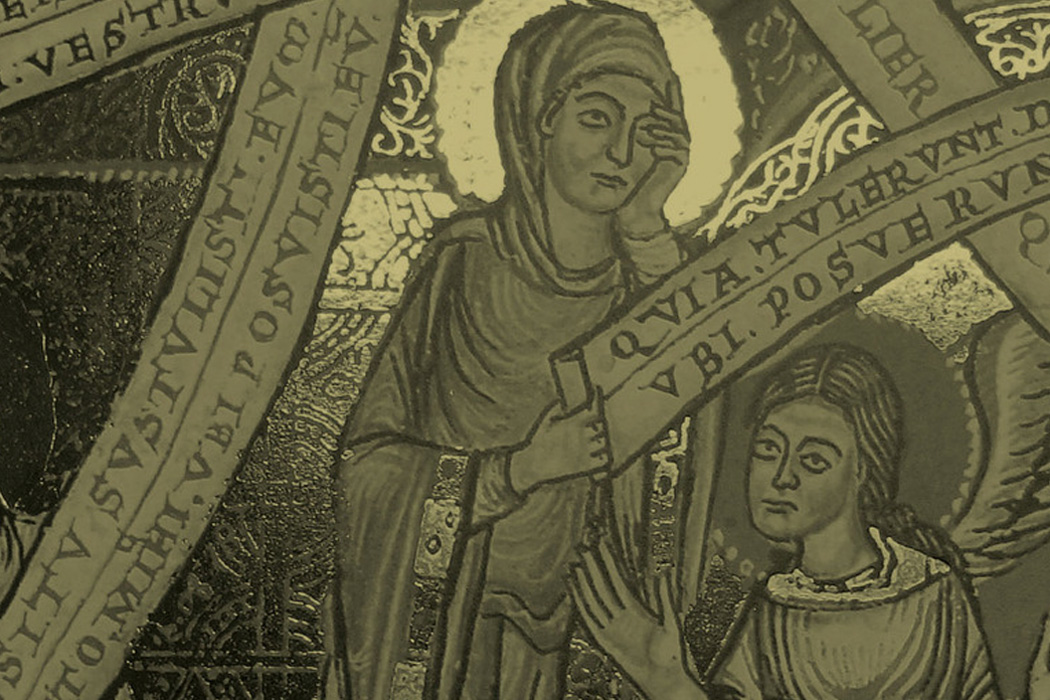
Voice and Voicelessness in Medieval Europe forges connections between medieval voices and contemporary ones, giving "voices" to a fresh generation of scholars