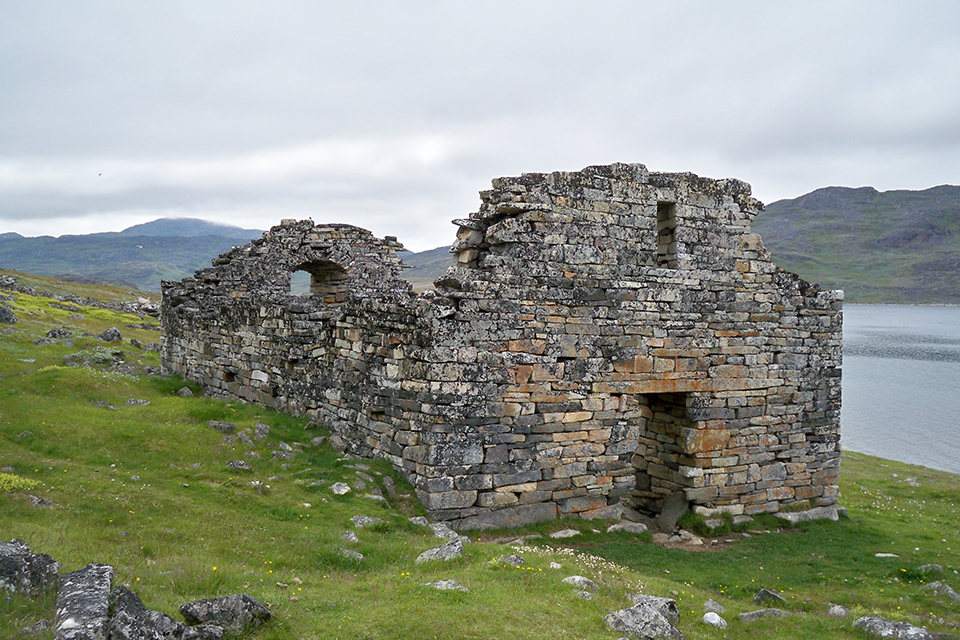
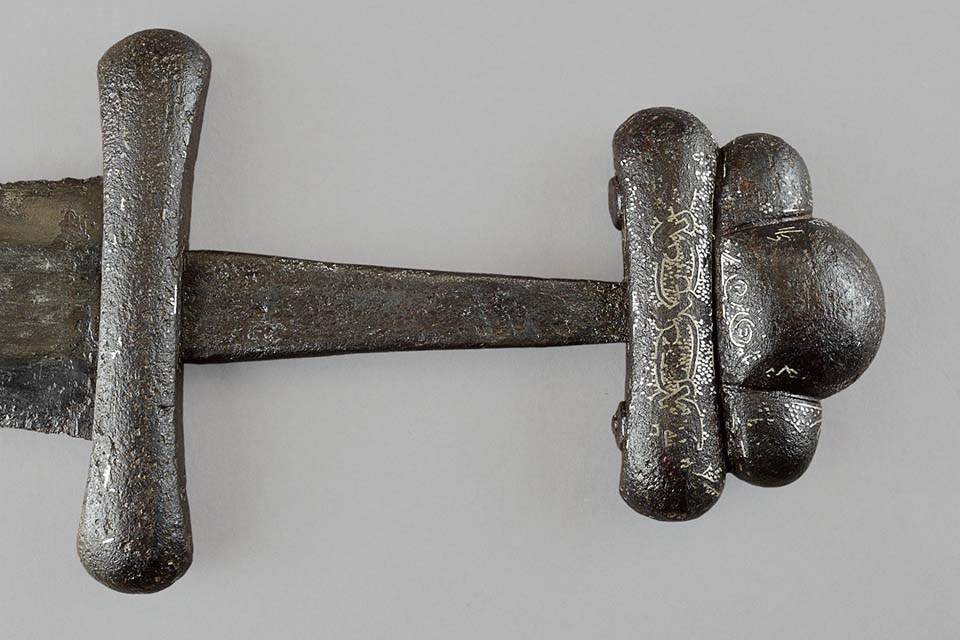
Why did the Norse People in Greenland upend their settlements in the late 15th century? A new explanation refers to their culture and way of life inherited from 9th century Viking Society.
How resilient are people when met with sudden and terrifying climatic changes? New project at Durham University aims to carry out groundbreaking research into the resilience - or lack thereof - in the Mediterranean Early Middle Ages
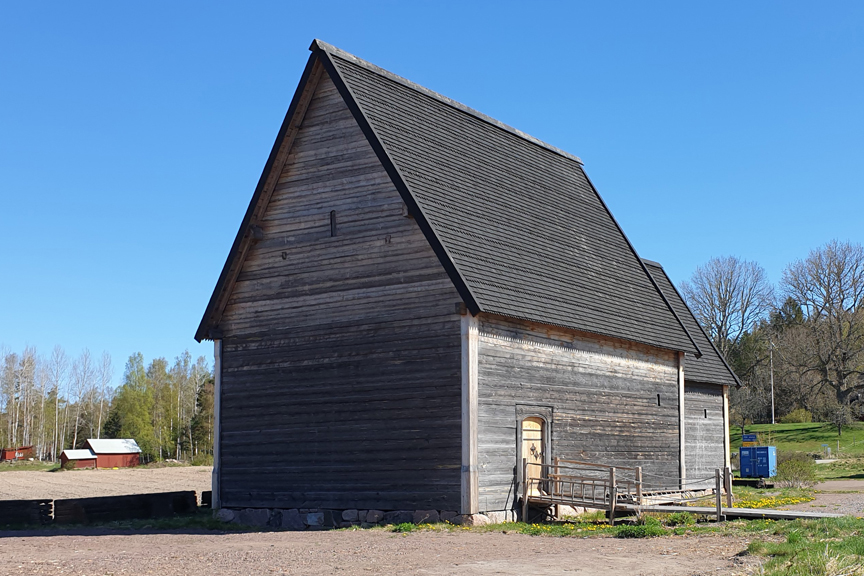
This Whitsun, Södra Råda Church in Värmland in Sweden will be re-inaugurated. The aim of the reconstruction of the burnt-down medieval treasure was to learn how a church was built in the 14th century.
After AD 800, Winchester was gradually established as a prominent royal centre. New books tells the story of how historians and archaeologists have worked together to reconstruct the physical realities of the landscape, the royal and ecclesiastical institutions and their wider impact of the formation of future England.
Winchester’s identity as a royal centre became well established between the ninth and twelfth centuries, closely tied to the significance of the religious communities who lived within and without the city walls.
The reach of power of Winchester was felt throughout England and into the Continent through the relationships of the bishops, the power fluctuations of the Norman period, the pursuit of arts and history writing, the reach of the city’s saints, and more.
The essays contained in this volume present early medieval Winchester not as a city alone, but a city emmeshed in wider political, social, and cultural movements and, in many cases, providing examples of authority and power that are representative of early medieval England as a whole.
1. Communities, Authority and Power in Winchester, c. 800–c. 1200
Katherine Weikert, Ryan Lavelle, and Simon Roffey
2. Capital Considerations: Winchester and the Birth of Urban Archaeology
Martin Biddle
3. The King’s Stone: Peace, Power and the Highway in Early Medieval Winchester
Alexander James Langlands
4. Royal Burial in Winchester: Context and Significance
Barbara Yorke
5. Constructing Early Medieval Winchester: Historical Narratives and the Compilation of British Library Cotton Otho B.XI
Sharon M. Rowley
6. Winchester, Æthelings and Clitones: The Political Significance of the City for Anglo-Saxon Royalty and Norman Nobility
David McDermott
7. The Execution of Earl Waltheof: Public Space and Royal Authority at the Edge of Eleventh-Century Winchester
Ryan Lavelle
8. Queen, the Countess and the Conflict: Winchester 1141
Katherine Weikert
9. Lantfred and Local Life at Winchester in the 960s and 970s
Mark Atherton
10. Wælcyrian in the Water Meadows: Lantfred’s Furies
Eric Lacey
11. SK27, Or A Winchester Pilgrim’s Tale
Simon Roffey
12. The Early Jewish Community in Twelfth-Century Winchester: An Interdisciplinary View
Toni Griffiths
13. Henry of Blois and an Archbishopric of Winchester: Medieval Rationale and Anglo-Saxon Sources
Alexander R. Rumble
14. Swithun in the North: A Winchester Saint in Norway
Karl Christian Alvestad
ABOUT THE AUTHORS:
Ryan Lavelle is a senior lecturer in medieval history at the University of Winchester where he teaches on Anglo-Saxon England, the Normans and the Norman Conquest, and the Carolingian Renaissance. He specialises in late Anglo-Saxon political history, including royal landholding, especially in Wessex, and early medieval warfare. He is the co-editor of Danes in Wessex (Oxbow 2016).
Simon Roffey is a reader in medieval archaeology at the University of Winchester with research interests in the archaeology of the medieval period, the archaeology of Winchester, church and building archaeology and the influence of the medieval period on creative writing and popular culture, including novels, films, games and art forms.
Dr Katherine Weikert is Senior Lecturer in Early Medieval European History at the University of Winchester. Her main areas of research examine the connections between gender, space and authority in England and Normandy ca 900 to 1200, female hostageships in the central Middle Ages, and the political uses of the medieval past.
During the Middle Ages, the Cross and its veneration became a key topic in numerous Islamic and Christian treatises. New book explores the theologies behind
In AD 1362, a terrible storm broke through the medieval dykes in the Wadden Sea, protecting people living in the marshy foreland. Later called the Grote Mandrenke – The Great Drowning of Men – a whole town, Rungholt, together with 42 parishes, disappeared.
A close analysis of forgeries and historical writings at Saint Peter's, Ghent; Saint-Denis near Paris; and Christ Church, Canterbury, offers valuable access to why medieval people often rewrote their pasts.
In 1358, the village of Venette near Compiegne was visited by marauding English troops burning, pillaging and murdering innocent people. These events inspired an evocative and haunting description of the horrors of wars
In the years from c. 1359 – 1368, a Carmelite friar and head of the order’s French province wrote a profoundly moving chronicle about the events in France since 1340, the devastation of the plague and the atrocities waged by armies and bands of mercenaries on Northern France. Scholars have postulated that the event, which prompted him to write, was the wholesale destruction of the village, Venette, along the river Oise, where he was born. He writes:
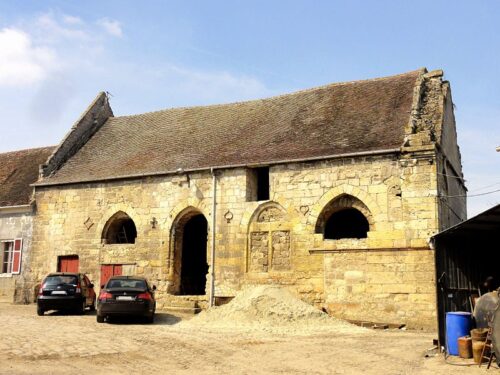
The old Batimént Conventuelle at Venette. Perhaps the harassed people hid there – and were murdered in 1358. Source: wikipedia
“The English destroyed, burned, and plundered many little towns and villages in this part of the diocese of Beauvais, capturing and even killing the inhabitants. The loss by fire of the village where I was born, Vennette near Compiègne, is to be lamented together with that of many others nearby. The vines in this region, which supply that most pleasant and desirable liquor which make glad the heart of man, were not pruned or kept from rotting by the labors of men’s hands. The fields were not sown or ploughed. There were no cattle or fowl in the fields.
No cock crowed in the depths of the night to tell the hours. No hen called to her chicks. It was of no use for the kite to lie in wait for chickens in- March of this year nor for children to hunt for eggs in secret hiding places. No lambs or calves bleated after their mothers in this region. The wolf might seek its prey elsewhere and here fill his capacious gullet with green grass instead of rams. At this time rabbits and hares played freely about in the deserted fields with no fear of hunting dogs, for no one dared go coursing through the pleasant woods and fields. Larks soared safely through the air and lifted their unending songs with no thought of the whistling attacks of eyas or falcon. No wayfarers went along the roads, carrying their best cheese and dairy produce to market. Throughout the parishes and villages, alas! went forth no mendicants to hear confessions and to preach in Lent but rather robbers and thieves to carry off openly whatever they could find.
Houses and churches no longer presented a smiling appearance with newly repaired roofs but rather the lamentable spectacle of scattered, smoking ruins to which they had been reduced by devouring flames. The eye of man was no longer rejoiced by the accustomed sight of green pastures and fields charmingly colored by the growing grain, but rather saddened by the looks of the nettles and thistles springing up on every side. The pleasant sound of bells was heard indeed, not as a summons ·to- divine worship, but as a warning of hostile incursions, in order that men might seek out hiding places while the enemy were yet on the way. What more can I say? Every misery increased on every hand, especially among the rural population, the peasants, for their lords bore hard upon them, extorting from them all their substance and poor means of livelihood. Though there were few flocks or herds, those who owned any were forced to pay their 51 lords for each animal; 10 solidi for an ox, 4 or 5 for a sheep. Yet, their lords did not, in return, repel their enemies or attempt to attack them, except occasionally”
From: Jean de Vennette: The Chronicle. Translated by Jean Birdsall. Edited. With an introduction and Notes, by Richard A. Newhall. Columbia University Press 1953, s. 93 – 94
St. Martin at Venette
The village was repeatedly destroyed, first by the Norman Vikings in the 10th century, again in 1358 – as described above – and finally in 1430. The latest fighting took place during the Napoleonic wars.
Situated two kilometres from the Abbey of Saint-Corneille de Compiègne, which was founded in AD 876, the history of the village history will have been intimately entwined with this. Exactly, though, when the village was founded is not known. Currently, the village is included in the town of Venette, which grew up around the Abbey. Most of the village dates to the 19th century.
The church, which dates to the 12th century, does feature a few details from the time of Jean de Venette, primarily the ribbed vaults in the choir. But, apart from these, the mix and match of styles in the church’s fabric witness to the constant effort to keep it under a roof.
More interesting is the 13th century conventual building – the Bâtiment Conventuel – in the courtyard of the old seignorial farm at Rue de Corbeaulieu. Perhaps the frightened people of Venette sought refuge here?
The village is worth a drive-through just to pay tribute to one of the great chroniclers of the 14th century, Jean de Venette.
Jean de Venette
Of peasant origin, Jean joined the Carmelite order and was elected prior of the Carmelite convent at Paris in 1339. In 1342 he was appointed provincial of France. Probably, he also taught theology at the University of Paris, where he experienced the horrors of the Black Death.
His Latin chronicle, covering the period of 1340–68, was a continuation of an earlier chronicle by Guillaume de Nangis. Although he was interested in the fate of the ruling Valois dynasty, he displayed an marked sympathy for the peasants and was critical of the leaders of France. Unique among chroniclers at that time, he wrote as an eyewitness offering distinct characetisations of the events he recorded. He also wrote an unpublished religious poem, the Roman des trois Maries (c. 1347).
EDITIONS:
Jean de Vennette: The Chronicle.
Translated by Jean Birdsall.
Edited with an introduction and notes, by Richard A. Newhall.
Columbia University Press 1953
Warring was endemic to the Middle Ages. But so were endeavours to try and soften the attrition to secure peace and the truce of God. New book tells the cultural history of medieval peacemaking
Participation in society in the Greek and Roman eras was a question of civic identy. The main question raised in the new collection of articles focus on the question how these civic identities lived on and took new forms in the Early Middle Ages
Which military campaigns were propagated as crusades? How were they established as crusades? And as such: what role did crusades play in the formation of European and Christian togetherness and idetuty formation?
A major new exhibition in Canterbury Cathedral’s Crypt allows visitors to explore up close, for the first time, a unique collection of artefacts – including the battle shield, gauntlets and jupon of medieval The Black Prince
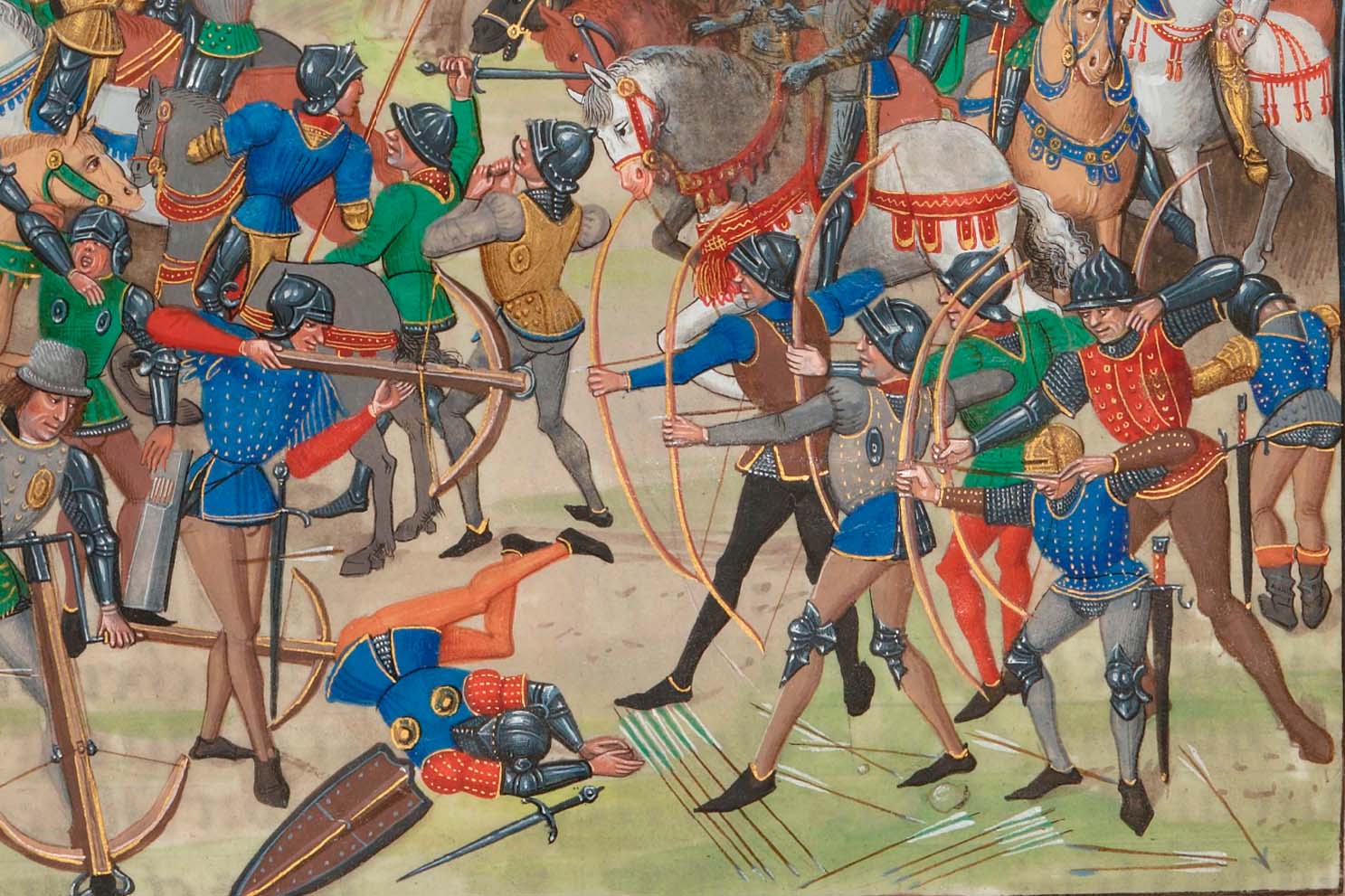
In 1346 Edward III launched an invasion of Medieval France. Mounting the largest medieval invasion ever, he gained an overwhelming victory of the French army at Crécy. Since then, scholars have asked whether he was just lucky or a superb strategist.
This is a list of books published in the last decades. Together, they represent a selction which may serve as an introduction to the new understanding of the Kyivan Rus' and the formaion of one of the largest medieval European kingdoms at the turn of the first millenium
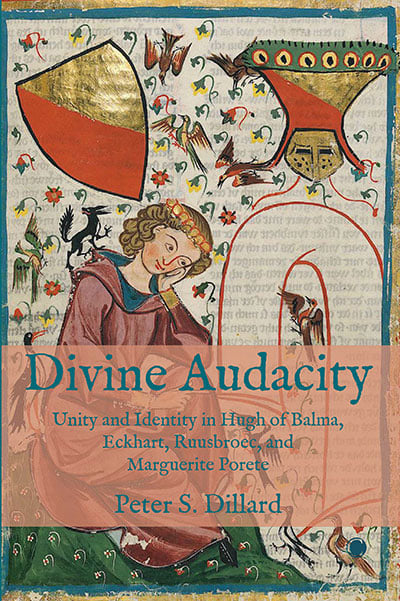
Mystical Theology, introspection and radical thinking was wedded in the lives and works of Margurite Porete, Hugh of Balma, Meister Eckhart and Ruusbroch. New book presents their thinking
In Divine Audacity, Peter Dillard presents a historically informed and rigorous analysis of the themes of mystical union, volition and virtue that occupied several of the foremost theological minds in the late thirteenth and early fourteenth centuries. In particular, the work of Marguerite Porete raises complex questions in these areas, which are further explored by a trio of her near contemporaries. Their respective meditations are thoroughly analysed and then skilfully brought into dialogue.
What emerges from Dillard’s synthesis of these voices is a contemporary mystical theology that is rooted in Hugh of Balma’s affective approach, sharpened through critical engagement with Meister Eckhart’s intellectualism, and strengthened by crucial insights gleaned from the writings of John Ruusbroec. The fresh examination of these thinkers – one of whom paid with her life for her radicalism – will appeal to philosophers and theologians alike, while Dillard’s own propositions demand attention from all who concern themselves with the nature of the union between the soul and God.
ABOUT THE AUTHOR:
Peter S. Dillard has a PhD in Philosophy from the University of Pennsylvania, USA. He has taught at the University of Pennsylvania and Villanova University, USA and his novel, Hohokam Bones, was published by Aydy Press in 2004.
FEATURED PHOTO:
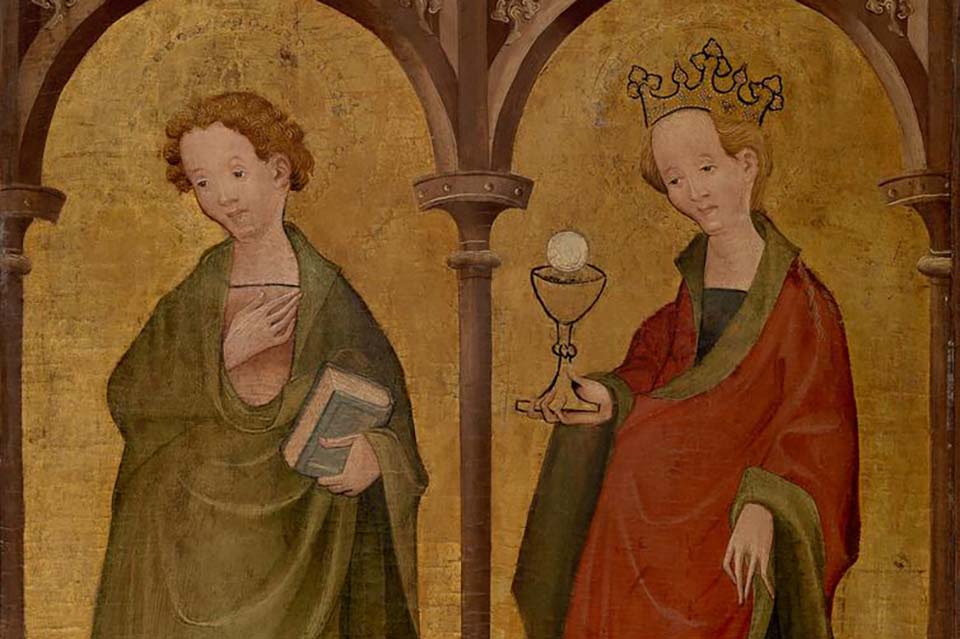
Unidentified artist, German, possibly Bohemian. Two Female Saints, 14th century. Oil and gold on panel, Overall: 31 3/8 x 23 1/8 in. (79.7 x 58.7 cm). Barnes Foundation BF875. Public Domain