Archaeologist have been digging at the abbey of Saint-Maurice d’Agaune since 1896. Very recent excavations have uncovered parts of a huge and fascinating royal-episcopal complex
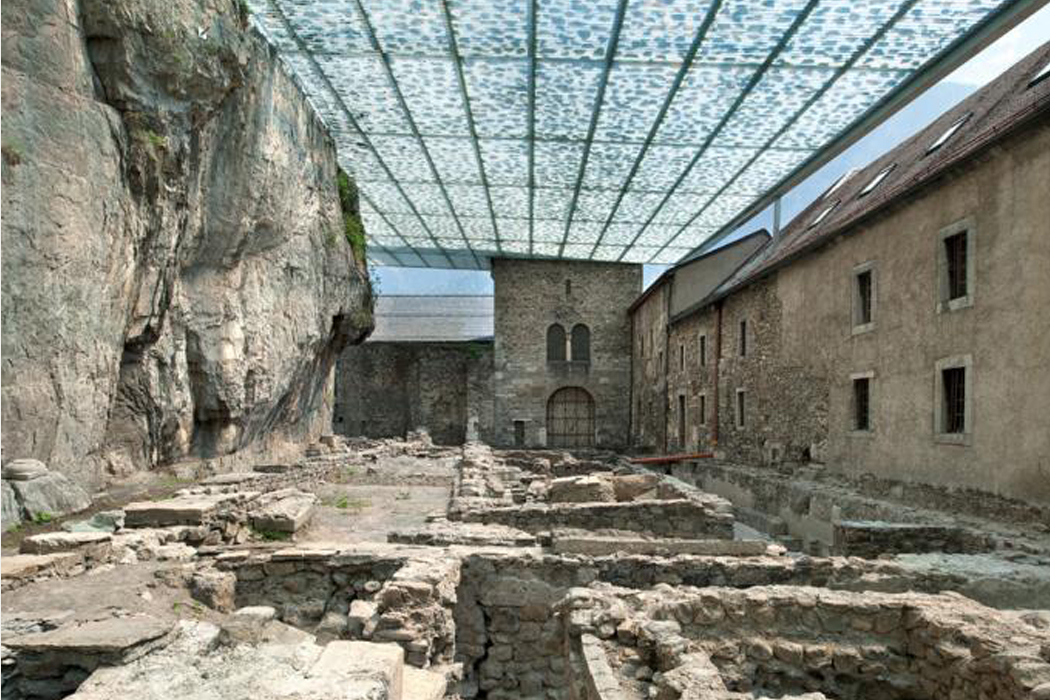
Archaeologist have been digging at the abbey of Saint-Maurice d’Agaune since 1896. Very recent excavations have uncovered parts of a huge and fascinating royal-episcopal complex
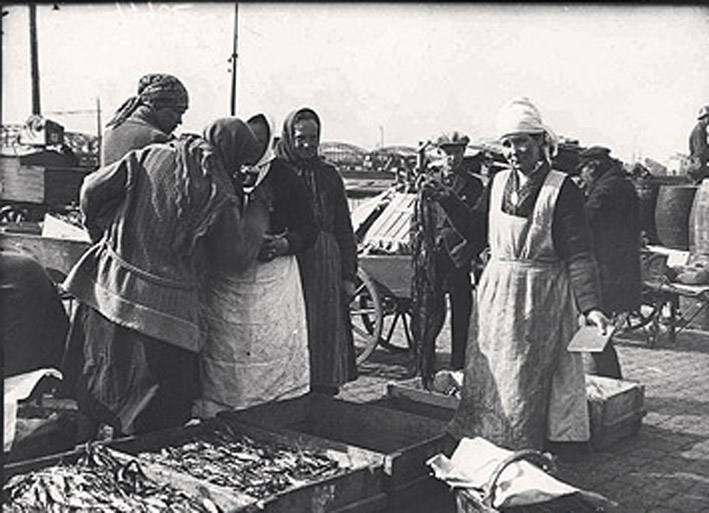
Analysis of a medieval latrine block from Riga with excellent organic preservation demonstrated an unusually high concentration of human intestinal parasite eggs present, primarily fish tapeworm. This indicates the population consumed significant amounts of raw, smoked, pickled, or dried fish by the population.
Intestinal parasites in a mid-14th century latrine from Riga, Latvia: fish tapeworm and the consumption of uncooked fish in the medieval eastern Baltic region
By Hui-Yuan Yeha, Aleks Pluskowskib, Uldis Kalējsc, Piers D. Mitchella
In: Journal of Archaeological Science, Vol. 49, September 2014, pp. 83–89
ABSTRACT:
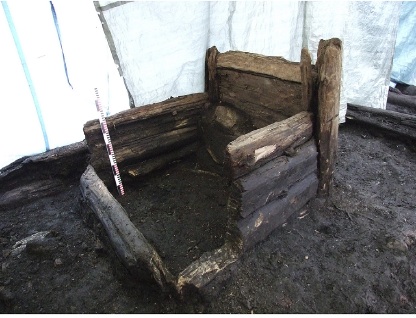
The aim of this study was to investigate faecal material from a medieval latrine in the coastal town of Riga (Latvia) in order to identify the intestinal parasites present within the population. We identified very large numbers of the eggs of three species of parasitic intestinal worms that affect humans – fish tapeworm (Diphyllobothrium latum), whipworm (Trichuris trichiura), and roundworm (Ascaris lumbricoides). The fish tapeworm evidence demonstrates that the population were eating large amounts of uncooked fish (perhaps raw, smoked, or pickled) since cooking prevents parasite transmission.
ELISA analysis identified the presence of the parasite Entamoeba histolytica, which can cause dysentery in humans. Two eggs of equid pinworm (Oxyuris equi) that affects horses and donkeys, demonstrating the presence of this parasite in farm animals of the region by the medieval period, was also noted.
In the article the scientists discuss the implications of these findings for our knowledge of intestinal parasites in coastal areas of the medieval Baltic region, of food consumption, of hygiene, and of the affects of the parasites upon the health of those living in medieval Riga, the most important city in the crusader state of Livonia.
The authors conclude that the analysis “provide a vivid insight into the water-focussed culture of the Baltic Region during the Medieval period.”
PS: Freezing raw fish for 24 hours to -4 Celsius makes the raw fish safe for consumption
OTHER POSTS:
Richard III suffered from roundworm
Raw Herring was a Medieval Delicatessen – try it out in a safe version and read the story
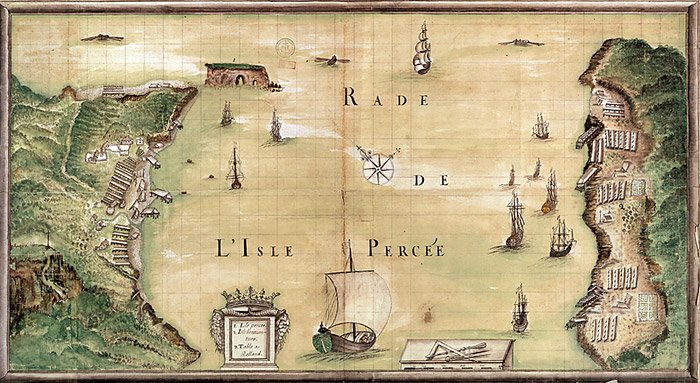
Commercial fishing off the coast of Newfoundland and Labrador quickly gained economic importance. A zoo-archaeological study of sifted bones from different locations off and on the coast of Newfoundland and Labrador documents the environmental impact of commercial fishery and the different technologies used.

Zooarchaeology of the Historic Cod Fishery in Newfoundland and Labrador, Canada
By Matthew W. Betts, Canadian Museum of History, Stéphane Noël, Université Laval, Eric Tourigny, University of Leicester, Mélissa Burns, Memorial University of Newfoundland, Peter E. Pope, Memorial University of Newfoundland, and Stephen L. Cumbaa, Canadian Museum of Nature
In: Journal of the North Atlantic 2014, Vol. 24 pp. 1 – 21
ABSTRACT:
Allometry and growth-increment aging of archaeological fish remains has the potential to reveal much about past fishing strategies, fish processing and trade, and fish populations. This paper documents the age and size characteristics of four samples of Atlantic cod (Gadus morhua) bones from early European contexts at Red Bay, Ferryland, Bay Bulls, and Crouse, which collectively span the middle 16th to early 19th centuries AD. It is shown that the size of cod became significantly depressed already during the 17th century.
The samples, which document the size structure of the “fished” population (the death assemblage), thus allow for a comparison of fishing strategies and techniques between the early Basque, French, and English commercial operations. In the article it is discussed whether the depressed size of cod from a ‘French’ site is a reflection on the fact that the French Fishermen were known to use seines to fish for bait (including small cod) for their ‘hand-lined’ fishing for large cods. Already in the 17th century the English banned the use of seines; a very early example of environmental protection introduced by the governing institutions. However, the explanation for the depression of average size in a later context is definitely linked to the shift from hand-lined fishing to long-line fishing post 1850. Contributing to this is nevertheless also climate changes with colder water slowing growth significantly.
Thus the samples, derived from multiple fishing regions around Newfoundland and Labrador, provide an important record of cod populations during early stages of the commercial fishery and thus offer a critical baseline record against which to compare modern handlined cod population data, when evaluating future consequences of the expected climate changes.
OTHER RELEVANT POSTS:
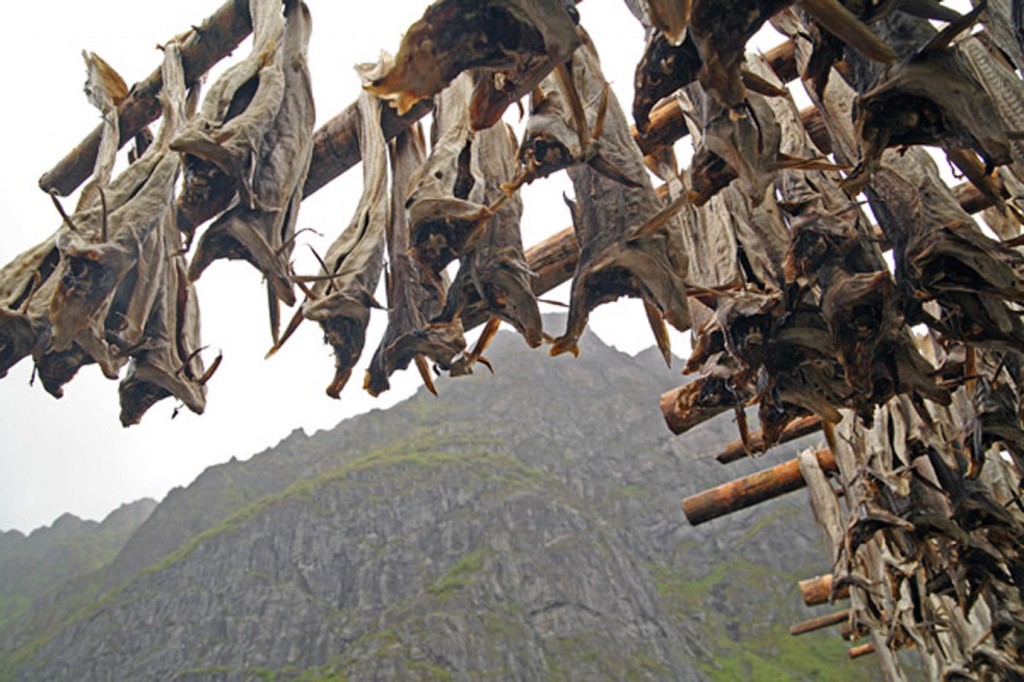
When marine fisheries developed around the year 1000 AD, cod quickly came to play a crucial role for the growth of large cities like London
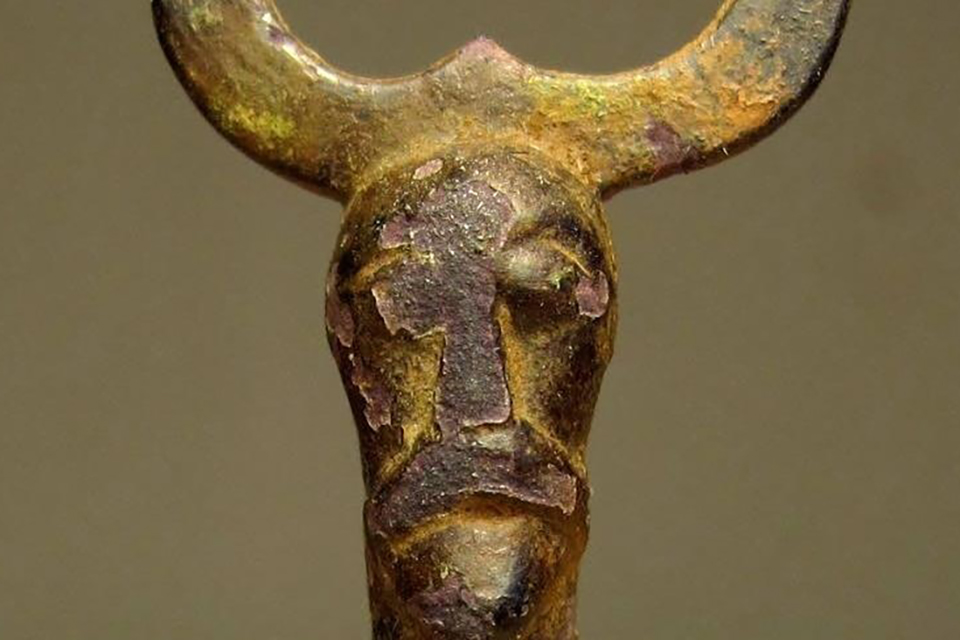
A sensational small amulet of Odin has been found in Levide in Southern Gotland, Sweden. The pendant belongs to a group of figurines commonly called the “weapon-dancers”
‘Warrior-women’ in Viking Age Scandinavia? A preliminary archaeological study
by Leszek Gardela
In: Analecta Archaeologica Ressoviensia. Rzeszow 2013, Vol. 8, pp. 273 – 309 (both English and Polish text)

Did Viking Women participate in war and piracy? Were shield maidens more than a mythological or literary construct? Or did Viking women primarily lead lives centred on feeding their households, tending their children and spinning their wool?
A systematic reconsideration of a series of odd Viking burials might shed light on this question in the future.
As is well known, Viking burial customs were very diverse; different practices governed through time and inside the same burial ground, where cremation and inhumation were used simultaneously. As to furnishing, a wide variety in terms of grave goods (or not) has been documented by archaeologists.
This article focuses on a handful of select graves from Denmark, Norway, and Southern Sweden, which have puzzled archaeologists for some time. These graves, which hold either solitary females or females buried together with males, are characterised by being furnished with weapons or war gear, which might be identified as having belonged to the dead woman.
Weapons present were axes, spears, arrows and shield buckles, but no swords. These assemblages are not easily understood, and Leszek Gardela, who has surveyed the material, is very careful to pinpoint that no firm conclusions may be reached at present. For instance, the presence of axes in these graves might reflect the need for the woman to have a helpful axe for cutting up meat. Or axes might be symbolically placed in the graves, referring to Mjöllnir, the hammer of Thor. Some of these axes were very old and appear to be heirlooms.
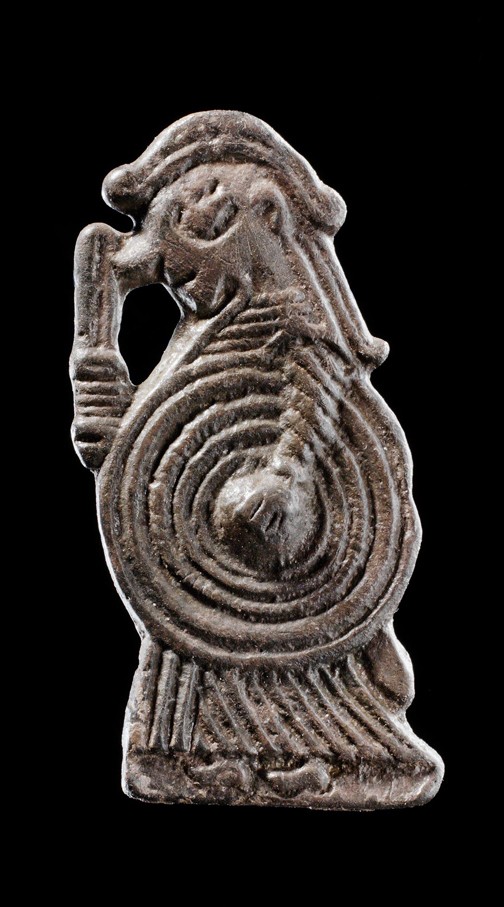
However, perhaps we glimpse something else, such as graves, where wise women well versed in seiðr (shapeshifting) and other obscure magic were buried together with their staffs, which sometimes might be a spear (Vølva means “staf”. Often these graves were located in liminal positions within the burial ground. Literary texts indicate that the bereaved also threw spears or axes into the graves to keep the women from haunting the living. In some graves, boulders were placed to keep the dead in their place. However, this practice was decidedly Swedish.
Some of these ‘warrior women’ may thus have been known as Völver or spæwīfes, which they tended to be called in an Old English – wise women in the broadest sense. Others might have been known as ‘warrior women’ or ‘Valkyries’ as they were called in Norse Mythology and other written sources. Such Valkyries had spears as their attributes (although brooches seem to show them with swords). But perhaps the two roles were mingled?
To conclude, the author states that it is likely too early to offer definite answers as to whether some women lived out their lives as shield maidens in Viking society. Much information lacks, for instance, detailed anthropological explorations of the skeletal material (for example, were the women in these graves able to wield a sword or were they too frail?)
A project which shifts the evidence to a wider geographical context and which also includes evidence from The Anglo Saxon world might perhaps help to answer some of these questions, writes Leszek Gardela
Viking women, warriors, and valkyries
By Judith Jesch, Professor of Viking Studies, University of Nottingham – British Museum Blog
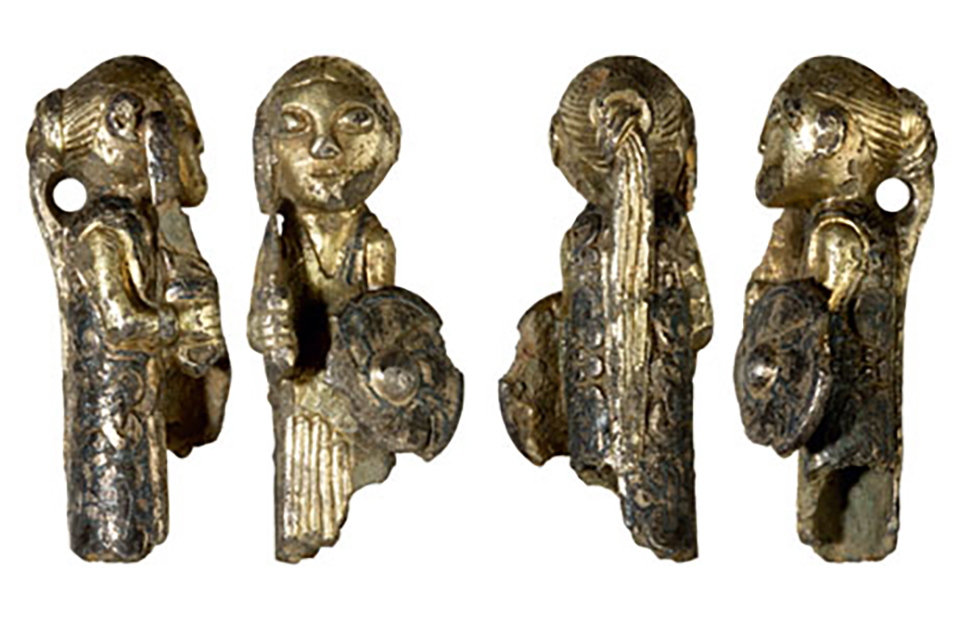
Four views of the Valkyrie from Haarby near Odense. © National Museum in Copenhagen/CCBYSA


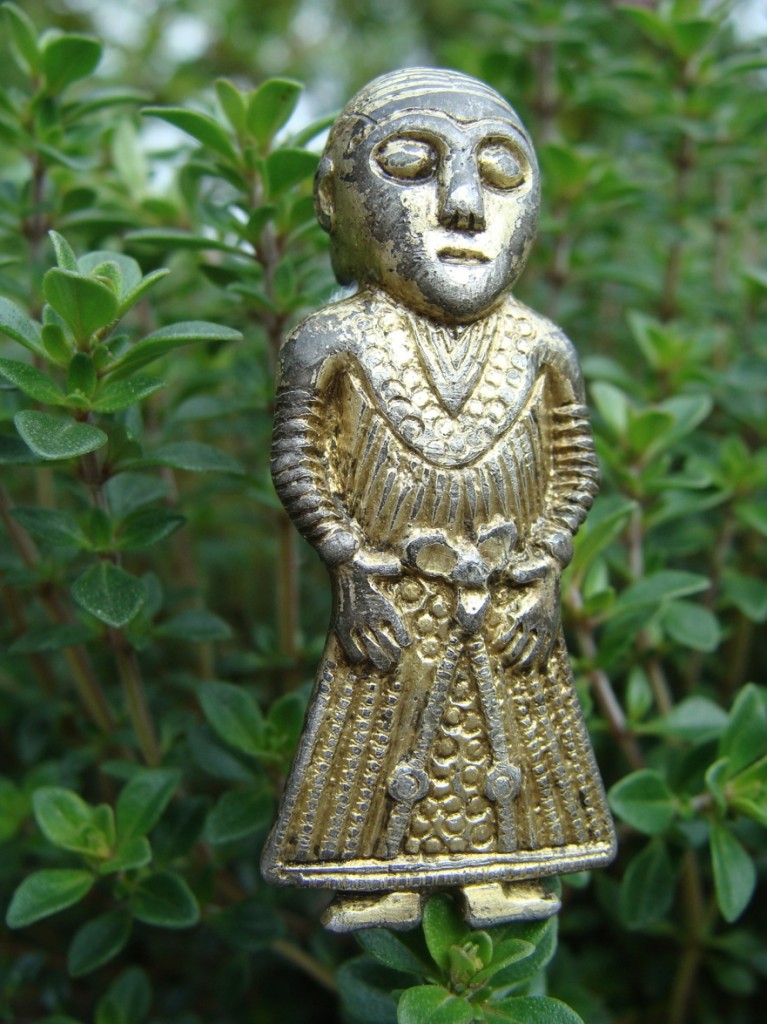
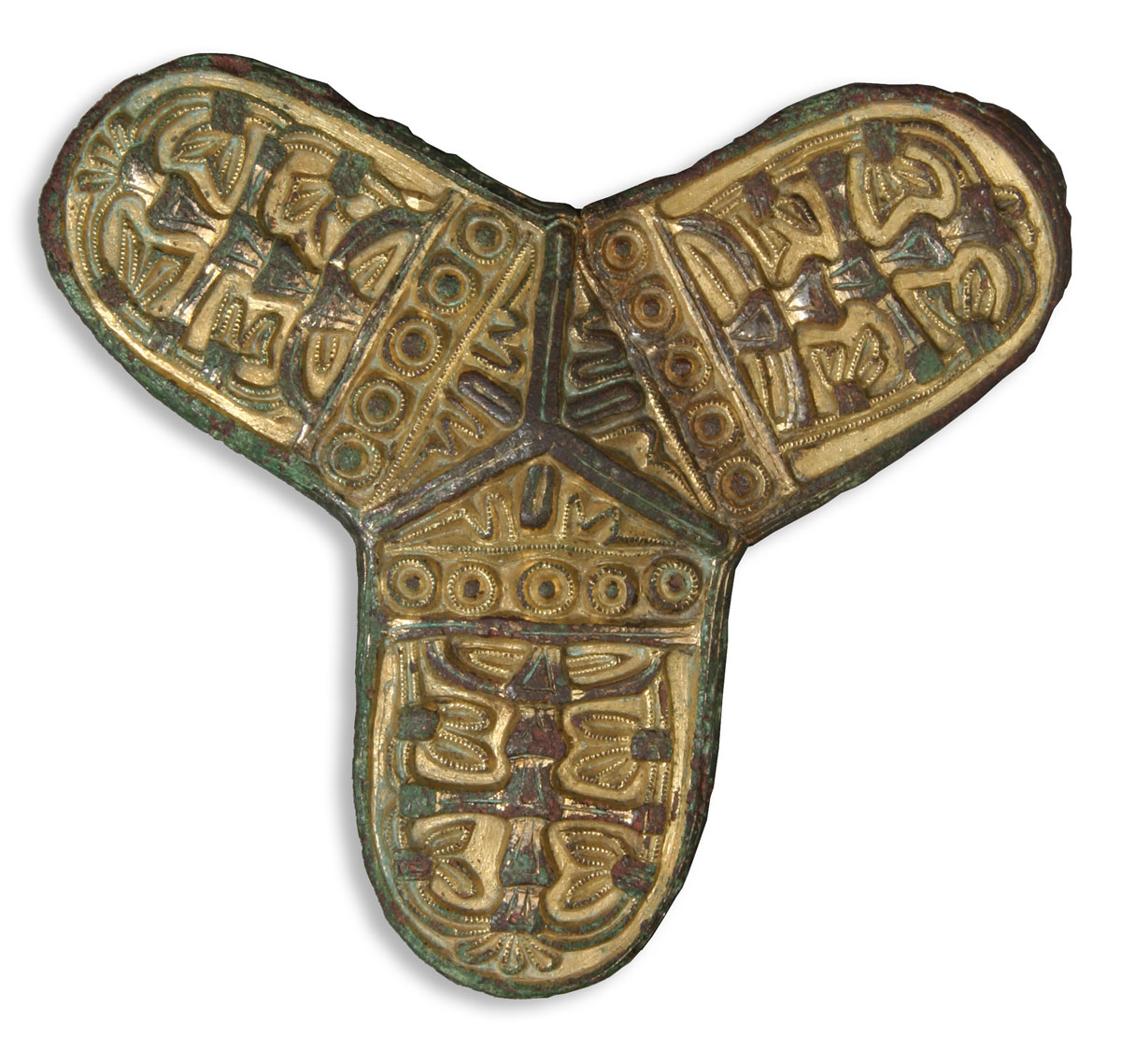
A few months ago a tiny silver figurine was found on the Island of Funen by a man with a metal-detector. Immediately called ‘The Revinge-Woman’ after the spot, where she was found, soon found her way into the hearts of the archaeologists. Not only is she sensational, she is also lovely! The figurine estimated to be from the 9th century is tiny and measures no more than 4,6 cm. She is made of solid silver and afterwards gilded. While her body is flat, the head is three-dimensional. In the back of her head small holes signify, that she has been worn as an amulet. She is wearing a dress and jewels, which are very delicately wrought and which presents details, not known from graves Her hair, which has been parted in the middle, is tightly pulled back and twisted into a bun. Around her neck she carries what looks like a massive string of pearls or a golden necklace. Perhaps her arms are covered in golden rings too. Or perhaps the arms of her dress were pleated, as might also have been the case with the body of her dress. Around her waist she carries a belt, fastened by a three-foil brooch. In Viking graves these brooches are usually found on the breasts of the dead women, but here it is used to pull her dress together at the waist. From the waist hang delicately wrought belt-straps. Beneath her dress delicate feet peep out. Due to the position of her hands in front of her tummy, she is believed to represent the goddess Freyja, responsible for love, lust, beauty, sorcery, fertility and gold. According to Norse Mythology she is said to own Brísingamen, a fabulous torque or necklace, made by dwarfs. Brísingamen is also mentioned in Beowulf, who receives something like it as a gift from Wealtheow, the queen of Denmark after he has killed Grendel. (Verses 1190 – 1200 [1])

Other silverfigurines from the same time – for instance the unique silver Valkyrie, presently (summer 2014) exhibited at the British Museum at the Viking exhibition – are of app. the same size. This Valkyrie measures 3.5 cm and was found in Hårby, also on the island of Funen in 2013. It shows a female warrior complete with sword and shield. Her hair, though, is flowing down from a bun and her dress looks different. She also seems to carry a long necklace around her throat. The two figurines were found app. 50 km apart. The Silver newly found figurine may be seen at the The Viking Museum Ladby on the Island of Funen, Denmark, during summer 2014.
Ekstraordinært fund: Forgyldt sølvfigur fra 800-tallet [Extraordinary find: Gilded silver-figurine from the 9th century]
[1]
The cup was carried to him, kind words
spoken in welcome and a wealth of wrought gold
graciously bestowed: Two arm bangles, a mail-shirt and rings; and the most resplendent
torque of gold I have ever heard tell of
anywhere on earth or under heaven.
The was no hoard like it since Hama Snatched
the Brosings’ neck-chain and bore it away
(p. 85, verses 1191 – 1198)
From:
Beowulf. A New Verse Translation.
By Seamus Heaney
New York, Farrar, Straus and Geroux 2000
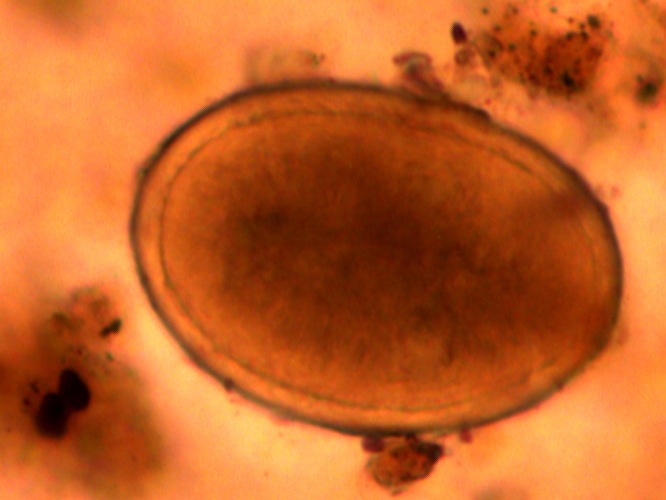
Careful sifting of area around the gut of Richard III uncovered eggs from roundworm
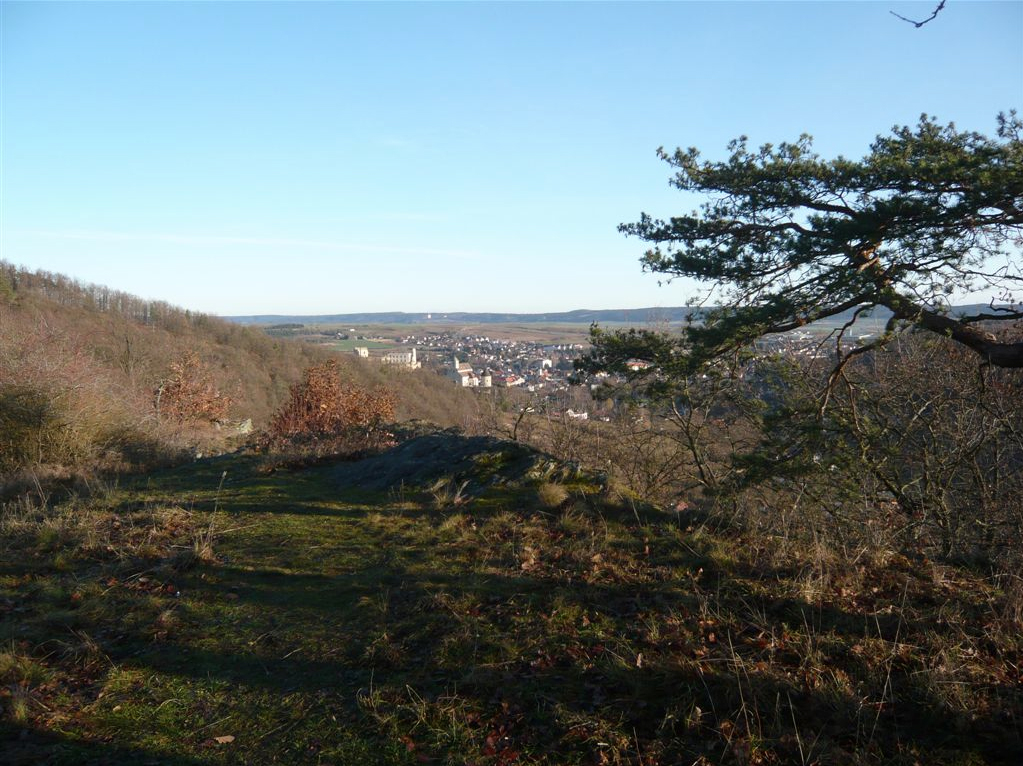
Excavations of a fortified hilltop has yielded information about the way of life of the early medieval elite, 9th -10th centuries AD...
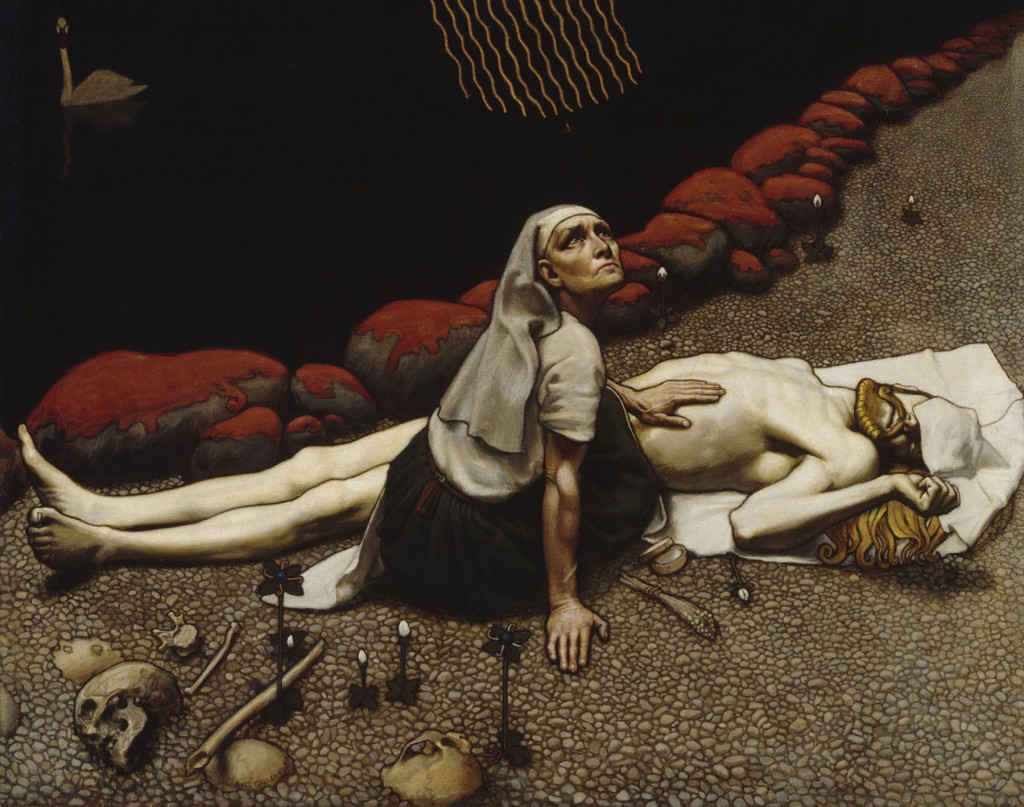
The sun turns black, earth sinks in the sea. Down from heaven, stars are whirled… Thus sang the Seeress (the Völva) to Odin
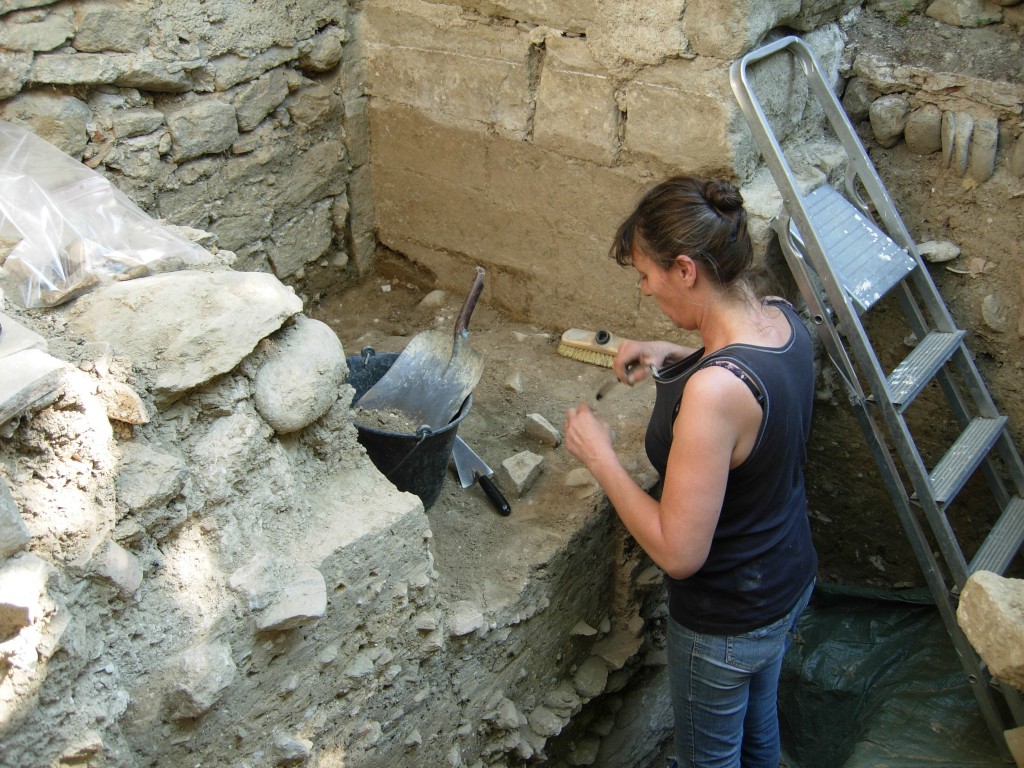
Exciting discovery in Carcassonne: the infamous prison of the inquisition has been found...
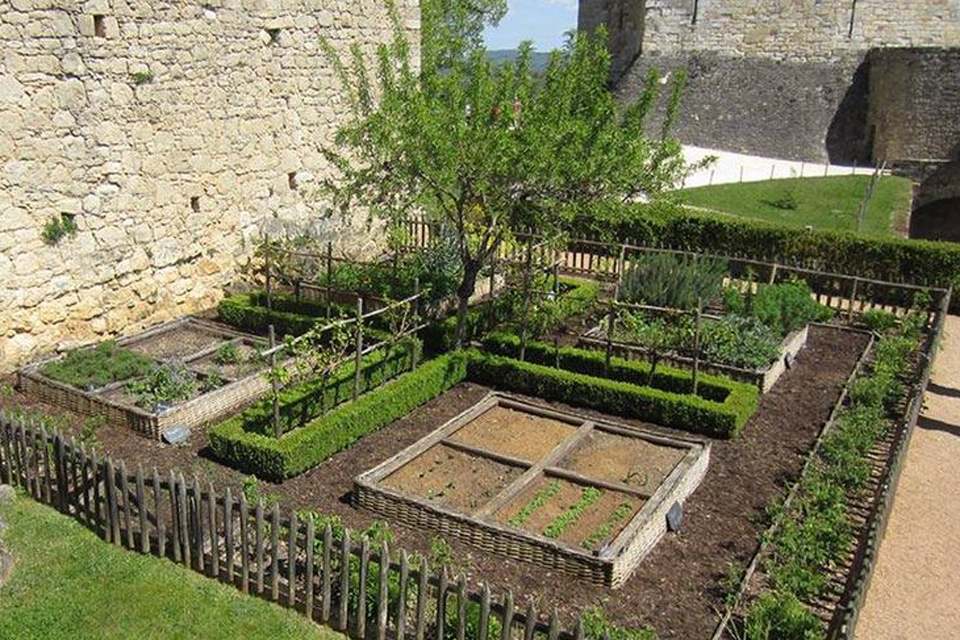
RESEARCH: Cathar Montaillou was excavated from 1998 - 2004. Charred remains of spinach were found in the hearth...

Roskilde 6 is the pitiful wreck, which clothed in stainless steel still amazes. The question is what effort it took to set sail...
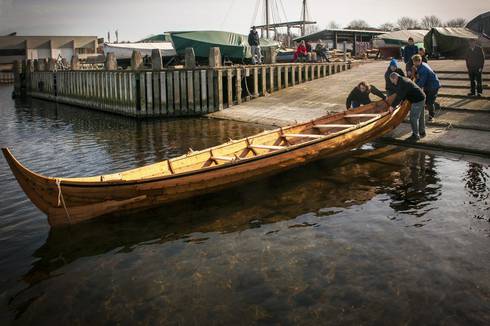
A copy of one of the small clinker-built boats from 900 AD found at Gokstad in Norway in 1880 was recently launched…
Rendlesham is a small village five km northeast of Sutton Hoo and home to a royal Anglo-Saxon palace...
NEW BOOK: An Early Meal is a Viking Age Cookbook and a culinary Odyssey worth placing near your hearth in your kitchen…


