RESEARCH: Gold used in the treasure from Nagyszéksós witness the widespread perambulations of the Huns...
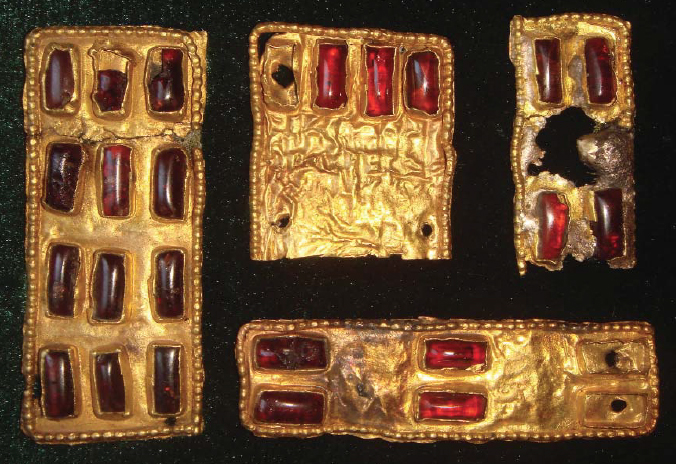
RESEARCH: Gold used in the treasure from Nagyszéksós witness the widespread perambulations of the Huns...
BOOK: 1919 a hoard of Roman silver – wine jugs, goblets, coins and military buckles – much of it cut, as if ready for melting down was uncovered in Scotland. A new book places the hoard in its wider European context.

The Huns and the Avars were famous for their lusty greed for gold. But what did they do with it all?
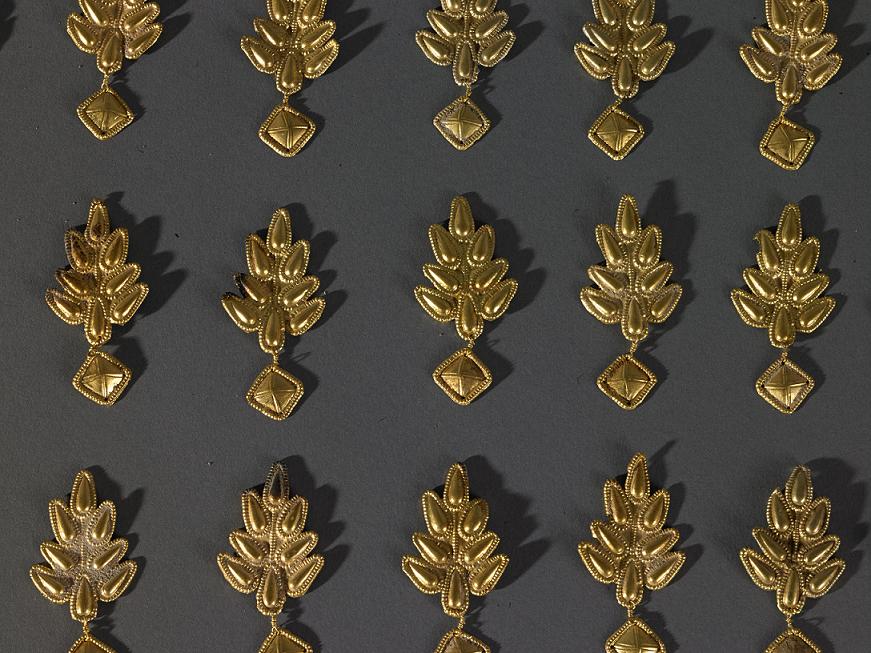
A fabulous treasure from the 5th century – already named the Nibelungen Hoard - was recently found
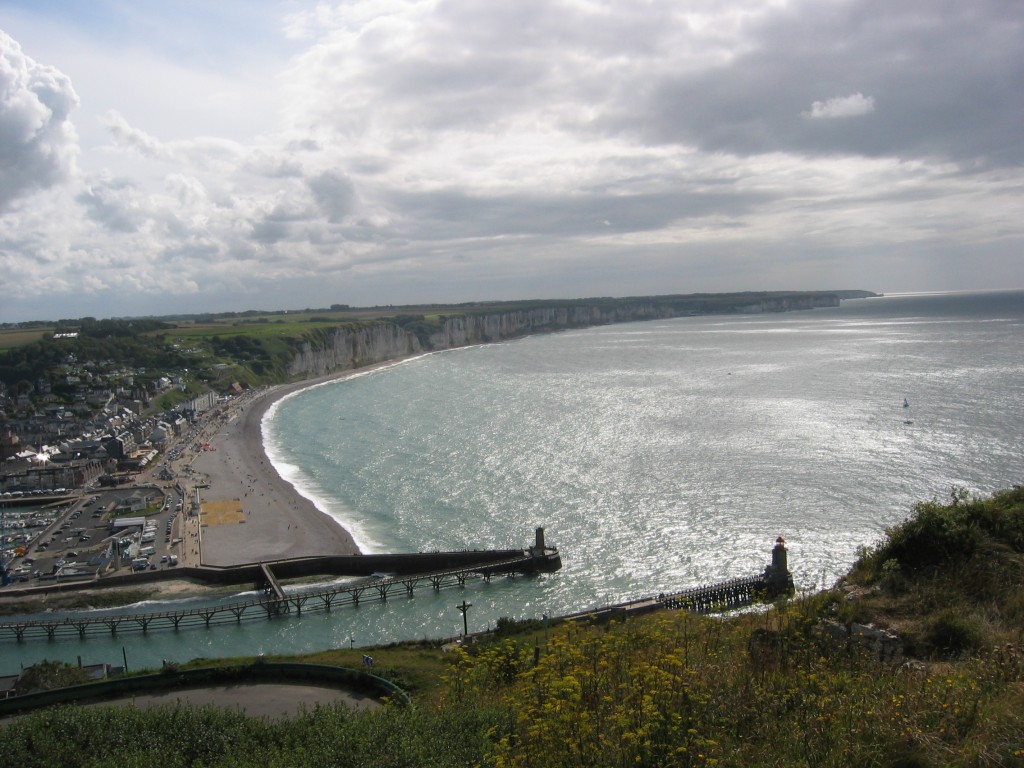
ARCHAEOLOGY: Fécamp boasts a natural harbour, perfect for 10th century marauding Vikings. Later they built a ducal palace...
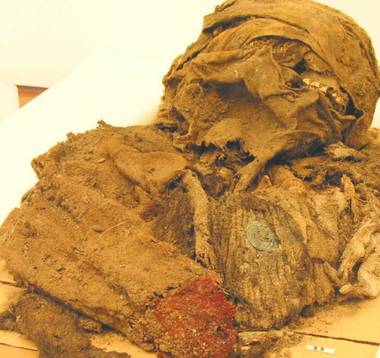
RESEARCH: Beneath the floor of the Stave-Church in Uvdal a burial was found containing medieval tunics and other textiles...
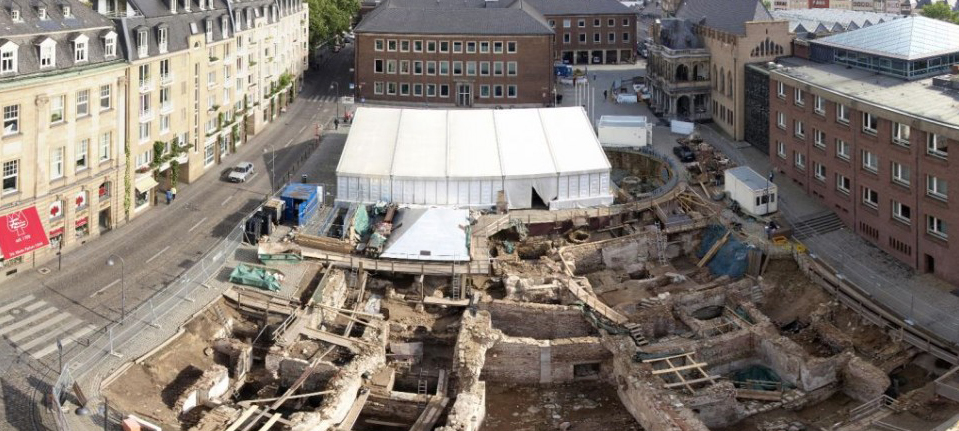
During the last decade archaeologists in Cologne have re-excavated the 700-year old synagogue with its adjacent Mikveh...
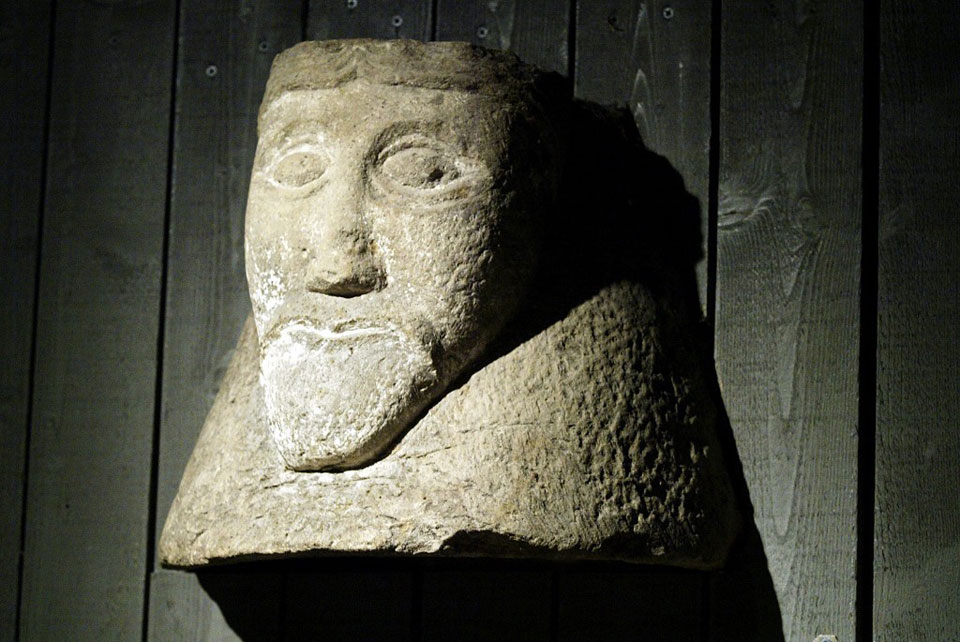
Sweyn Forkbeard was buried in Lund in Scania, where what is left of his church can be seen beneath the floor of a local café...
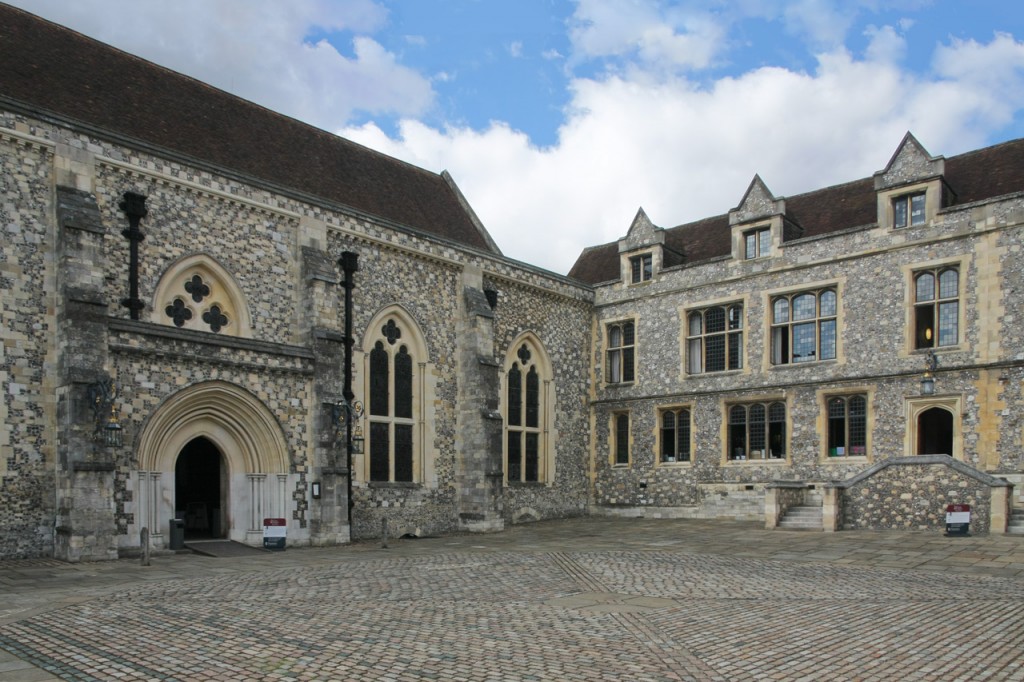
26.04.2014 - 27.04.2014 Winchester: archaeology and memory

In 2013 Richard Hodges revisited the Pirenne-thesis at a lecture in Rome. Read the full paper here...

RESEARCH: The Sagas shed light on Viking life in the Mosfell Valley in Iceland...
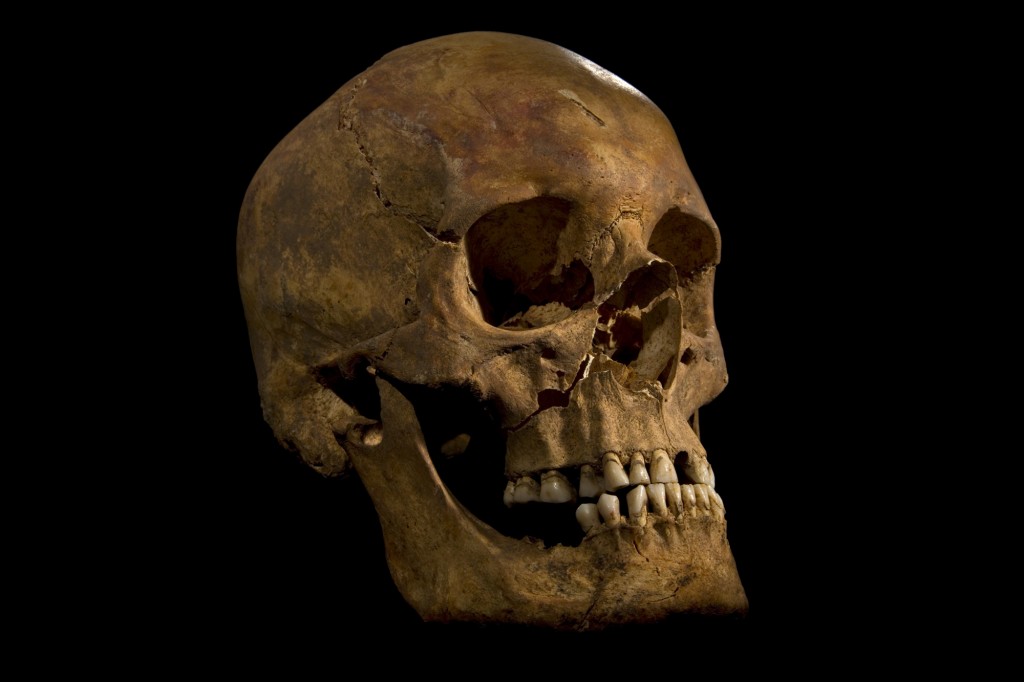
Richard III ate a very protein-rich diet. Whether this protein came from animals or plants (beans or peas) cannot be said. However, at least a quarter of the protein came from seafood. A diet like this was typical of a late medieval nobleman, who could afford to consume expensive foods like meat, game and fish.
However, analysis of skeletons from even high-status graves in the cemetery of St. Peter’s in Leicester has shown that they ate less protein and fish than Richard III.
Further analysis has shown that Richard must have suffered from stomach troubles. Careful analysis around the gut area of Richard III resulted in finds of microscopic egg-casings from roundworms, an intestinal parasite.
Finally his teeth have been analysed. Researchers found that he must have suffered severe tooth decay, possibly from a “sweet tooth”, which he was able to please.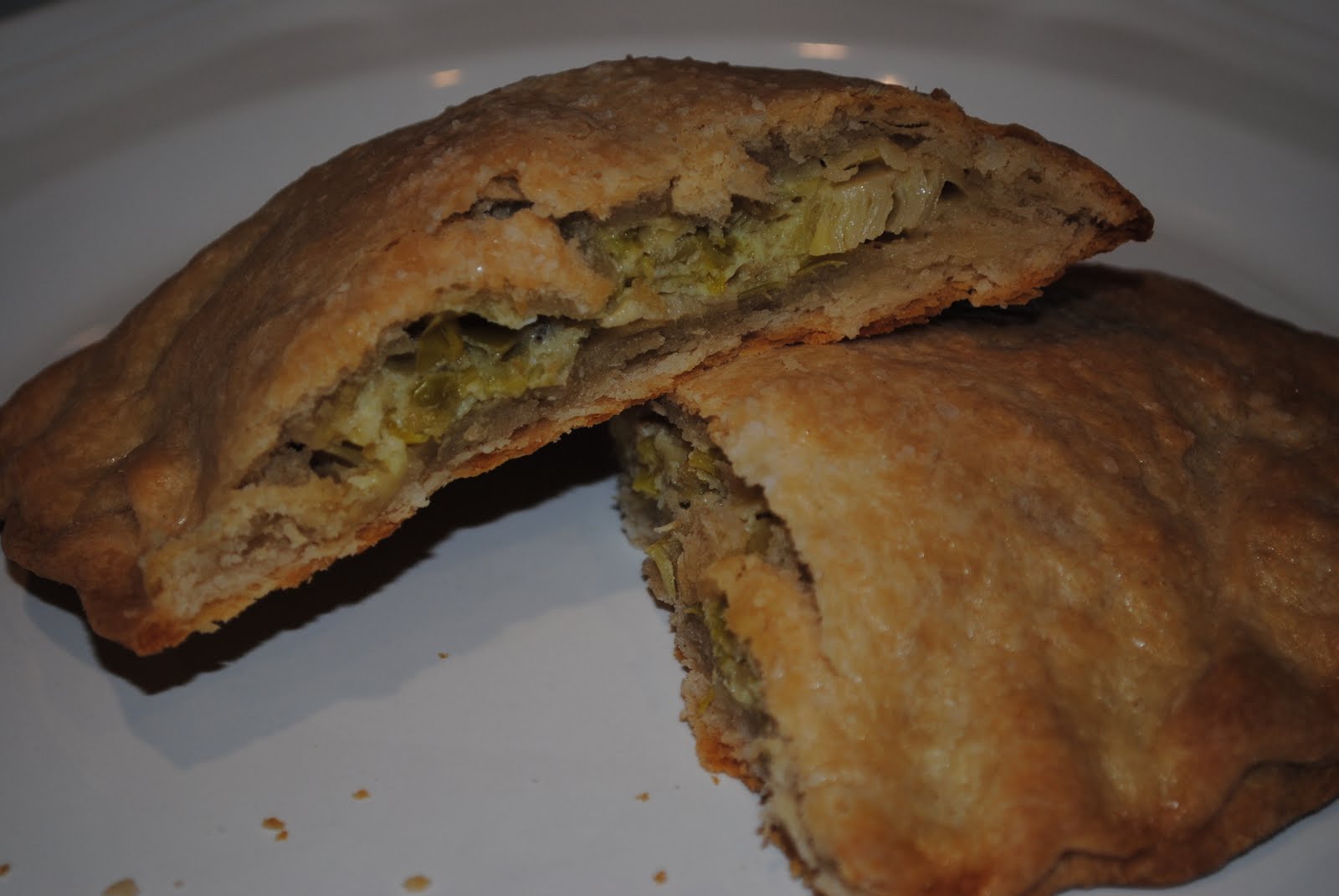
There exists at least one menu from a party, Richard III attended: his coronation on the 06.07.1483. At this feast venison, roast cygnet (swan), roast crane, roast heron, roast bittern (small heron), roast egret (another heron), sturgeon and pike were served. The banquet lasted over five hours and Richard was served on a golden plate, while Anne his wife was served on a gilt plate.
SOURCE:
Richard III. The King under the Car Park.
By Mathew Morris and Richard Buckley
Leicester University press 2013.
The intestinal parasites of King Richard III
By
Dr Piers D Mitchell et al
In: The Lancet, Volume 382, Issue 9895, Page 888, 7 September 2013
Richard III – the final act
By Amit Rai
IN: British Dental Journal 214, 415 – 417 (2013)
The Coronation of Richard III: The Extant Documents.
Ed. by Anne F. Sutton ad P.W. Hammond
Alan Sutton 1983
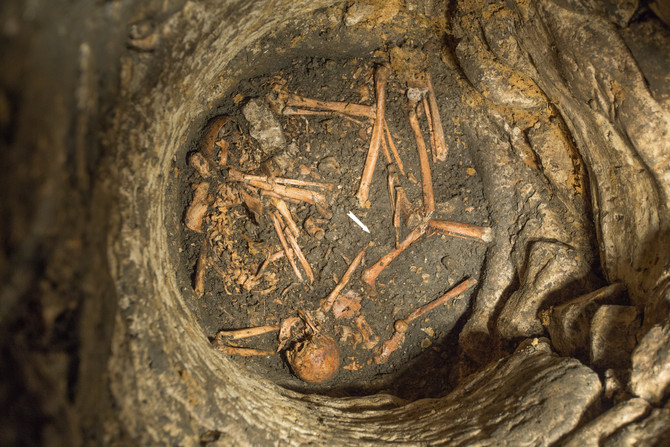
INRAP – Institut national de recherches archaeologiques preventives – recently finished an archaeological investigation of a Roman village, Intaranum. Located in the Northwest of France at the crossroad of an important Roman network of roads it covered more than 120 ha2 of which 1000 m2 has been excavated. The archaeological investigation has uncovered a stretch of a road, a forge and a series of stone houses complete with bathing facilities equipped with hot and cold baths. These were supplied with water from deep wells.
Excavating one of these, the archaeologists found a gruesome collection of human skeletons packed in a layer measuring more than 3 metres. It is estimated that between 20 to 30 bodies were dumped into the well. Representing a collection of men, women and children the people are believed to be of civilian origin.
Even though the wells are from the antiquity, the bodies have preliminarily been dated to the period between the 8th and the 10th century. This leaves us with a number of plausible events, which may indirectly have caused the medieval massacre:
1) In 841 the sons of Louis the Pious – Lothar, Charles the Bald and Louis the German fought at Fontenoy, 25 km north of Entrains – about a days ride up North. Charles the Bald set up camp in Thury, 16 km from Entrains.
2) After 845 the Vikings arrived in the region pillaging not only Paris, Chartres and Beauvais but also Orleans and the Abbey of Saint-Benoit-sur-Loire. The massacre may have been the result of a Viking band of warriors pillaging the countryside, 30 km inland from Loire.
3) The third explanation presented is more general. The massacre may simply have been caused by one of the groups of brigands, which were known to pillage villages before the turn of the millennium, which witnessed the formation of the peace-movement, Pax Dei meant to control anarchy and widespread violence which followed in the weakening of the Carolingian power.
Future studies of the skeletons will hopefully provide a more precise date plus more information about the dead and whether they show signs of mutilations and violence. One possibility is also that the dead people were the victims of an epidemic. However, if this was the case, the question remains why they were not buried in the local cemetery, but rather dumped in a well.
SOURCE:
Au fond du puits, mystérieuse découverte à Entrains-sur-Nohain
INRAP 18.12.2013
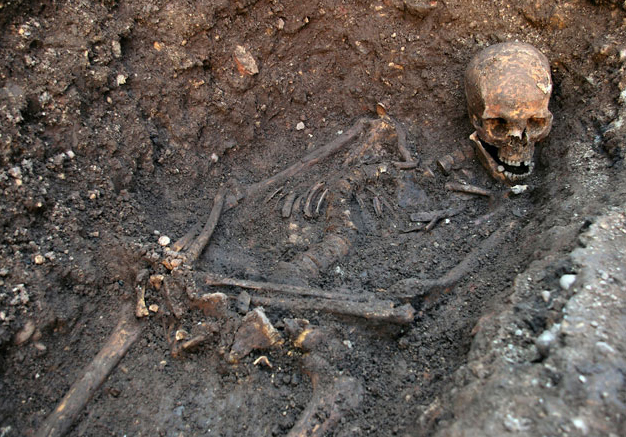
After his discovery in the Car Park, the remains of Richard III was scrutinized by a large interdisciplinary group of scientists and scholars. This was the first scholarly report.
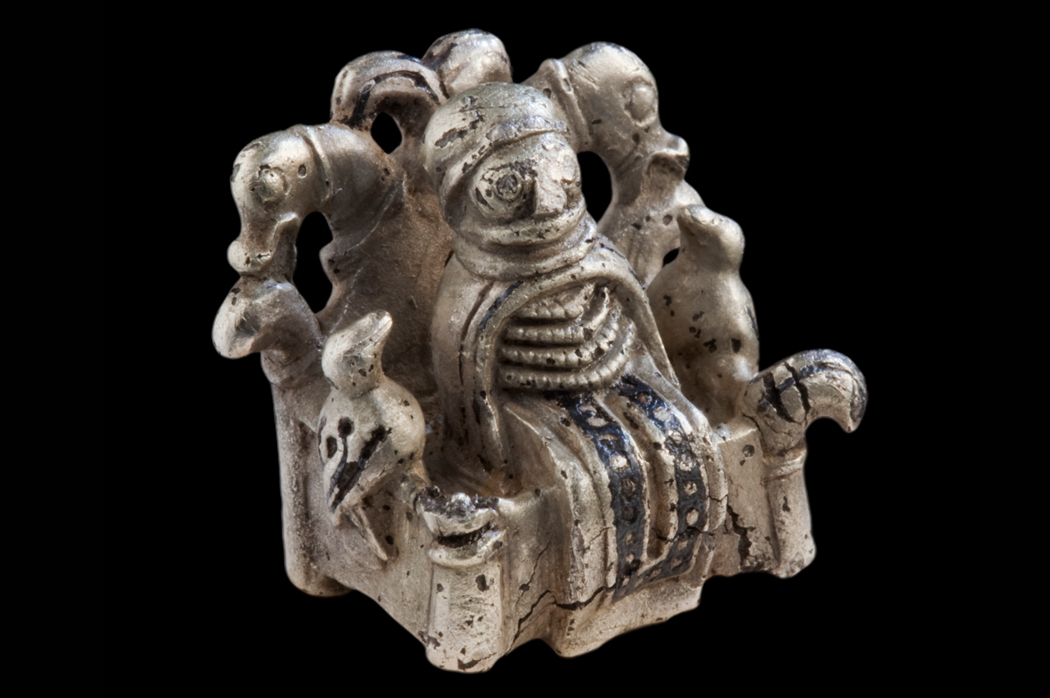
NEW RESEARCH: Odin from Lejre as challenger of hegemonic orders...
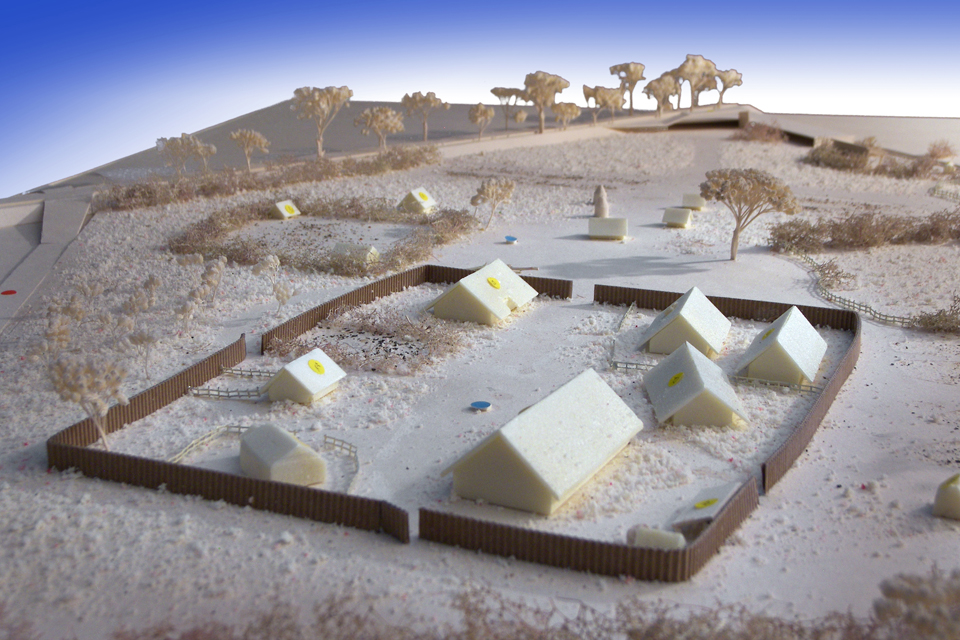
Lauresham is a Carolingian manor being rebuilt at Lorsch...