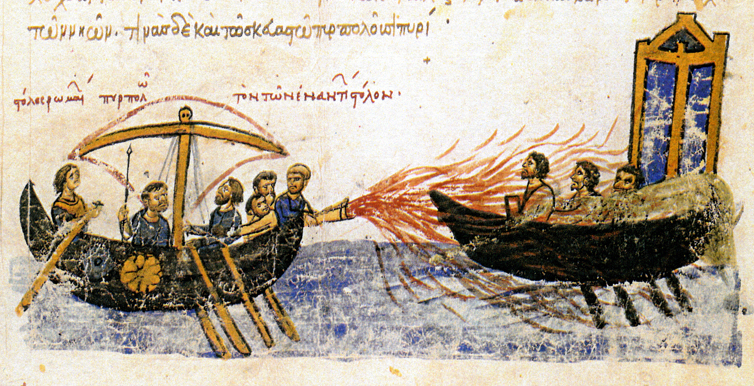
2606.2015 - 28.06.2015 The Military History of the Mediterranean Sea is being organized at the Fatih University in Istanbul in June 2015
‘Medieval Histories’ offers medievalists all the news about exhibitions, books, research, archaeology, travel-tips and much more from the Medieval World
2606.2015 - 28.06.2015 The Military History of the Mediterranean Sea is being organized at the Fatih University in Istanbul in June 2015
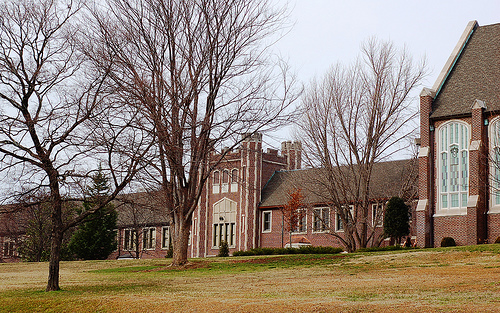
Before 28.04.2014 - Tenure-Track Assistant Professor, Medieval Europe at the University of Tennessee - Chattanooga, Department of History
This new issue contains the following articles:
Jocelin of Brakelond and the power of Abbot Samson
By Daniel Gerrard
pp. 1-23
DOI: 10.1080/03044181.2013.871326
Robert Grosseteste and the simple benefice: a novel solution to the complexities of lay presentation
By Philippa Hoskin
pp. 24-43
DOI: 10.1080/03044181.2013.856031
Papal pronouncements on legitimate lordship and the formulation of nationhood in early fourteenth-century Scottish writings
By Sarah Tebbit
pp. 44-62
DOI: 10.1080/03044181.2013.871327
The authority and charter usage of female rulers in medieval Silesia, c.1200–c.1330
Sébastien Rossignol
pp. 63-84
DOI: 10.1080/03044181.2013.869246
My sister for abbess: fifteenth-century disputes over the Abbey of Sainte-Croix, Poitiers
By Jennifer C. Edwards
pp. 85-107
DOI: 10.1080/03044181.2013.850582
The ‘Injunction of Jeremiah’: papal politicking and power in the Middle Ages
By Kriston R. Rennie
pp. 108-122
DOI: 10.1080/03044181.2013.838907
Journal of Medieval History, Vol. 40, No. 1, 02 Jan 2014
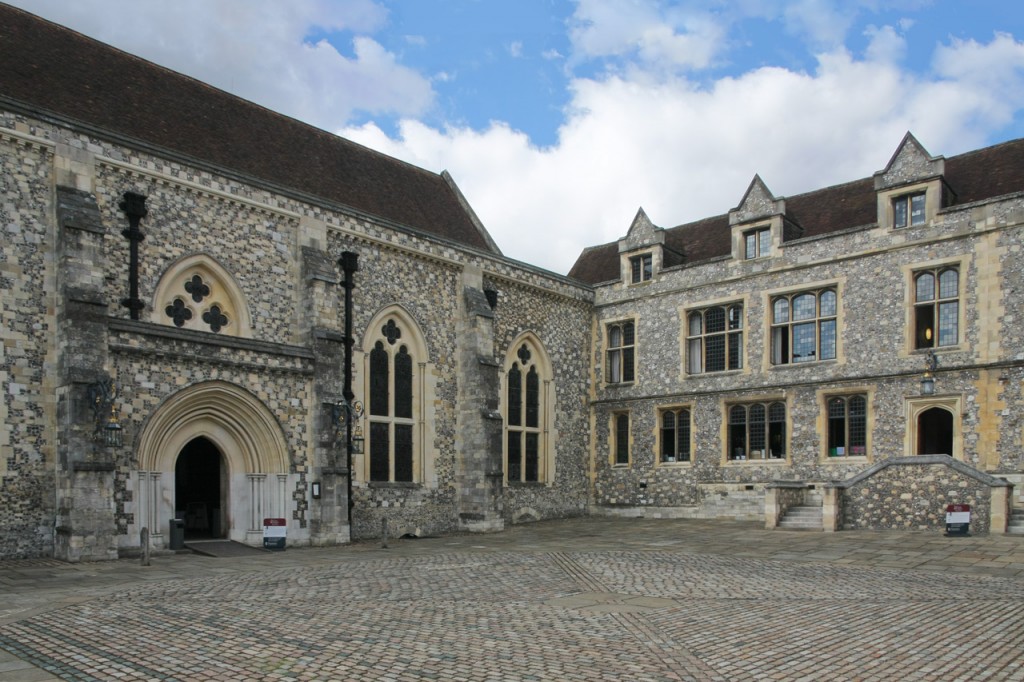
26.04.2014 - 27.04.2014 Winchester: archaeology and memory
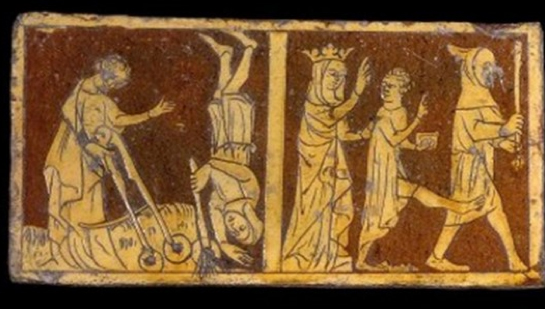
30.10.2014 - 01.11.2014 Invention and Imagination in British Art and Architecture, 600—1500
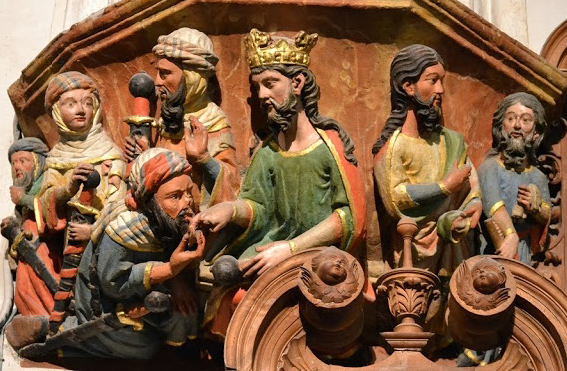
RESEARCH: The article invites us to take part in a medieval walk-through of the chapel of Santa Catalina in the Cathedral of Burgos
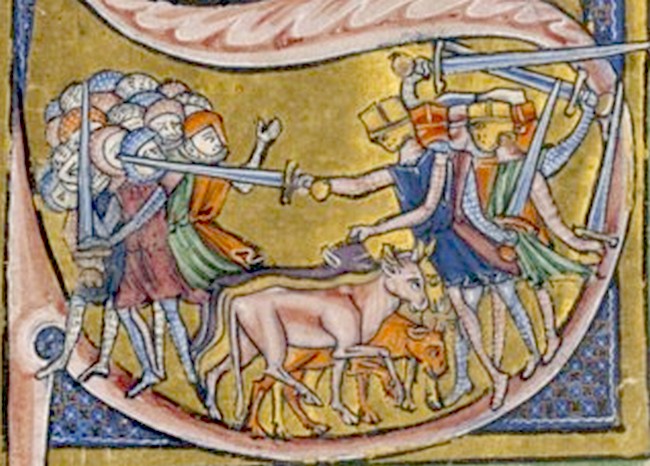
16.05.2014 - 18.5.2014 The Religious Aspect of War covers the Mediterranean World in Antiquity and the Middle Ages

Modern Medievalist an interesting blog on all things "medieval in a modern setting"...
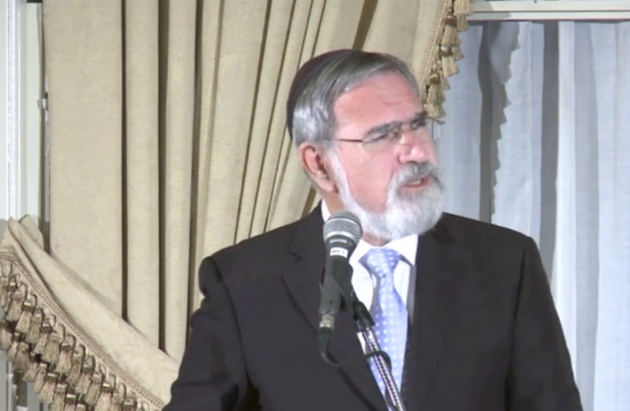
Christians can learn from Jews and the history of the Jews, unfolding their lives as a “Creative Minority”, says Jonathan Sacks in the Erasmus Lecture 2013...
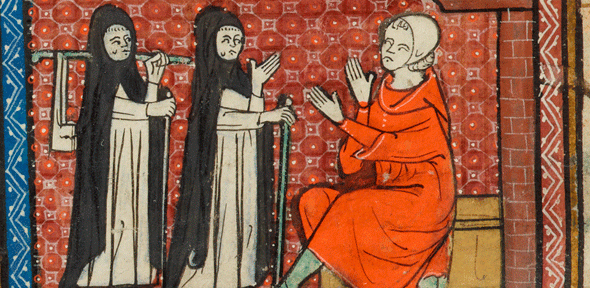
10.04-2014 - 12.04.2014 Medieval Francophone Literary Culture Outside France, King's College, Cambridge

10.09.2014 – 14.09.2014 20th Annual Meeting 2014 of the European Association of Archaeologists

The European Journal of Archaeology is published on behalf of the European Association of Archaeologists (EAA)
Vol. 17, issue 1 (2014) holds a series of articles especially pertinent for medievalists:
Spatial and Temporal Trends in New Cases of Men with Modified Teeth from Sweden (ad 750–1100)
Anna Kjellström
pp. 45–59
The Hanseatic Cultural Signature: Exploring Globalization on the Micro-Scale in Late Medieval Northern Europe
David Gaimster
pp. 60–81
The Medieval Europe Research Committee (MERC)
Martin Carver
pp. 82–82
Ecological Approaches in Medieval Rural Archaeology
Rainer Schreg
pp. 83–119
The Maritime Middle Ages—Past, Present, and Future. Some Ideas from a Scandinavian Horizon
Christer Westerdahl
pp. 120–138
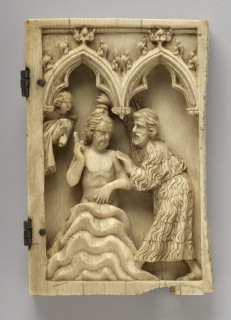
05.07.2014 -06.07.2014 The conference: Gothic Ivories - Content and Context aims to showcase and celebrate new research

Fasti Online is a project of the International Association of Classical Archaeology (AIAC) and the Center for the Study of Ancient Italy of the University of Texas at Austin (CSAI)
Between 1946 and 1987 the International Association for Classical Archaeology (AIAC) published the Fasti Archaeologici. It contained very useful summary notices of excavations throughout the area of the Roman Empire. However, spiraling costs and publication delays combined to render it less and less useful. AIACs board of directors thus decided in 1998 to discontinue the publication and to seek a new way of recording and diffusing new results. The Fasti Online is the result of this effort.
The aim of the site is to provide a database of excavations since 2000, providing a record in English and in the local language for each season. We do not pretend to offer information on all sites being excavated, and certainly not on those excavated in the past, or never excavated. Each participating country is responsible for uploading the data it gathers: some countries’ records are more complete than others.
The project was started with the support of the Packard Humanities Institute, to which we remain very grateful. It has subsequently developed partnerships with ICCROM, and the Center for the Study of Ancient Italy at the University of Texas at Austin, where the project will be housed on the University’s computers.
The project is now generously supported by the Baron Lorne Thyssen, the Italian Ministry for Cultural Heritage and Activities, the Society for the Promotion of Roman Studies,the Classical Association and the Oxford Journal of Archaeology. As part of the European Project ARIADNE we will receive 20% matching funds to continue the project over the next four years. The Ukrainian sites receive additional support from the Ukrainian Studies Fund of Harvard University.
FASTI is eager to welcome and support the entry of new countries into the project. For information on how to join FASTI contact Elizabeth Fentress, elizabeth.fentress@gmail.com
Scientific Committee: Michael Crawford, Stefano De Caro, Luigi Malnati, Adam Rabinowitz, Christopher Smith, Michael Thomas
Scientific Director: Elizabeth Fentress
Project Manager for Italy: Helga Di Giuseppe
Software and technical support: L – P : Archaeology
Using and Citing Fasti Records
Unless otherwise stated, all Fasti Online Data is licensed by AIAC under the Creative Commons Attribution-ShareAlike (CC BY-SA) license. As such, you are free to share, use and remix Fasti data, as long as you attribute the source data accordingly. When citing Fasti Site Records, please refer to the URL of the site and the date accessed. When citing Fasti Season Summaries please cite the summary authors, the year of the intervention, the URL and the date accessed.
Fasti FOLD&R publications are licensed separately under the Creative Commons Attribution-NonCommercial-ShareAlike (CC BY-NC-SA) license, with further information noted in the FOLD&R About page.
The project is supported by the Italian Ministry of Cultural Heritage (MiBAC), the Classical Association, the Society for the Promotion of Roman Studies, the Ukrainian Studies Fund of Harvard University and L – P : Archaeology.
Web, GIS and Database Design by L – P : Archaeology
All Fasti Online data, unless otherwise stated is licensed under the Creative Commons Attribution-ShareAlike Unported License (CC BY-SA 3.0), © 2004 – 2013 AIAC

The Center for Medieval and Early Modern Studies at the University of Colorado at Boulder focus on the period from 400 -1800 in a global context
Early Medieval Europe Vol. 22 Issue 1 is now published and (for a while freely available)