Pomegranates were a medieval luxury and may have inspired a famous royal dress from ca. 1400, which belonged to the danish Queen, Margaret I

Pomegranates were a medieval luxury and may have inspired a famous royal dress from ca. 1400, which belonged to the danish Queen, Margaret I
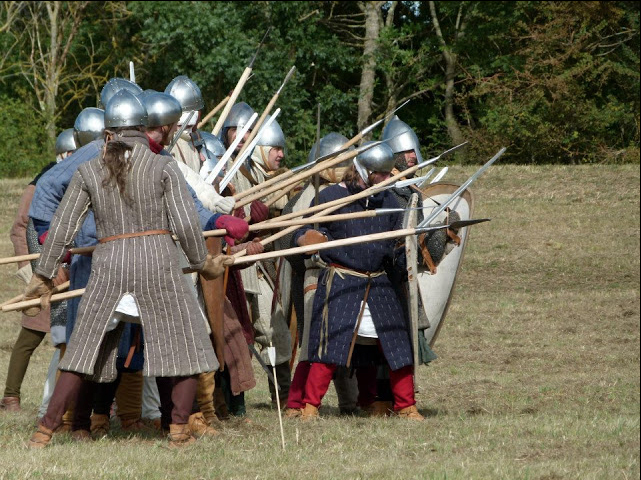
The anniversary of the Battle of Muret 1213 ...
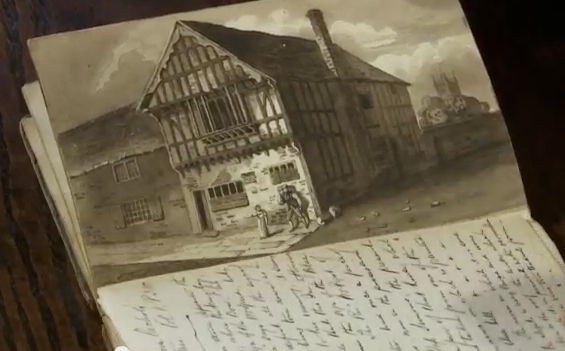
The Blue Boar in Leicester is being recreated...


Next year, the Cathedral of Notre-Dame de Paris expects more than 20 million visitors, celebrating the anniversary of this beautiful church. The first stone was laid in the presence of the Pope, Alexander III, in 1163. It took about a hundred years to finish the impressive edifice.
Complete with a new viewing platform, improved lighting, a renovated organ and – in a while – eight new bells, the Cathedral is looking all spick and span for the celebrations of the upcoming year. The lighting system is already in place, but the bells are still poured in Normandy at the bell-maker Cornille Havard. Overall, the Cathedral has raised €6.5 million from private donors to finance the ongoing projects.
The celebrations took off on December 12th, with the Parisian Cardinal-Archbishop Andrè Vingt-Trois celebrating mass at an evening service in the presence of ministers and a large crowd of other specially invited honoraries. Nearly 2000 took part in the event, which took place in front of the Cathedral.
 At the same time, an interdisciplinary scientific symposium is taking place in Collège des Bernadins, where the focus is not so much on the building itself but on the religious life at the Cathedral through 850 years. The program may be viewed here.
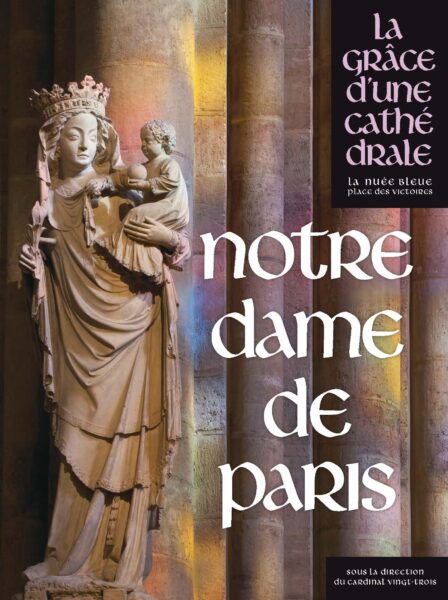
A heavy coffee-table book – 27 x 37 cm, 504 pages, 600 images and 2 kilos – has been published in connection with the anniversary. The book covers the history of construction from the 12th century up until now, and it tells the story of the building as a set piece for significant events in French history. The book is published in the series “La Grace d’une Cathédrale” by La Nuée Bleue Editions. The proceedings from the scientific symposium will be published later this year.
In connection with the anniversary the magazine Pelerin has hired the photographer Stéphane Compoint to take photos with his special technique. He uses a camera mounted on a balloon filled with helium, which he directs from below. A presentation of how this is done may be seen at the site of Pelerins. The photos may be enjoyed as part an E-pilgrimage taking seven days and inviting the pilgrim every day to enjoy and reflect upon the special sites of Notre Dame de Paris.
Sign up to receive the daily email with the E-pilgrimage aka photo-safari by Stéphane Compoint here
© Stéphane Compoint
Read more about the Celebrations at Notre Dame de Paris 2013
Notre Dame de Paris. La Grace d’une Cathedrale.
Ed. by Dany Sandron, Jean-Pierre Cartier and Gerard Pélletier.
Paris, La NuéeBleue Editions 2012.
READ MORE:
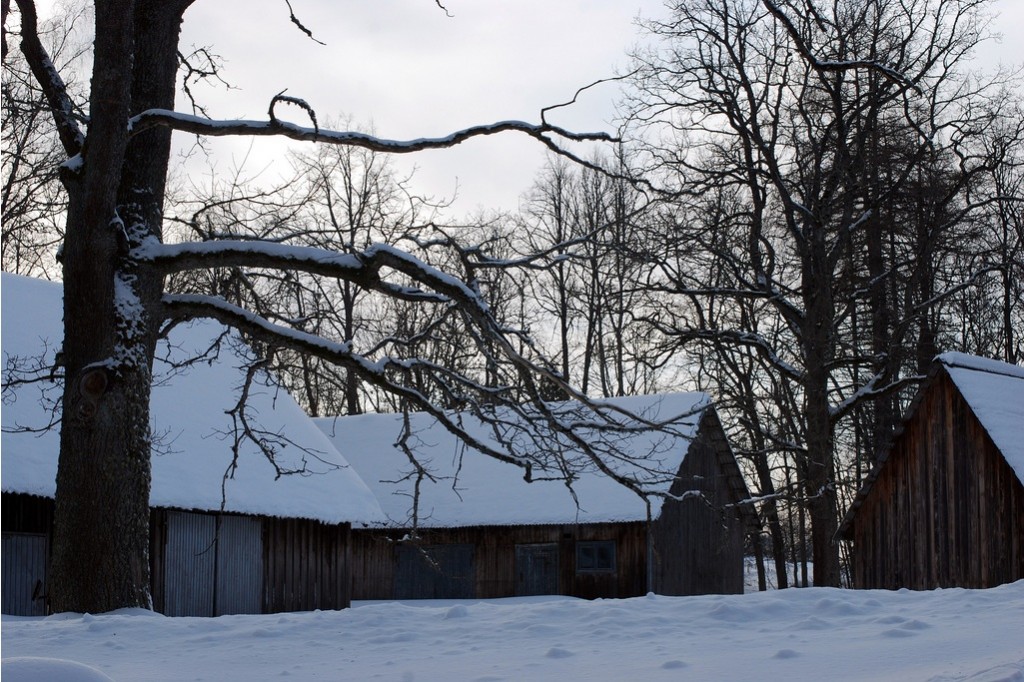
nterdisciplinary research into the ecology of crusading in the Baltics 1200 -1500 document a massive ecological shift in landscape, settlements, flora and fauna
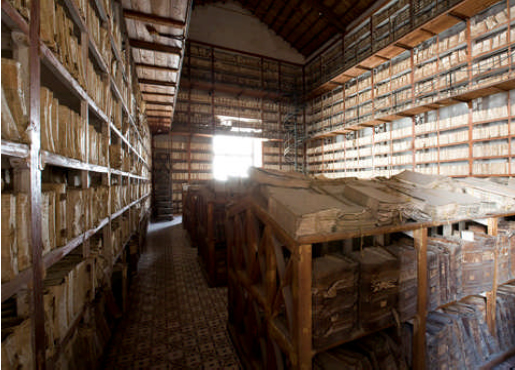
AR.C.H.I.ves – A comparative history of archives in late medieval and early modern Italy
Most historians work in archives, but generally have not made archives their primary object of research. While we tend to be preoccupied by documentary loss, what is striking is the sheer amount of paperwork preserved over the centuries. We need to study the reasons for this preservation.
The project’s general aim is to study the history of the archives and of the chanceries that oversaw their production storage and organization in late medieval and early modern Italy from the late twelfth century to the opening of the Archivi di Stato that – after the ancient states’ dissolution – preserved documents as tools for scholarship rather than administration.
Italian states were at the forefront of the institutionalization of documentary preservation on a large scale, and the country as a whole has an extraordinary rich and diverse archival patrimony. Because of its fragmented political history, concentrating on Italy means having access to the archives of a wide variety of regimes; archives, which lend themselves to comparison, even though Italian archives often seem disorderly to scholars who have no local knowledge. However, this project builds precisely on the basis of the plurality of Italy’s archives, and on their overwhelming closeness to the pre-modern institutions that created them. The proposed research intends to approach their history in a doubly comparative framework, by focusing on a series of seven case studies of chanceries disseminated across Italy: Venice, Modena, Florence, the Vatican, Milan, Naples, and Palermo; and by comparing Italian chanceries with those of other European and non-European states and cities, chiefly by organizing and encouraging exchanges between scholars working in different countries.
Secondly, while histories of archives are generally inscribed in the framework of institutional history, the proposed research wishes to test the chanceries’ interactions within a wider social and cultural context, by focusing on six interconnected themes:
1) the political role of archives, and the efforts devoted by governments to their development;
2) their organization, subdivisions, and referencing systems;
3) the materiality of record-keeping;
4) the social characteristics of the staff, their education and selection;
5) the archives’ place in society, including their access and (mis)use;
6) their use by historians.
As implied in the choice of these themes, the project is deliberately interdisciplinary, and aims at the mutually beneficial exchange between social, political, and cultural historians, historians of art, and archivists.
The research team
The project has a deliberately long timeframe, it tackles a large variety of sources, and it needs to combine local knowledge with a wider vision. In order to tackle these challenges the project will employ a research team trained in different disciplinary skills, formed of five people:
▪ The Principal Investigator, Dr Filippo de Vivo, who will also be responsible for supervising the team’s work as a whole.
▪ Two post-doctoral research assistants, Dr Andrea Guidi, a specialist of the Florentine Chancery, and Dr Alessandro Silvestri, a specialist of the Aragonese Chancery of Palermo.
▪ Two PhD students who will research specific themes on the basis of one or two case studies alone. Mr Fabio Antonini will work on the theme of Archives and the writing of history, especially the use of archival sources by late medieval and early modern antiquarians and historians, with special reference to the Venetian case. Mr Giacomo Giudici works under the joint supervision of Dr de Vivo and Professor Evelyn Welch (QMUL) on the theme of “Paper and place”: the physical and material aspects of documentary evidence, such as the architecture and furnishings of the repositories, or the decoration and making of the records, with special reference to the cases of Milan and Venice.
There will be regular workshops with invited international participants, where team members will be able to present their findings before discussants. A final conference will conclude the project and it is expected that selected papers from the conference and the workshops will be published in a volume edited jointly by the PI and the PDRAs.
A first workshop on “Recent tendencies in the history of archives, documentary production and organization” has been planned for the 12th of December 2012.
The project is funded by a European Research Council Starting Grant
SOURCE:
Recent tendencies in the history of archives, document production and organization. Conference on Wednesday, the 12th of December 2012, Birkbeck, University of London, 2-6pm. Dreyfus Room, 26 Russell Square (TBC)
Conference program
 The Journal of Medieval Archaeology
50 years ago the Society of Medieval Archaeology was founded in London. As a celebration the first 50 years of the Society’s Journal went online last year. Now the Index to 51 -55 has also become available.
Medieval-Archaeology-Index-51-55
Find out more about Medieval Archaeology on our publication webpages.

The Medieval Settlement Research Group
The Medieval Settlement Research Group (MSRG) is a long established, widely recognised and open multi-disciplinary group that facilitates collaboration between archaeologists, historians, geographers and other interested parties.
The Group is dedicated to developing understanding of rural landscapes and settlements including villages, hamlets and farmsteads between the 5th and 16th centuries AD. For information about membership, conferences, grants and other activities, please see the MSRG website.
The MSRG’s journal, Medieval Settlement Research (MSR), is published each year in the autumn. The journal is an internationally recognised publication, containing peer-reviewed research papers, fieldwork reports and news, reviews and an annual bibliography. Although the Group’s interests are concentrated on British and Irish medieval landscapes between the 5th and 16th centuries AD, it actively encourages wider chronological and pan-European perspectives. Medieval Settlement Research therefore welcomes papers on Britain, Ireland and Europe that help us to improve our understanding of medieval settlements and landscapes from the level of individual sites to the international scale.
A digitisation project is currently near completion and back issues of the MSR and its predecessor the MSRG Annual Report are now available to users free of charge via the Archaeology Data Service (ADS). Other bibliographic details of past content can be found on the British and Irish Archaeological Bibliography (BIAB).

Log boats, wooden vessels and decorated dress pins excite...
 The Crusadersword captured from Mamluk Arsenal in Alexandria gave £163.250 edge to Bonhams Arms and Armour sale. Viking swords sold for up to six times the evaluation
A rare medieval sword taken from the Mamluk Arsenal at Alexandria was the top item in Bonhams sale of Antique Arms and Armour on November 28th in London. The sword, estimated to sell for £40,000 to £60,000, was eventually bought for £163,250 after stiff competition in a sale that made a total of £1m with 90% sold.
The medieval Crusader Italian-made sword was given as a gift to the Mamluk rulers of Alexandria by the Christian ruler of Cyprus and Jerusalem, King Peter I as part of a gift sealing a treaty.
King Peter I, the King of Cyprus and Jerusalem, launched the last Crusade in 1362 against the Muslim Mamluk Empire in the region. A fleet set out from Cyprus and proved victorious, taking the city of Alexandria with immense amounts of plunder returned to Cyprus, including this sword. Such was the treasure and weapons taken from the captured city that many of the overloaded ships had to jettison cargo.
David Williams, Head of Bonhams Antique Arms and Armour Department, says: “The fascination of this sword is that it has survived some six centuries having been gifted by a Christian King to a Muslim ruler and kept in the famed Alexandrian armoury and then taken by force by Crusaders and returned to Europe. It is a remarkable survivor of the Crusader period.”
The sword has a flat tapering double-edged blade 92.5 cm. long and overall with the hilt 115.7cm. The weapon bears an inscription that reads: ‘Hubs Khazain al-Silah bi thughri al-Iskandariyya ayyam al-Sayfi Faris al […d.]’, ‘Donation to the armoury in the frontier city of Alexandria in the days of al-Sayfi Faris al- [Muhammadi]. Amir Faris was an inspector in 840H, corresponding to 1436-7 AD. Only three other swords appear to be recorded inscribed in the name of the Amir Faris. One in a private charitable foundation, another in Leeds Castle, Kent and the other in the Military Museum at Istanbul.
A stunning array of death-dealing swords from the Medieval period and earlier, including Viking weapons, formed the main thrust of Bonhams sale of Antique Arms and Armour on November 28th in Knightsbridge.
David Williams, Director of Arms and Armour at Bonhams, comments: “Many of these rare and remarkable weapons would have been used in battle. The scarring and damage goes some way to confirm this, though the years have also taken their toll.”
Among the collection of swords in the sale from the distinguished Danish collector the late E.A. Christensen, there were some seven Viking swords dating from the 9th and tenth centuries when the Vikings were invading the British Isles on a regular basis.
Lot 55, a Viking sword similar to one found in Ireland and estimated at £4,000 to £5,000, sold for a whopping £30,000.
A rare Viking sword from the 9th Century, found in 1887 in the mouth of the River Thieles, in Switzerland, (lot 57), estimated to sell for £6,000 to £8,000, made £27,500.
Lot 54, found in the River Meuse in Belgium estimated to sell for £3,500 to £4,500 made £10,625.
The Viking Age spanned the late 8th to 11th centuries.
The Viking destruction of Lindisfarne was reported by a Northumbrian scholar who wrote: “Never before has such an atrocity been seen”. More than any other single event, the attack on Lindisfarne cast a shadow on the perception of the Vikings for the next twelve centuries.
For more information please contact www.bonhams.com
 Byzantine History of the World to be Studied and Made Accessible
Tübingen Historian, Professor Mischa Meier, heads new 12-year project examining the Chronographia of Ioannes Malalas (490 -578 AD). He wrote his Chronographia in Greek in the 6th century. In recent years, researchers have come to believe he was an official in the provincial administration of the Eastern Roman Empire. In that position, Malalas appears to have had access to important archives – which was important for the final books in the chronology, which dealt with the contemporary history.
Read more at University of Tübingen
 New book on Royal Seals of the Árpád Dynasty
28.11.2012
A new book, written by Imre Takács on Royal Seals of the Árpád Dynasty was presented today at the Hungarian National Archives. The book is the first part of a new series, titled Corpus Sigillorum Hungariae Mediaevalis. The series aims to provide catalogue of Hungarian medieval seals – including royal seals, aristocratic seals as well as seals of towns, religious institutions and other organizations. The first volume is dedicated to seals issued by Hungarian kings of the Árpád Dynasty (1000-1301), and includes a total of 48 entries.
Read more at Medieval Hungary
 New book on Royal Seals of the Árpád Dynasty
28.11.2012
A new book, written by Imre Takács on Royal Seals of the Árpád Dynasty was presented today at the Hungarian National Archives. The book is the first part of a new series, titled Corpus Sigillorum Hungariae Mediaevalis. The series aims to provide catalogue of Hungarian medieval seals – including royal seals, aristocratic seals as well as seals of towns, religious institutions and other organizations. The first volume is dedicated to seals issued by Hungarian kings of the Árpád Dynasty (1000-1301), and includes a total of 48 entries.
Read more at Medieval Hungary

Wooden sticks from Greenland with Runic inscriptions...

Gothic Ivories is a really splendid database...

Louvre is petitioning to complement a unique Gothic Ivory Group…
The Medieval Week in Visby suffers in a time of crisis