Medieval Conferences lists major events - check out the dates and see what is happening around the Medieval World in 2022
Medieval Conferences lists major events - check out the dates and see what is happening around the Medieval World in 2022
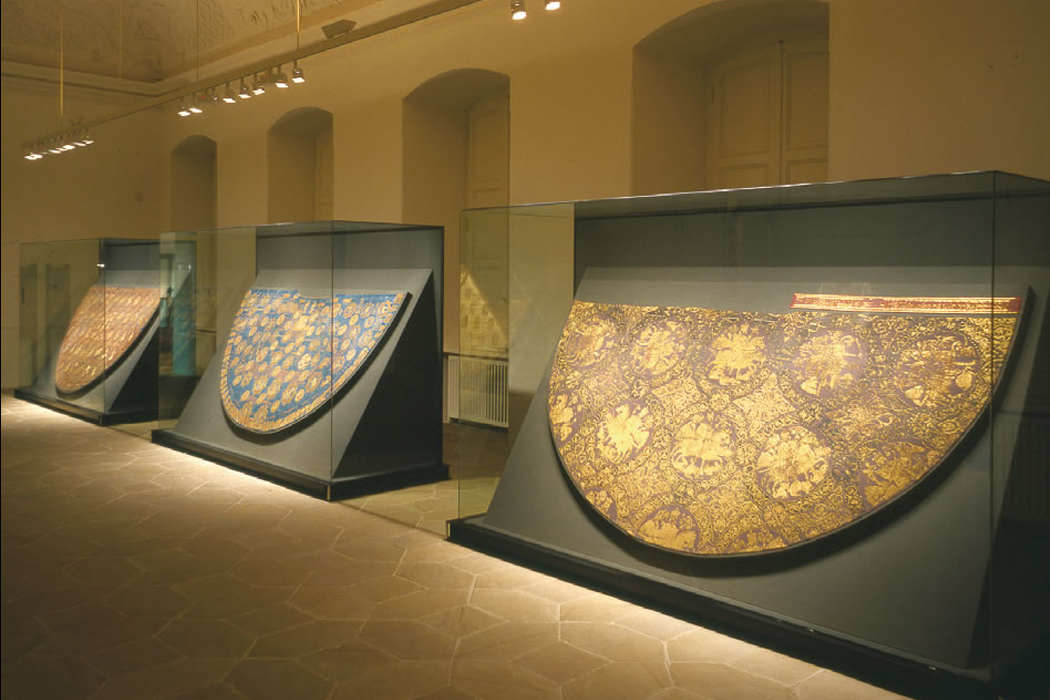
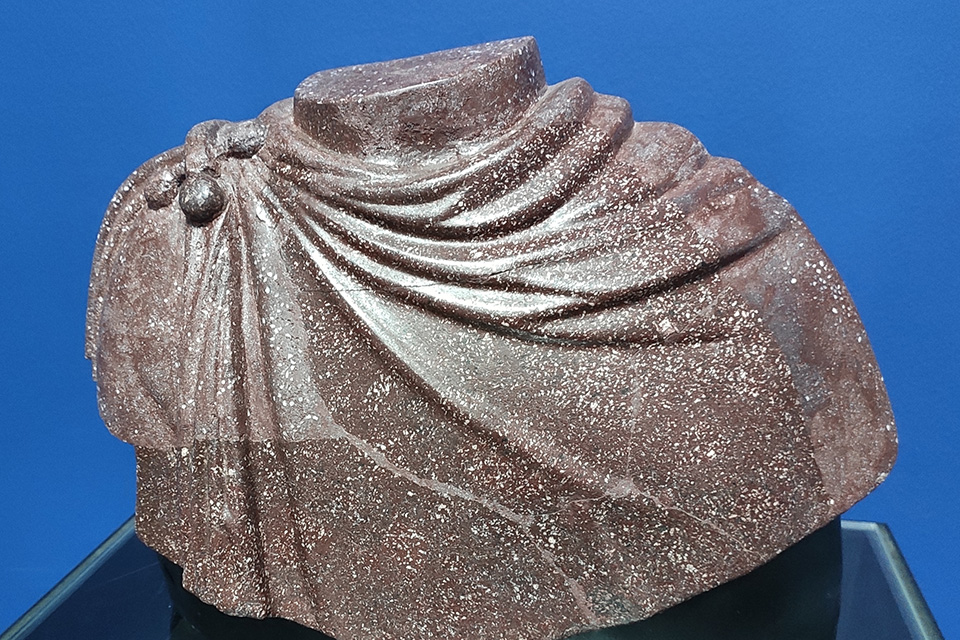
The 11th century Imperial Robes in Bamberg are some of the oldest preserved royal garments. They form a unique ensemble from the 11th century. New research project aims to get a better understanding of their original design and outlook.
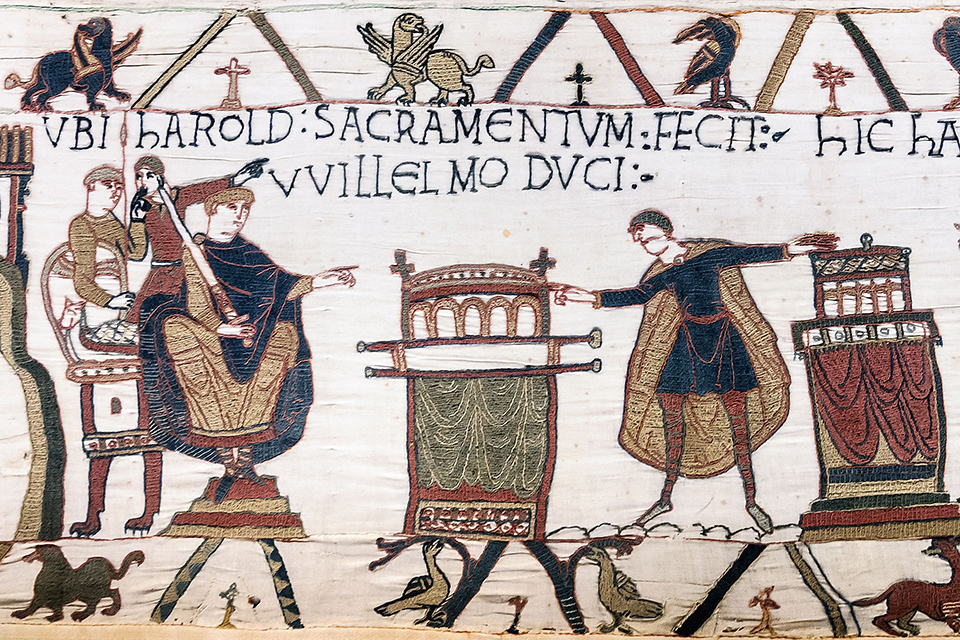
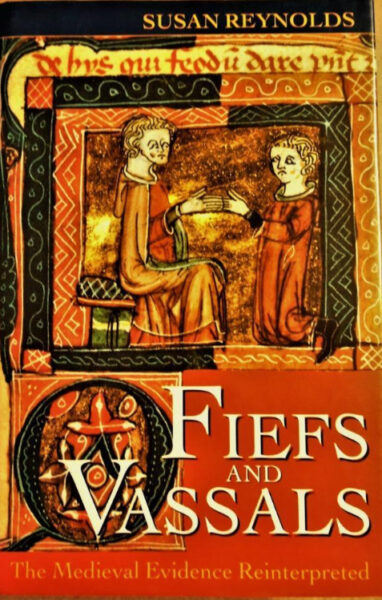
For some historians (Reynolds 1984), feudalism is a concept created in the 17th century and used in the 19th century to describe the world before the more enlightened times of modernity. For others, it has acted primarily as a conceptual opening to explore the endless complexities of economic and social ties in the Middle Ages in the Maconnais, in Bourgogne or elsewhere.
Archaeology, however, has, during the last fifty years, uncovered a series of clear breaks in the European landscapes in the 10th and 11th centuries, demarcating feudalism as a distinct new socio-economic way of living and thinking about the world. These findings correspond to the history written by several French historians from the Annales School, who took pains to explore these new ways of thinking about land, tributes and taxes and the corresponding system of obligations welded into the fabric of medieval society in the High Middle Ages. (c. 1000 – 1300)
This new and transformational way of thinking originated in a world devoid of towns, money and markets. Instead, the cultural habits were based on economies of gifts, barters, and trading ventures. Here, a tribal outlook governed the social and economic relations among people wherever the iron grip of the Carolingian world order did not reach. Which was, in fact, not pervasive throughout Europe in the 8th and 9th centuries.
In the post-Carolingian world, budding feudalism organised a world gradually marked by private fortified homesteads, villages, and an economic upsurge in material wealth for the wider society. This materialism took off in the 9th century and flourished in the 10th century and later. Arguably, this shift was part of the interplay between centres and peripheries, leading to (among other alterations) the swinging seesaw between Carolingian France and Ottonian Germany.
More precisely, feudalism is generally understood as a reflection of the
As such, feudalism and feudal domination constituted a mode of production based on a specific organisation of exploitation of landed wealth and supported by the theology and religious thinking of the times. In time, it fostered a distinct lifestyle, the epiphenomena of the Middle Ages’ social and material culture and outlook.
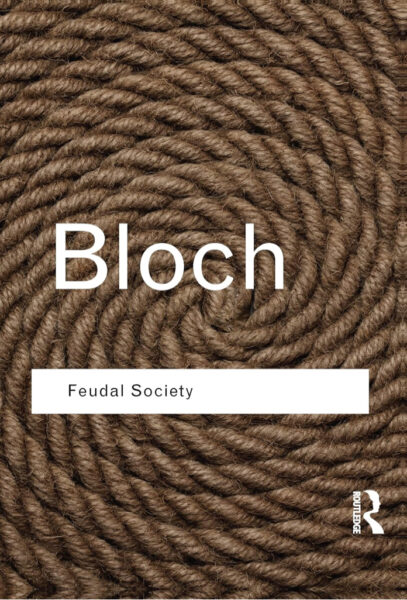
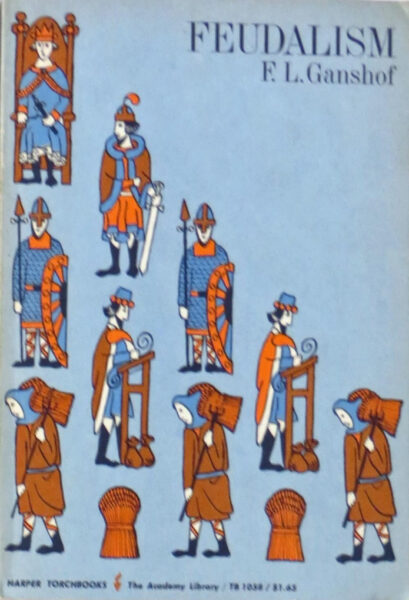
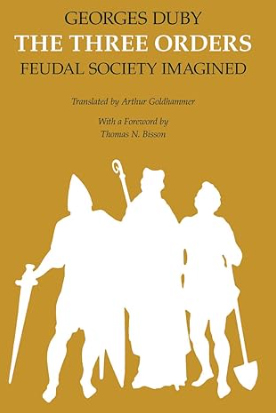
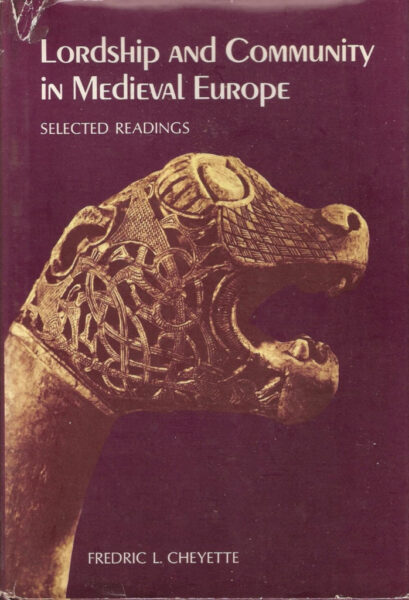
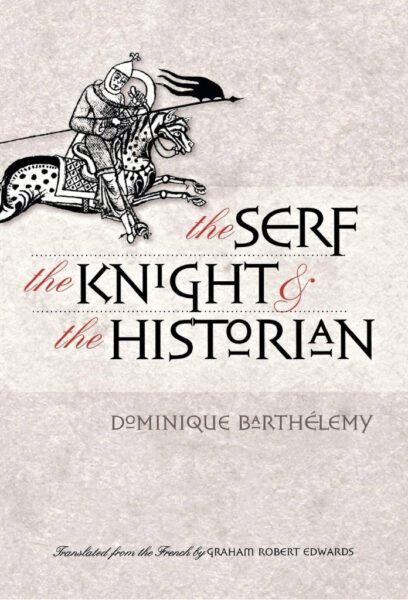
Central to the outlining of the concept of feudalism were the works of French historians such as Marc Bloch (1886-1944), François-Louis Ganshof (1895-1980), Georges Duby (1919-96) and Jaques le Goff (1924-2014).
The latter two were primarily inspired by Marc Bloch and his definition based on the following characteristics: a peasantry consisting of tenants, a distinct warrior class, a cultural thinking based on violence, protection and obedience called vassalage, a fragmentation of state-sponsored rule and monopolised violence framed by dynastic thinking about familial and associative thinking.
“European feudalism should, therefore, be seen as the outcome of the violent dissolution of older societies. It would, in fact, be unintelligible without the great upheaval of the Germanic invasions, which, by forcibly uniting two societies originally at very different stages of development, disrupted both of them and brought to the surface a great many modes of thought and social practices of an extremely primitive character. It finally developed in the atmosphere of the last barbarian raids. It involved a far-reaching restriction of social intercourse, a sluggish circulation of money to admit salaried officialdom and a mentality attached to tangible and local circumstances. When these conditions began to change, feudalism began to wane.” (Bloch 2004, p 443).
Based on this understanding, Bloch developed his ideas of the two “feudal ages”, of which the First Feudal Age reached from the collapse of the Carolingian Empire in the 9th century to the mid-11th century, while the second feudal age covered the period from the mid 12th century to the mid 14th century and into the waning of the Middle Ages. Unlike this definition, Ganshof focused on the feudo-vasallic relations where feudalism was considered a system ruling duties concerning aid, obligations, and service (Ganshof 1961).
The cusp of the feudal age must be found in the economic and cultural decline, notably marking out the period from c. 500 – 700, with different timespans evoked in different parts of Europe. During this period, the Byzantine Empire virtually collapsed, leading to a decline in long-distance trade in the Mediterranean as well as in the North Sea and the Baltic.
During this period, the landscape and the towns became ruralised, if not abandoned. Europe closed off and fell into a disjunct and dispersed countryside where peoples’ lives were based on a subsistence economy pared with a gift economy. This was a period of economic decline and the formation of closed-off political and linguistic peripheries.
Interestingly enough, the first economic revival took off in the later Merovingian north, in the deltas of the Seine and Rhine with their tributaries, the Channel and the North Sea region reaching into the Baltic. Noticeably, this area came to foster a number of semi-religious central places surrounding lordly halls, to be followed by foundations of the emporia such as Quentovic, Dorestad, Ribe and later Haithabu, Birka, and Kaupang being linked up with York and London.
As opposed to this, the Mediterranean lacked behind, furthered by the Arab expansion in the 8th century and its culture of piracy and slave-raiding (the revisited Pirenne Thesis). Not until the late 9th and early 10th century did Italy and Iberia gradually revive through the short-term Carolingian and Ottonian efforts to revive the Roman Empire in a new disguise. These efforts, however, fell apart with the decentralisation of power establishing more or less independent kinglets and warlords as regional oppressors.
In the long run, Bloch’s work has stood better against the tides than Ganshof’s, claims the archaeologists (Hodges 2020). The last fifty years of archaeological surveys and excavations have furnished the evidence. Uncovering the decentralisation of the landscape dominated by the motte-and-bailey castles on hilltops, the amalgamation of grand estates, the corresponding nucleation of settlements in the form of villages and the continued reorganisation of the agrarian systems and the gradual expropriation of other natural resources such as forests, fishing waters, and hunting by kinglets and local warlords have documented this shift.
Gradually, all this led to a distinct upheaval in the economic and material culture of the elite, formalised in new lifestyles and ways of thinking based on the so-called “cerealisation” of the economy created through the dispersal of new systems of cultivation and technologies and the development of secondary products from the first half of the 9th century. The archaeological finds of grain silos, granaries, and traces of three-field systems and variations thereof have witnessed this process.
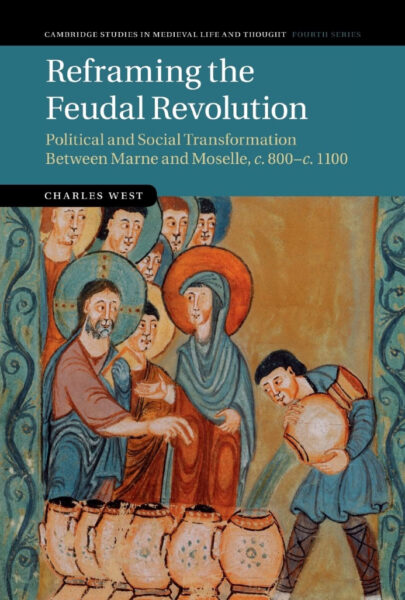
Today, the process of feudalisation, which was forged in the crucible of the dissolution of the Carolingian Empire, has been documented through textual evidence and archaeology of landscapes, settlements and, not least, the elite centres from 10th-century Europe, as well as through dedicated monographs on the history of specific regions and localities.
Defining the Archaeology of Bloch’s first Feudal Age. Implications of Vetricella Phases I and II for the making of Medieval Italy (8th to 9th centuries)
By Richard Hodges (2020)
In: The nEU-Med project. Vetricella, and Early Medieval royal property on Tuscany’s Mediterranean. Ed. By Giovanni Bianchi and Richard Hodges. Archaeologia Medievale (2020)28
How did the Feudal Economy Work? the Economic Logic of Medieval Societies
By Chris Wickham 2021
In: Past & Present , Volume 251, Issue 1, May 2021, Pages 3–40,
The Archaeology of the Peasantry in the Early Medieval Age. Reflections and Proposals.
By Helena Kirchner (2020)
In: Imago temporis medium aevum, XIV (2020) pp 61-102

Germans and Poles living in the Oder Delta strongly support rewilding and the introduction of large animals - including wolves and lynx, returning its landscape to its former medieval glory.
Davide Reubeni was a black adventurer, who claimed to be an emissary from a powerful Jewish Kingdom in Arabia. His diary was recently translated into English
When did the war on wolves commence? Only in the later Middle Ages it appears. On the contrary, poetry, sagas, onomastics, and pictorial art were rich in the motif of the wolf and the man and their myriad metamorphoses.
In AD 294, Sirmium was proclaimed one of the four capitals of the Roman Empire and allotted to the emperor Galerius. Sirmium boasted an imperial palace, a horse-racing arena or hippodrome, a sporting arena, and a theatre. Two bridges crossed the river, Also, the city sported numerous baths, villas, and public palaces. Glued to its important status were the silver mines in the Dinaric Alps and the mint established in the city. Already by the third century, the Sirmium housed a Christian community and from c. 300 the bishop acted as metropolitan for the Pannonian bishops. The first known bishop was Irenaeus of Sirmium, who was martyred together with his deacon St. Dimitrius and others during the Diocletian persecutions in AD 304.
Archaeologist have provided evidence for a vibrant cult in the 4th and 5th centuries. However, around AD 600 the Avars destroyed the city, and the cult was not renewed until the Bavarian and Byzantine missions took off in the 10th century,
The following translation is based on one of the earlier manuscripts containing the vita: (ÖNB), Cod. Ser. n. 371, Österreichische Nationalbibliothek. The manuscript is dated to the 10th century and derives from Salzburg.
Passio sancti Irenaei episcopi – The Passion of the Blessed Bishop Irenaeus
When there was persecution under the emperors Diocletian and Maximian, Christians, participating in various agonies and with a devoted mind to God willingly endured punishments inflicted by tyrants. Thus, they made themselves participants in perpetual rewards.
This also happened to the servant of God, Irenaeus, Bishop of the city of Sirmium, whose trial I shall now recount for you to show you his victory. He, because of his inherent modesty and his fear of God whom he served with worthy deeds, was found worthy of his name.
So, he was seized and presented before the rightful governor of Pannonia. This governor said to him, “Obey the divine commands, and sacrifice to the gods.” Irenaeus answered, “He who sacrifices to gods and not to God will be eternally lost.” The governor said, “The most merciful emperors have commanded that you either sacrifice or succumb to tortures.” Irenaeus replied, “For me, it is commanded to endure tortures rather than denying God and sacrificing to demons.” The esteemed governor ordered him to be tortured.
And when he was severely tortured, he said to him, “What do you say, Iraeneus? Sacrifice!” Ireaneus responded, “I sacrifice through a full confession to my God, whom I have always worshiped”.
His relatives, seeing him being tortured, implored him; his children embraced his feet, saying, “Have mercy on yourself and us, father.” The women, with mournful faces, begged for his life. But, detained by a better desire, he held the judgement of the Lord before his eyes, who says, “If anyone denies me before men, I will deny him before my Father who is in heaven.”
Disregarding everyone, he responded to none and hastened to attain the supreme hope of his calling. The erightful governor said, “What do you say? For the sake of your youth, be moved by the tears of these, and sacrifice.” Irenaeus responded, “I look to eternity; I am resolved, I shall not sacrifice.” The rightful governor ordered him to be taken to prison.
For many days, he was confined there and subjected to punishments. But at a certain time, in the middle of the night, the most blessed martyr Iraeneus was brought again before the tribunal of the rightful governor. This governor said to him, “Now sacrifice, Irenaeus, gain by sacrificing and avoid pains.” Iraeneus responded, “Do what is commanded; do not expect this from me.”
The rightful governor again ordered him to be beaten with rods. Irenaeus responded, “I have God, whom I have been taught to worship from my earliest age; I adore Him, who confirm me in all things, and to whom I also bring offers. But I cannot adore gods made by hands.” The rightful governor said, “Gain death. Let the tortures you endured be sufficient.” Irenaeus responded, “I shall obtain death through those punishments which you think to inflict on me, which I do not feel. Because of God, I shall receive the eternal life.”
The rightful governor then said, “You have a wife, Irenaeus.” Irenaeus responded, “I do not have one.” The rightful governor said, “You have sons.” Irenaeus responded, “I do not have any.” The rightful governor said, “You have parents.” Irenaeus responded, “I do not have any.” The rightful governor said, “And who were those who lamented your past inquisitions?” Irenaeus responded, “It is the command of my Lord Jesus Christ, who says, “He who loves father or mother or wife or sons or brothers or parents more than me, is not worthy of me.” Therefore, looking up to God in Heaven and turning toward His promises, while despising all things, I offer up myself for them.” Irenaeus responded, “My sons have God. By His grace, I can save them. But you, do what you are commanded to do.” The rightful governor said, “I advise you, young man, sacrifice, so that I do not have to inflict tortures on you.” Irenaeus responded, “Do what you wish. Soon you will see how much esteem, the Lord Jesus Christ will grant me as opposed to your scheming.”
The rightful governor said, “I will pass the sentence on you.” Irenaeus responded, “I congratulate you if you do. Passing the sentence, the rightful governor said, “I order that Irenaeus, disobedient to imperial commands, be thrown into the river.” Irenaeus responded, “I expected your many threats and many tortures, so that, because of these, you might subject me to the sword. But you have decided not to inflict this. I pray that you understand how Christians, because of the faith they have in God, are accustomed to despise death.”
Therefore, angered, the rightful governor, at the calm and trust of the most blessed man, ordered him to be struck with a sword. The holy martyr, as if being met with waving palm branches, gave thanks to God, saying, “I thank you, Lord Jesus Christ, who, through various pains and tortures, which you have granted me patience to suffer, that you have deemed me worthy to partake in your eternal glory.”
And when he came to the bridge called Basentius, he removed his clothes, extended his hands to heaven, and prayed, saying, “Lord Jesus Christ, who deigned to suffer for the salvation of the world, let your heavens open to receive the angels. Let them receive the spirit of your servant Irenaeus, who, for your name and your people in your Catholic Church in Sirmium, endures these things. I beg you, for your mercy to receive me and to deem us worthy as faithful.
Thus, struck by the sword by the officers, he was thrown into the river. The servant of God, the holy bishop Irenaeus of the city of Sermium, suffered on the 8th of the Ides of April. Under the Emperor Diocletian, with Probus acting as governor, and our Lord Jesus Christ reigning, to whom the glory be forever and ever. Amen; the account is complete.”
Le dossier hagiographique d’Irénée, évêque de Sirmium
By François Dolbeau (2000)
Antiquité Tardive. Revue Internationale d’Histoire et d’Archéologie (IVe-VIIe siècle), Vol 7, pp. 205-214
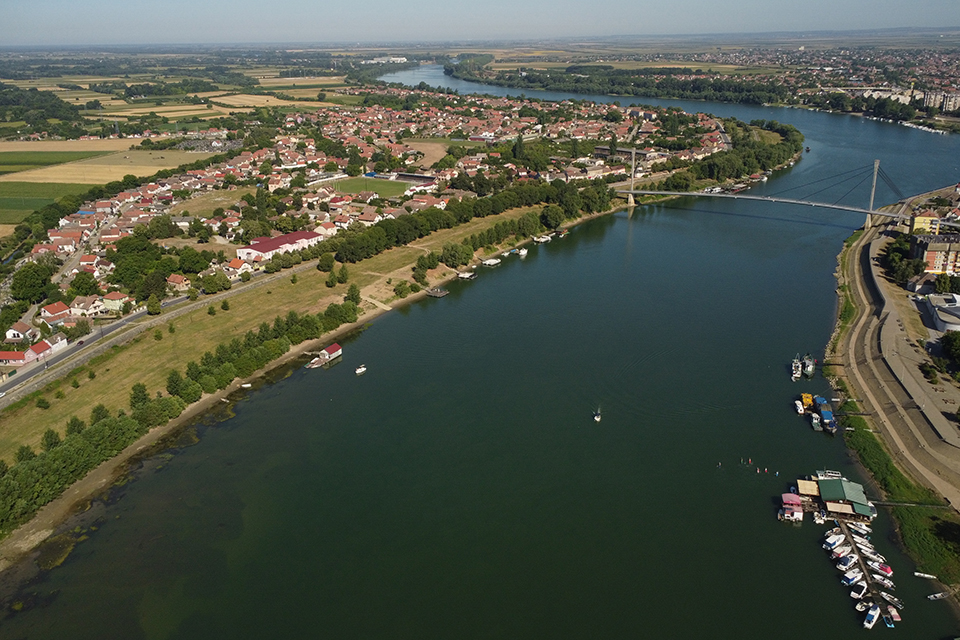
Roman Sirmium is located beneath modern day Sremska Mitrovica on the River Sava. Once a major Roman city, it was destroyed by the Avars

Iceland is covered with vast stretches of wilderness. The question is, how is it best protected?
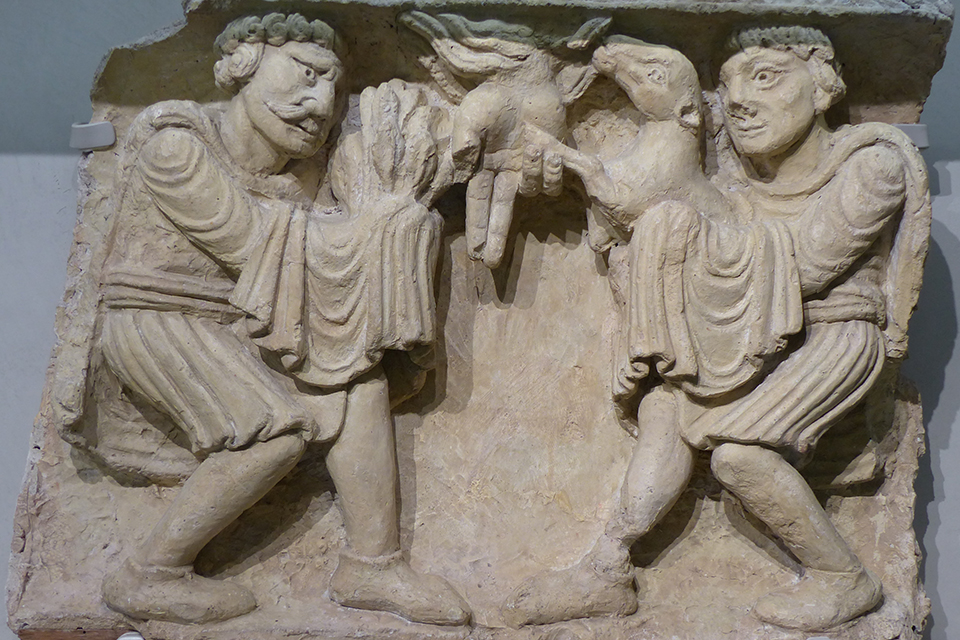
The Frieze on the Cathedral in Nîmes is currently undergoing study by a team of archaeologists and art historians, uncovering new insights about this significant Romanesque monument.


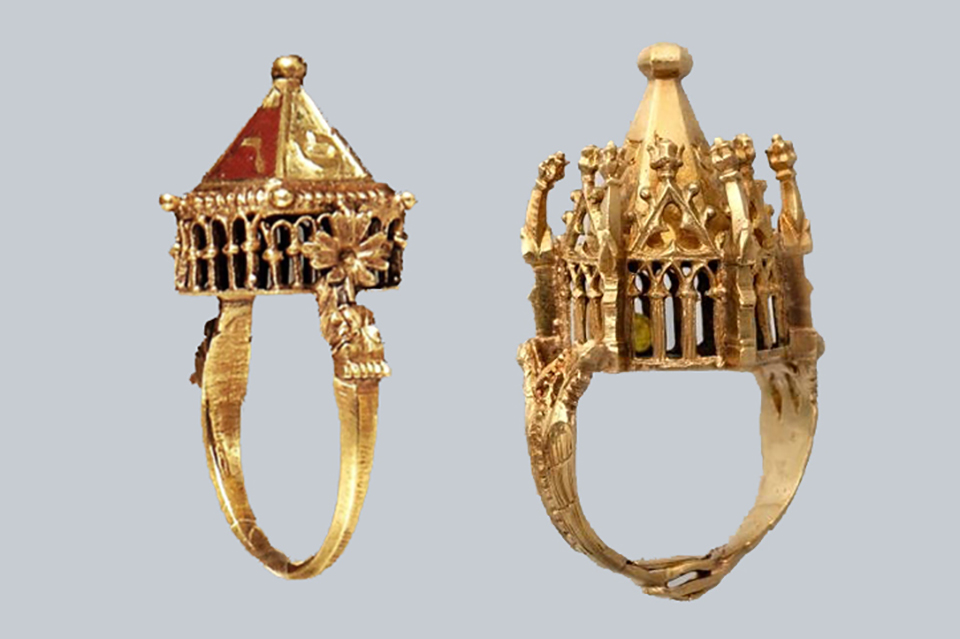
One of the exiting finds in the hidden Jewish treasure trove discovered in Erfurt in 1998 was a precious wedding ring featuring an elaborate piece of medieval architecture. What was the symbolic meaning of this?
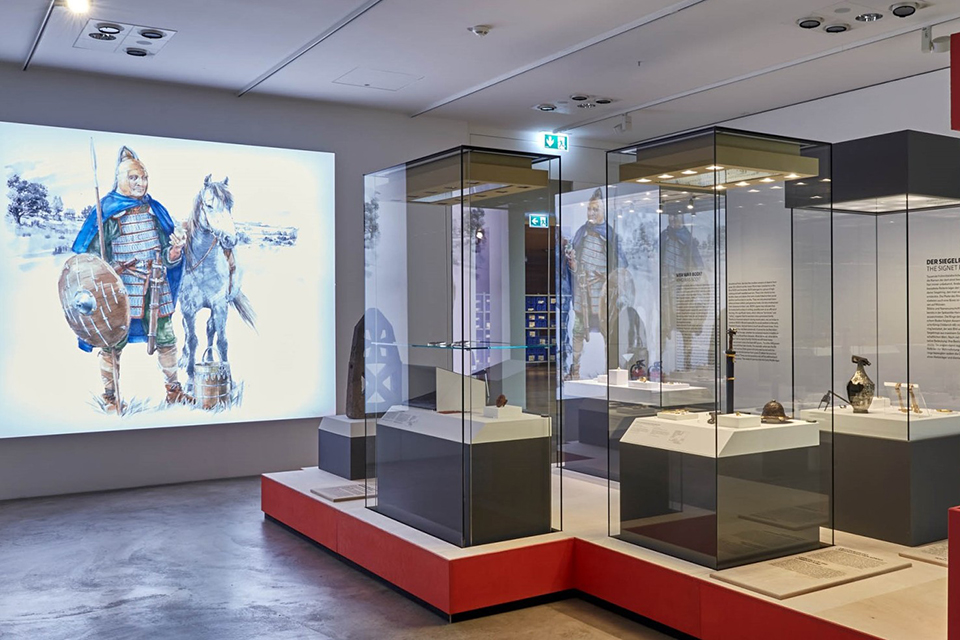
Fifty years ago, archaeologists discovered Bodi’s burial near the river Rhine. This summer, we are invited to explore his life at an exhibition in Bonn.
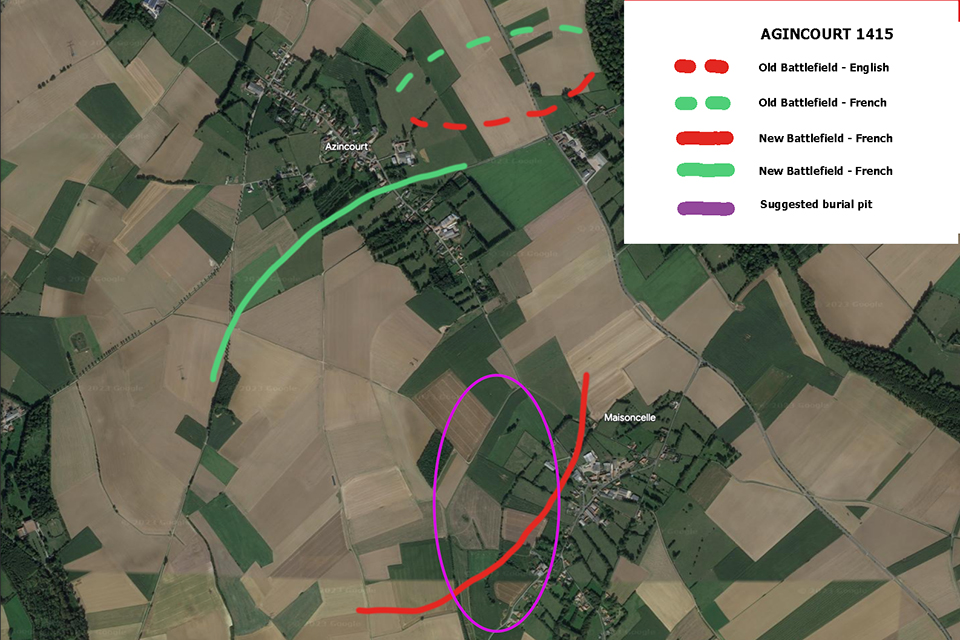
In a new article, Michael Livingston generously allows us to follow in his footsteps while he studies the layout of the battleground of Agincourt.

Making a Warrior: the Social Implications of Viking Age Martial Ideologies" is the title of a new research project, which was recently granted substantial funding from Nordforsk.

Also known as the Chillingham Cattle, Britain is home to four flocks of White Cattle living in the wild since the 12th century.


